Your guide to spiritual meaning, self-discovery, and timeless wisdom.
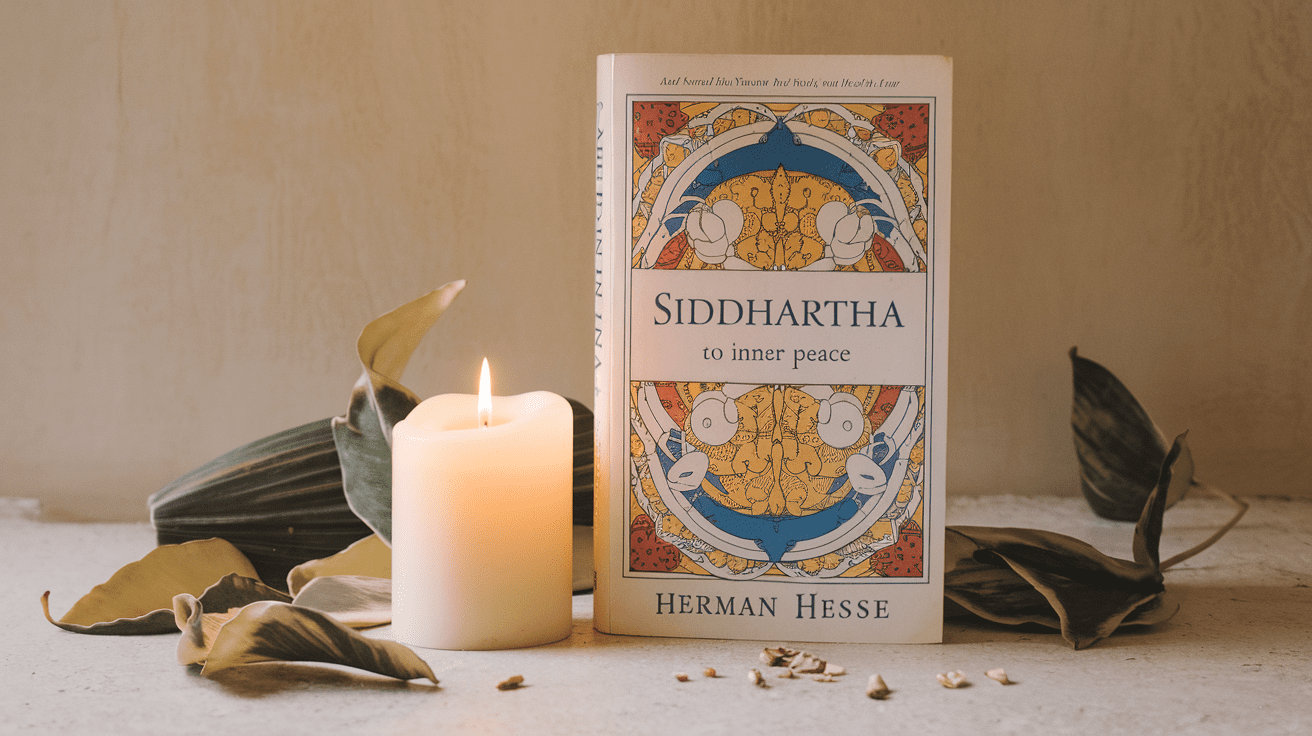
If you’re searching for a Siddhartha book review that goes deep beneath the plot summary and offers real insight into its spiritual power, you’re in the right place.
Hermann Hesse’s Siddhartha isn’t just a work of fiction. It’s a spiritual mirror—reflecting your unasked questions, unexplored truths, and untapped inner wisdom.
In today’s fast-paced world, it’s easy to feel disconnected from our true selves. The constant noise, relentless pursuit of material success, and societal pressures can leave us longing for something more meaningful.
Siddhartha’s spiritual meaning addresses this universal yearning, guiding readers toward inner peace and self-discovery.
Whether you’re on a quest toward enlightenment, exploring personal growth through literature, or seeking guidance on how to find balance between the material and spiritual realms, this book offers profound insights that are as relevant now as when it was first published in 1922.

What Is Siddhartha Really About?
On the surface, Siddhartha tells the story of a young Brahmin in ancient India who embarks on a quest for enlightenment.
Dissatisfied with the teachings of his elders and the religious practices of his upbringing, Siddhartha leaves his home to seek spiritual fulfillment.
But this is more than just a tale of one man’s journey; it’s an exploration of the human condition and the universal search for meaning.
Highlights from Siddhartha’s Spiritual Journey
- The Departure from Tradition Siddhartha begins his journey by rejecting the conventional path laid out for him. Despite being revered in his community, he feels an inner emptiness that traditional rituals cannot fill. This represents the moment many of us face when we begin to question the status quo and seek our own truth.
- Life as an Ascetic Joining the Samanas, a group of wandering ascetics, Siddhartha practices severe self-denial, believing that stripping away physical desires will lead to spiritual enlightenment. He abstains from all pleasures, endures physical hardships, and practices meditation to transcend the Self. However, he soon realizes that extreme austerity is not the answer either. This phase illustrates the futility of extremes and the importance of finding a balanced path.
- Encounter with the Buddha Siddhartha meets Gautama Buddha and is deeply impressed by his peaceful presence and teachings. Yet, he decides not to become a follower, believing that enlightenment cannot be taught but must be experienced firsthand. This pivotal moment emphasizes the theme that your path can’t be borrowed; true wisdom comes from personal experience.
- Immersion in the Material World In a stark contrast, Siddhartha indulges in sensual pleasures and amasses wealth under the guidance of Kamala, a courtesan, and Kamaswami, a merchant. He becomes successful in business, enjoys luxuries, and experiences love and passion. However, he eventually feels spiritually bankrupt, realizing that material success and hedonistic pleasures lead to a hollow existence. This segment of his journey highlights the emptiness of materialism and how external success doesn’t equate to inner fulfillment.
- The River and Redemption Disillusioned and despairing, Siddhartha contemplates ending his life but instead falls into a deep sleep by a river. Upon awakening, he experiences a profound sense of peace. Here, he meets the ferryman Vasudeva, who becomes his spiritual mentor. Through attentive listening to the river, Siddhartha learns about the interconnectedness of all life and the nature of time. The river symbolizes the constant flow of life and the wisdom that comes from observing and being present.
- Final Enlightenment Siddhartha reaches enlightenment not through asceticism, indulgence, or teachings but through embracing the unity of all things. He understands that all experiences, all lives, and all moments exist simultaneously, just like the river. He realizes that love is the highest form of understanding, and by relinquishing his ego, he achieves true serenity.
The cyclical nature of Siddhartha’s journey—from spiritual pursuit to worldly indulgence and back—reflects the nonlinear path many of us take in our own quests for meaning. It’s a powerful reminder that every experience, whether deemed ‘good’ or ‘bad’, contributes to our growth.
Join thousands of satisfied readers – Get your copy today!
Themes and Symbolism in Siddhartha
Hermann Hesse weaves rich themes and symbols throughout the novel, offering layers of meaning to unpack. Understanding these elements enhances our appreciation of the story and its relevance to our own lives.
1. The Limitations of Intellectual Knowledge
Siddhartha’s journey underscores the difference between intellectual understanding and experiential wisdom.
- Experience Over Doctrine: Despite learning from esteemed teachers and studying sacred texts, Siddhartha realizes that knowledge alone cannot lead to enlightenment. He says, “Knowledge can be communicated, but not wisdom.” His journey emphasizes that wisdom cannot be taught; it must be personally realized through direct experience.
- Critique of Dogmatism: The novel critiques rigid adherence to doctrines, suggesting that clinging to established beliefs can hinder true understanding. Siddhartha’s departure from the Buddha highlights this—he acknowledges the value of the Buddha’s teachings but feels that following them would prevent him from finding his own path.
This theme resonates today as we navigate an age of information overload, where knowledge is abundant but true understanding is rare. It encourages us to seek authentic experiences rather than relying solely on secondhand information.
2. The Power of the River
The river is one of the most potent symbols in Siddhartha, representing life, time, and the path to enlightenment.
- Symbol of Unity and Continuity: The river embodies the unity of all things. Siddhartha learns that past, present, and future are interconnected, much like the river’s continuous flow. He realizes that life is not a series of separate events but a unified existence.
- Reflection and Self-Discovery: By listening to the river, Siddhartha gains insights into his own nature and the nature of existence. The river teaches him about acceptance, the impermanence of life, and the importance of being present. It becomes a metaphor for the inner journey and the flow of consciousness.
- Vasudeva, the Ferryman: Vasudeva, who listens more than he speaks, embodies the wisdom of the river. He guides Siddhartha to learn from the river, emphasizing that deep understanding comes from attentive observation.
For readers, the river symbolism in Siddhartha serves as a powerful metaphor for self-reflection and the continuous journey of growth. It encourages us to find stillness within ourselves to observe the flow of our lives.
3. The Balance Between Worldly Life and Spiritual Life
Siddhartha explores the tension between materialism and spirituality, illustrating the need for balance.
- Integration of Dualities: The novel suggests that enlightenment isn’t found in rejecting the world but in embracing and transcending it. Siddhartha’s experiences teach him that both spiritual and worldly experiences are necessary for a complete understanding of life.
- Middle Path: Echoing the Buddhist concept of the Middle Way, the book advocates for a balanced approach, avoiding the extremes of self-indulgence and self-mortification. Siddhartha ultimately understands that living fully in the world without being attached to it leads to true liberation.
- Acceptance of Samsara: Siddhartha learns to accept the cycle of life (Samsara) rather than fighting against it. This acceptance brings him peace, as he no longer resists the natural flow of existence.
This theme encourages us to find harmony in our own lives, integrating our spiritual pursuits with our everyday responsibilities and experiences. It suggests that true spirituality involves engaging with the world compassionately and mindfully.
4. Love and Human Connection
While often perceived as a spiritual recluse, Siddhartha’s relationships play a crucial role in his journey.
- Love as a Teacher: Through his relationship with Kamala, Siddhartha experiences physical love and deep affection. Later, his bond with his son forces him to confront attachment and loss. These experiences deepen his understanding of compassion and empathy.
- Overcoming Attachment: Siddhartha grapples with the pain of attachment, especially with his son. He learns that true love involves letting go and allowing others to follow their own paths.
- Unity Through Love: The novel posits that love is a unifying force that transcends individual ego. By loving others, Siddhartha connects more deeply with the world around him.
This theme highlights the importance of human connections and emotions in our spiritual development. It emphasizes that relationships are not obstacles but opportunities for growth.
5. Self-Realization and Enlightenment
At its core, Siddhartha is about the quest for self-realization.
- Inner vs. Outer Search: Siddhartha discovers that enlightenment comes from within, not from external teachers or practices. His journey emphasizes introspection and self-awareness, encouraging readers to look inward for answers.
- Embracing the Present Moment: By fully immersing himself in each experience, Siddhartha learns to live in the present—a concept that parallels mindfulness practices in today’s world. He realizes that enlightenment is not a distant goal but a state of being.
- Overcoming the Self: The novel explores the idea of transcending the ego to achieve unity with all existence. Siddhartha learns that by shedding his ego and desires, he can experience the oneness of life.
This theme aligns with the modern emphasis on inner peace and self-discovery, showing that true fulfillment comes from understanding oneself at the deepest level.
Transform your life today – Get your copy now!
Siddhartha’s Spiritual Meaning (Why It Still Resonates)
The spiritual meaning of Siddhartha lies in its exploration of universal truths and the human experience.
Timeless Relevance
- The novel addresses questions that remain pertinent: “Who am I?”, “What is the purpose of life?”, “How can I find true happiness?”
- It resonates with anyone who has felt the call to seek something beyond the material aspects of life.
- The themes of searching for meaning, rebelling against conformity, and seeking authentic experiences are especially relevant in today’s society.
Personal Growth Through Literature
- Siddhartha serves as a guide for readers seeking personal transformation.
- By witnessing Siddhartha’s trials and triumphs, we reflect on our own paths, challenges, and growth opportunities.
- Literature like this can be a catalyst for self-exploration and change.
Critique of Materialism
- In an era dominated by consumerism and the pursuit of wealth, the novel’s message about the hollowness of material success is striking.
- It challenges us to look beyond external achievements for fulfillment, emphasizing that true happiness comes from within.
Emphasis on Individual Journey
- The book champions the idea that enlightenment is a personal journey, unique to each individual.
- It empowers readers to trust their intuition and experiences rather than adhering strictly to prescribed doctrines or societal expectations.
Integration of Eastern Philosophy
- Hesse introduces Western readers to Eastern philosophical concepts, bridging cultural gaps.
- The universal applicability of these philosophies demonstrates the interconnectedness of human wisdom across cultures.
Modern spiritual movements, mindfulness practices, and even psychological therapies echo themes found in Siddhartha. The novel’s insights into the human psyche and spirit make it a timeless companion for anyone on a journey of self-improvement.
For example, mindfulness-based stress reduction (MBSR) programs emphasize being present and observing one’s thoughts without judgment—a concept central to Siddhartha’s enlightenment. ncbi
Start your journey to success – Order your copy!
Common Life Lessons learned from the Book
- Trust Your Inner Wisdom Siddhartha’s decision to forge his own path teaches us to listen to our intuition, even when it goes against societal expectations. Trusting ourselves can lead to authentic and fulfilling lives.
- Embrace the Journey, Not Just the Destination The novel highlights that each phase of life, including mistakes and setbacks, contributes to our growth. Embracing the journey allows us to find joy and meaning in the present moment.
- The Importance of Presence By learning to be present and observe, Siddhartha gains profound insights. Practicing mindfulness can reduce stress, enhance well-being, and deepen our understanding of ourselves and others.
- Letting Go Leads to Freedom Siddhartha’s ultimate enlightenment comes when he releases his attachments and accepts life as it is. Letting go of control and expectations opens us up to new possibilities and inner peace.
- Love as a Path to Understanding Embracing love and compassion connects us to others and ourselves, fostering empathy and unity.
These lessons resonate with many who are seeking direction and meaning in their own lives. They offer guidance on navigating personal challenges and finding fulfillment.
Frequently Asked Questions
Is Siddhartha a true story or biography?
No, Siddhartha is a work of fiction. While it draws inspiration from Indian philosophy and the life of the Buddha, it is not a historical account. Hermann Hesse created the character of Siddhartha to explore universal themes of spiritual searching and self-discovery. The name “Siddhartha” is also the given name of the historical Buddha, but the character in the novel is a separate entity with a different life story.
What age group is best suited to read Siddhartha?
Siddhartha is suitable for both teens and adults. Its accessible language makes it readable for younger audiences, while its deeper philosophical themes offer richness that adults can appreciate. Many readers find that revisiting the book at different stages of life reveals new insights, as personal experiences can change one’s interpretation and understanding of the novel.
Is this book Buddhist?
While Siddhartha incorporates elements of Buddhism and references the Buddha, it is not strictly a Buddhist text. Hesse blends ideas from various Eastern philosophies, including Hinduism and Taoism, to present a more universal exploration of spirituality. The novel is more about the individual’s journey toward enlightenment than adherence to a specific religious doctrine.
How does Siddhartha compare to other spiritual books?
Siddhartha stands out for its narrative storytelling, which allows readers to experience the protagonist’s journey alongside him. Unlike didactic self-help books, it doesn’t prescribe specific practices but instead invites personal reflection.
Similar to Paulo Coelho’s The Alchemist, it uses allegory and symbolism to convey profound truths. Both books encourage readers to pursue their personal legends or destinies by following their hearts.
For those interested in exploring more, check out our curated list of must-read spiritual books, which includes titles that delve into consciousness, purpose, and self-discovery.
Join thousands of satisfied readers – Get your copy today!
How to Read Siddhartha for True Impact

To fully absorb the wisdom of Siddhartha, consider the following approaches:
1. Journal After Each Chapter
- Reflective Prompts:
- “What resonated with me in this chapter, and why?”
- “How does Siddhartha’s experience relate to my own life?”
- “What beliefs or assumptions is Siddhartha challenging, and how do they parallel my own?”
- Document Personal Insights: Writing down your thoughts can deepen your understanding and help integrate the lessons. Journaling can also reveal patterns in your thinking and emotions, aiding in self-awareness.
2. Try a River Meditation
- Emulate Siddhartha’s Practice:
- Find a Quiet Space: If possible, sit by a river or stream. If not, a fountain or even a recording of water sounds can suffice.
- Focus on Sensory Experience: Pay attention to the sounds, sights, and sensations. Notice the flow of the water, its direction, and its changes.
- Let Thoughts Flow: Observe your thoughts as they come and go, without judgment or attachment, like the river’s current.
- Contemplate Impermanence: Reflect on how the water is constantly moving and changing, symbolizing life’s transient nature. This can foster acceptance of change in your own life.
- Benefits: River meditation can enhance mindfulness, reduce stress, and promote a sense of peace and connectedness.
3. Discuss with a Friend or Group
- Book Clubs or Discussion Groups:
- Share Perspectives: Engaging in conversations can reveal new interpretations and deepen your understanding.
- Questions to Explore:
- “What themes stood out to you, and why?”
- “How do you interpret the symbolism of the river or other elements?”
- Deepen Connections: Discussing profound topics can strengthen relationships and foster a sense of community. It allows for mutual support on the spiritual journey.
4. Engage with Supplementary Materials
- Read Companion Guides: There are numerous analyses and interpretations of Siddhartha that can offer additional context and insights.
- Listen to Lectures or Podcasts: Audio resources can provide different angles and make complex themes more accessible.
- Explore Historical and Cultural Context: Understanding the philosophical traditions and historical setting can enrich your reading experience.
5. Express Through Creativity
- Artistic Interpretation:
- Create Art: Paint, draw, or sculpt your interpretation of themes or scenes from the book.
- Write Poetry or Music: Compose pieces inspired by Siddhartha’s journey.
- Benefits: Creative expression can be therapeutic and deepen your connection to the material.
By actively engaging with the material, you’re more likely to experience the transformative impact that so many readers have reported. These practices not only enhance comprehension but also promote personal growth.

Final Thoughts: Is Siddhartha Worth Reading?
Absolutely. Siddhartha is more than a novel; it’s a timeless guide that encourages introspection and challenges us to seek our own truths. In a world filled with distractions and prescribed paths, the novel invites us to slow down, listen, and reconnect with our inner selves.
Hermann Hesse’s eloquent prose and the universality of Siddhartha’s quest make this book a valuable read for anyone interested in spirituality, philosophy, or personal growth. It’s a testament to the idea that the journey is just as important as the destination, and that every experience holds the potential for enlightenment.
Whether you’re well along your spiritual path or just beginning to ask life’s big questions, Siddhartha offers insights that can illuminate your journey. It reassures us that it’s okay to question, to stray from the expected path, and to find wisdom in unexpected places.
Transform your life today – Get your copy now!
Explore More Spiritual Reads
If Siddhartha resonates with you, consider diving into other works that explore similar themes.
10 Enlightenment Books to Expand Your Mind – Why It’s Worth Reading: A interesting list of influential books that delve into consciousness, spirituality, and personal growth. Whether you’re a seasoned seeker or new to the path, these books can offer fresh perspectives and inspiration.
Why The Power of Now Will Change Your Life – Overview: Learn how living in the present moment can alleviate stress and bring profound peace. Tolle’s teachings complement the themes in Siddhartha, emphasizing presence and self-awareness.
Why The Untethered Soul Is a Must-Read for Spiritual Seekers – Highlights: The Untethered Soul by Michael A. Singer shatters the conventional wisdom about spiritual growth. While most books tell you to control your thoughts, Singer reveals why that approach is exactly what’s keeping you stuck
Embarking on a journey of self-discovery can feel overwhelming, but you don’t have to walk the path alone.
Additional Resources
Books Similar to Siddhartha
- The Alchemist by Paulo Coelho: A fable about following your dreams and listening to your heart, rich with symbolism and inspiration.
- Jonathan Livingston Seagull by Richard Bach: A story about a seagull who seeks a higher purpose and pushes the boundaries of what is possible. It explores themes of self-perfection and the pursuit of higher ideals.
- Man’s Search for Meaning by Viktor Frankl: A profound exploration of finding purpose in the face of suffering. Frankl’s experiences in a concentration camp lead to insights about the human spirit and resilience.
Podcasts
- On Being with Krista Tippett: Conversations about spirituality, ethics, and the big questions of meaning. Features interviews with thinkers, poets, and philosophers.
- Wisdom of the Sages: Discussions on yogic philosophy, spirituality, and how ancient wisdom applies to modern life.
Share Your Thoughts
Have you read Siddhartha? What insights did you gain from Siddhartha’s journey? We’d love to hear your reflections.
- Leave a Comment Below: Your thoughts and experiences can inspire others on their paths.
- Email Us: Contact Us with your stories or questions.
- Follow Our Blog: Stay updated with our latest posts and resources to support your spiritual journey.
feelbetterwithin.com participates in the Amazon Services LLC Associates Program, an affiliate advertising program designed to provide a means for sites to earn advertising fees by advertising and linking to Amazon.com and other affiliate programs.