
A highly sensitive person is someone with a researched temperament trait called sensory processing sensitivity, meaning they process emotional, sensory, and environmental input more deeply; an empath is generally described as someone who responds so intensely to other people’s emotions that those emotions can seem like their own.
The simplest difference is this: highly sensitive people are deeply affected by stimulation, while empaths are especially affected by other people’s emotional states.
You can be one, both, or neither, and knowing the difference matters because the right label helps you choose better boundaries, recovery habits, relationships, work environments, and self-care tools.
Sensory processing sensitivity has been studied in psychology, while “empath” is more commonly used in popular psychology and wellness language rather than as a formal clinical term.
Before comparing the two, it helps to understand what an empath is and how the term is commonly used.
Highly Sensitive Person vs Empath: The Quick Difference
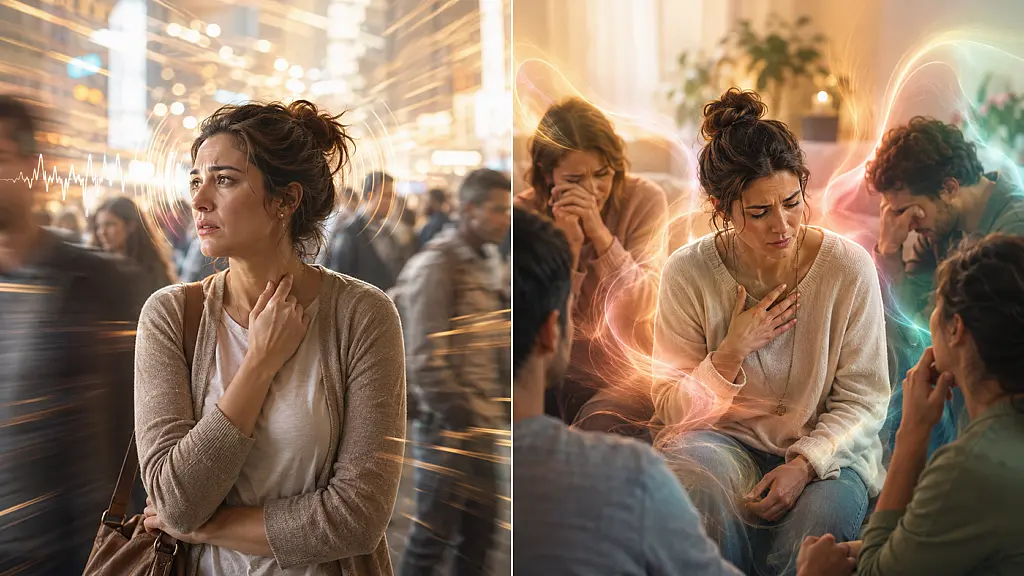
A highly sensitive person notices more, processes more, and often needs more time to recover from intensity. This can include noise, light, conflict, criticism, emotional tension, social pressure, caffeine, pain, hunger, clutter, or a busy schedule.
An empath is more specifically tuned into people, moods, emotional undercurrents, and sometimes the “energy” of a room. Many empaths describe feeling fine one moment and suddenly anxious, heavy, sad, or drained after interacting with someone else.
Here is the cleanest comparison:
| Trait | Highly Sensitive Person | Empath |
|---|---|---|
| Core pattern | Deep processing of sensory and emotional input | Deep emotional attunement to others |
| Main trigger | Overstimulation, conflict, pressure, sensory intensity | Other people’s emotions, stress, grief, anger, or tension |
| Scientific status | Linked to sensory processing sensitivity research | Popular term, not usually a formal diagnosis |
| Common experience | “Everything feels like a lot.” | “I feel what others feel.” |
| Main need | Nervous system regulation and low-stimulation recovery | Emotional boundaries and discernment |
| Can overlap? | Yes | Yes |
Many highly sensitive people are empathic, compassionate, and emotionally perceptive. But not every highly sensitive person feels as though they take on others’ emotions. And not every empath thinks of themselves as a highly sensitive person, even though many share similar traits.
What Is a Highly Sensitive Person?
For a grounded psychology-based explanation, Psychology Today describes a highly sensitive person as someone with high sensory-processing sensitivity, meaning they may respond more deeply to emotional, social, sensory, and environmental input.
That distinction matters. Being a highly sensitive person does not mean you are broken, fragile, dramatic, immature, or incapable. It means your nervous system may register subtleties and intensity more deeply than others, from a shift in someone’s tone to bright lights, crowded spaces, emotional tension, or sudden changes in your environment.
A helpful framework often used to explain high sensitivity is DOES, originally developed through Dr. Elaine Aron’s work on highly sensitive people:
- D — Depth of processing: thinking deeply, reflecting carefully, and noticing patterns others may miss.
- O — Overstimulation: becoming drained when too much sensory, emotional, or social input arrives too quickly.
- E — Emotional responsiveness and empathy: feeling emotions strongly and responding deeply to other people’s experiences.
- S — Sensitivity to subtleties: noticing small changes in mood, sound, light, body language, or atmosphere.
This framework helps explain why many highly sensitive people are not simply “too emotional.” They are often processing more information, more deeply, and with greater awareness of subtle details.
Common signs of a highly sensitive person
A highly sensitive person may:
- Notice slight shifts in tone, facial expression, lighting, sound, smell, or atmosphere.
- Feel overwhelmed by loud places, rushed decisions, cluttered rooms, or intense schedules.
- Think deeply before acting and replay conversations afterward.
- Feel criticism, rejection, or conflict strongly.
- Need quiet time after social events, workdays, travel, or emotionally charged situations.
- Experience beauty, music, nature, art, and kindness very deeply.
- Become stressed when people are upset, disappointed, or tense.
- Need more recovery after stimulation than less sensitive people.
This is why many highly sensitive people are told they are “too much” when they are actually processing more information than others realize.
What Is an Empath?
An empath is usually described as a person who is highly attuned to other people’s feelings and may experience those feelings internally. The American Psychological Association defines empathy as understanding another person from their frame of reference or vicariously experiencing that person’s feelings.
An empath takes that experience to a more intense level. Instead of simply recognizing that someone is sad, an empath may begin to feel sadness in their own body. Instead of noticing a tense room, an empath may leave with a headache, heaviness, anxiety, or exhaustion.
Read our guide on what an empath is, describes empaths as deeply connected to emotional and energetic fields around them, often picking up what others suppress, hide, or release.
Common signs of an empath
An empath may:
- Walk into a room and immediately sense tension.
- Feel emotionally heavy after supporting a distressed friend.
- Absorb another person’s mood without realizing it.
- Struggle to know whether a feeling is truly theirs.
- Feel physically affected by conflict, grief, anger, or collective distress.
- Become the “safe person” others unload on.
- Need solitude after emotionally intense interactions.
- Feel called to healing, caregiving, animals, nature, creativity, or spiritual work.
- Have strong intuition about people’s unspoken feelings.
Empaths often feel they need a different kind of self-care than the average person. A bath, walk, or nap may help, but the deeper need can be learning how to stop over-identifying with another person’s emotions or distress.
Highly Sensitive People and Empaths: Where They Overlap
The overlap is real. Many highly sensitive people are deeply empathic. They may notice micro-expressions, emotional shifts, tension in relationships, and subtle cues that other people miss. Research on empathy also shows that empathy includes both understanding and feeling others’ emotional states, which explains why emotional sensitivity can become relationally intense.
The shared traits often include:
- Strong emotional responses.
- Rich inner life.
- Need for downtime.
- Discomfort with harsh environments.
- Sensitivity to conflict.
- Compassion for suffering.
- Intuitive pattern recognition.
- Deep appreciation for nature, beauty, and meaning.
This is why the terms get mixed up online. A highly sensitive person may read about empaths and think, “That sounds like me.” An empath may read about high sensitivity and think, “That explains my nervous system.”
Both reactions can be valid. But the difference becomes important when you ask: What drains me most?
If noise, pressure, bright lights, multitasking, and overstimulation are your biggest drains, the highly sensitive person framework may fit best. If emotional absorption, rescuing, people’s moods, and energetic heaviness are the main issue, the empath framework may feel more accurate.
Highly Sensitive Person Signs vs Empath Signs

The fastest way to tell the difference is to look at your trigger pattern.
You may be a highly sensitive person if:
- A busy supermarket feels like too much.
- You need time to process decisions.
- You notice smells, textures, background noise, or lighting strongly.
- You feel startled easily.
- You become overwhelmed by packed schedules.
- You are moved deeply by art, music, spirituality, nature, or kindness.
- You need quiet after social or sensory stimulation.
- Your system reacts strongly to hunger, caffeine, pain, or lack of sleep.
You may be an empath if:
- You feel different after being around certain people.
- You feel strongly affected by sadness, anger, stress, or anxiety in others.
- People tell you things they do not tell anyone else.
- You feel responsible for fixing emotional discomfort.
- You can sense when someone says “I’m fine” but is not fine.
- You become drained after emotional conversations.
- You struggle with emotional boundaries.
- You need to consciously release what is not yours.
You may be both if:
- Crowds drain you because of both noise and emotional energy.
- Conflict overwhelms your nervous system and your heart.
- You notice subtle sensory details and subtle emotional cues.
- You need solitude to recover from stimulation and people’s feelings.
- You have been called too sensitive, too intense, too emotional, or too intuitive.
- You often feel like your body is reacting before your mind understands why.
This combination is common among readers looking for highly sensitive person vs empath because the lived experience is rarely neat. Human sensitivity exists on a spectrum, not in tidy boxes.
Why the Highly Sensitive Person and Empath Difference Matters
The difference matters because the wrong explanation can lead to the wrong solution.
A highly sensitive person who thinks they are only “being highly responsive to others' emotions” may overlook practical nervous system needs: sleep, reduced noise, better scheduling, sensory-friendly routines, fewer transitions, and more decompression time.
An empath who thinks they are only “overstimulated” may miss the emotional boundary issue: taking responsibility for others, confusing compassion with rescue, absorbing family tension, or staying open to people who drain them.
1. It changes your self-care
For a highly sensitive person, self-care often starts with reducing input:
- Lower noise.
- Softer lighting.
- Fewer back-to-back commitments.
- Slower mornings.
- Calmer workspaces.
- Clear routines.
- Recovery time after stimulation.
For an empath, self-care often starts with emotional separation:
- “Is this mine?”
- “Did I feel this before I entered the room?”
- “Am I supporting or absorbing?”
- “Can I care without carrying?”
- “What boundary is needed here?”
Our Empath burnout guide is especially relevant here because it describes the emotional and sensory “inbox” becoming too full and never being cleared.
2. It changes your boundaries
Highly sensitive people need boundaries around stimulation. Empaths need boundaries around emotional merging. Many people need both.
A sensory boundary sounds like:
- “I need a quiet evening after a busy day.”
- “I can meet for one hour, not three.”
- “I’m going to step outside for a few minutes.”
- “I do better with advance notice.”
An empath boundary sounds like:
- “I care about you, but I cannot process this for you.”
- “I can listen, but I cannot be available all night.”
- “I need to check in with myself before I say yes.”
- “I’m not the right person to hold this today.”
Boundaries are not cold. For highly sensitive people and empaths, boundaries are what keep compassion clean.
3. It changes your relationships
Without self-understanding, highly sensitive people may be labeled as difficult, avoidant, dramatic, or easily offended. Empaths may become unpaid therapists, emotional shock absorbers, or rescuers.
When you understand the difference, you can explain yourself more clearly:
- “I’m not ignoring you. I’m overstimulated.”
- “I’m not angry. I need quiet to reset.”
- “I care deeply, but I cannot take this on.”
- “I can support you better when I’m grounded.”
This reduces resentment. It also teaches others how to relate to you without guessing.
4. It changes your work life
A highly sensitive person may thrive in work that allows depth, autonomy, creativity, empathy, and meaningful contribution. They may struggle in chaotic, noisy, high-pressure environments with constant interruptions.
An empath may thrive in healing, teaching, coaching, writing, design, animal care, advocacy, spiritual work, or emotionally intelligent leadership. But they can burn out quickly if they work around suffering without recovery rituals.
For both types, success is not about becoming less sensitive. It is about designing life so sensitivity becomes useful rather than constantly overloaded.
Are Highly Sensitive People Always Empaths?
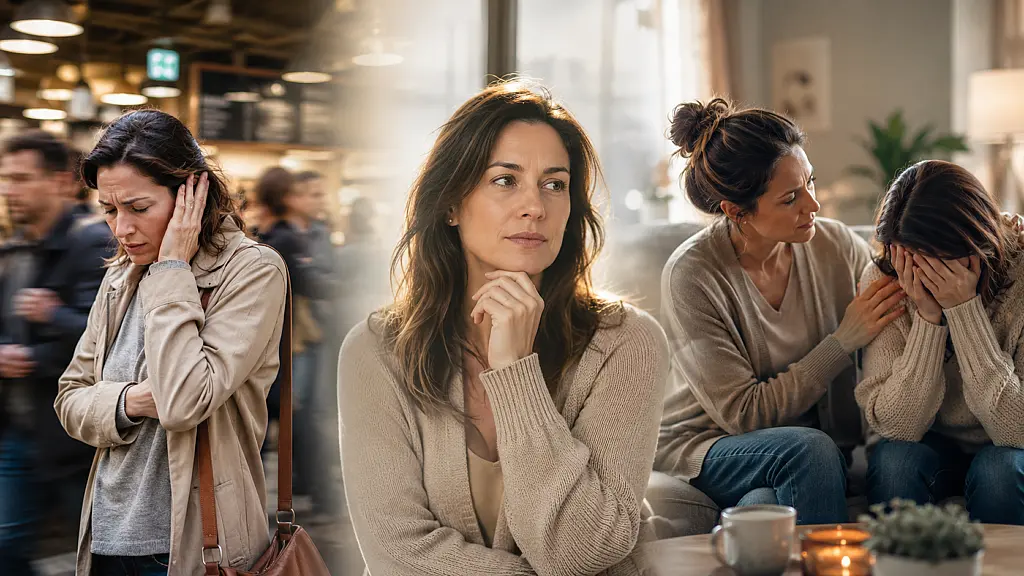
No. Highly sensitive people are often empathic, but they are not automatically empaths. Some HSPs feel deeply but do not necessarily experience other people’s emotions as if they were their own. They may be more affected by sensory input, criticism, decision fatigue, or environmental intensity than by emotional closeness.
Likewise, some people identify strongly as empaths because they experience others’ emotions as if they were their own, yet they may not relate to every classic highly sensitive person trait. For example, they may not be especially bothered by bright lights or textures, but they may feel devastated after a heavy conversation.
Dr. Judith Orloff, who writes extensively about empaths, describes HSPs and empaths as overlapping but not mutually exclusive, while framing empaths as experiencing sensitivity through emotions and what they may describe as subtle energy.
The best approach is not to force yourself into one identity. Instead, ask which framework gives you the most practical clarity.
The Science-and-Spirit Balance
A strong article on highly sensitive person vs empath needs a balanced view.
The highly sensitive person concept has a research base connected to sensory processing sensitivity. Aron and Aron’s early research identified sensory-processing sensitivity as a measurable individual difference, partly independent from introversion and emotionality.
The empath concept is more complicated. Many people use it to describe real experiences: emotional absorption, deep attunement, intuition, and difficulty separating self from others. But “empath” is not usually treated as a formal clinical diagnosis. That does not mean the experience is fake. It means the language belongs more to popular psychology, spirituality, and lived experience than to diagnostic manuals.
A grounded view makes room for both:
- Psychology helps explain temperament, empathy, nervous system sensitivity, and emotional processing.
- Spiritual language helps some people describe felt experiences that clinical language does not fully capture.
- Practical self-care matters more than winning a label debate.
This is especially important for Feel Better Within readers, because many come from both worlds: they want grounded tools and soul-honoring language.
What Causes Someone to Be a Highly Sensitive Person or Empath?
There is no single cause.
For a highly sensitive person, sensitivity is often discussed as temperament. It may be influenced by biology, genetics, early environment, and the way the nervous system processes input. The trait is not simply shyness, introversion, or weakness.
For empaths, the picture is broader. Some people may be naturally empathic. Others may develop intense emotional scanning because of childhood environments where they had to read moods for safety. Some may combine natural sensitivity with trauma responses, caregiving roles, spiritual openness, or long-term people-pleasing.
This distinction matters because not every empathic pattern is purely a gift. Some of it may be intuition. Some may be hypervigilance. Some may be compassion. Some may be an old survival strategy.
A useful question is:
Does this sensitivity help me respond with wisdom, or does it make me lose myself?
If it helps you notice, care, create, and connect, it may be a strength. If it leaves you anxious, exhausted, resentful, or unable to separate your feelings from others, it needs support.
The Hidden Strengths of Highly Sensitive People
Highly sensitive people often carry gifts that are overlooked in loud, fast, productivity-obsessed cultures.
Common strengths include:
- Deep thinking.
- Strong intuition.
- Emotional intelligence.
- Creativity.
- Conscientiousness.
- Pattern recognition.
- Careful decision-making.
- Loyalty.
- Ethical awareness.
- Appreciation for beauty and meaning.
- Ability to notice what others miss.
A highly sensitive person may be the one who senses a team problem early, notices a child is overwhelmed, catches details in a creative project, or brings emotional nuance to a conversation.
Sensitivity becomes powerful when it is not constantly flooded.
The Hidden Strengths of Empaths

Empaths often bring warmth into emotionally cold places. They notice pain that others ignore. They can help people feel seen, heard, and less alone.
Common empath strengths include:
- Deep compassion.
- Emotional intuition.
- Healing presence.
- Strong listening.
- Ability to read unspoken tension.
- Connection with animals, nature, or spiritual practices.
- Desire to relieve suffering.
- High relational awareness.
- Capacity for meaningful support.
But the empath’s gift becomes unhealthy when compassion turns into over-responsibility. You are not meant to metabolize everyone’s pain through your own body.
For practical support, read our post on energy shielding techniques for empaths pairs well with this topic because it focuses on protection without shutting the heart down.
Common Mistakes Highly Sensitive People and Empaths Make
Mistake 1: Thinking sensitivity means weakness
Sensitivity is responsiveness. It can become vulnerability in the wrong environment, but it can also become wisdom in the right one.
Mistake 2: Trying to live like less sensitive people
Highly sensitive people often suffer when they copy lifestyles built for higher stimulation thresholds. Empaths suffer when they copy emotional availability patterns that ignore energetic cost.
Mistake 3: Confusing compassion with access
You can care about someone without giving them unlimited access to your nervous system, time, attention, or emotional field.
Mistake 4: Ignoring the body
A highly sensitive person may try to think their way out of overstimulation. An empath may try to spiritually process everything. But the body still needs hydration, sleep, food, movement, sunlight, and rest.
Mistake 5: Making the label your whole identity
Labels should liberate you, not trap you. The goal is not to become “the most sensitive” or “the strongest empath.” The goal is to live with more clarity, peace, and self-trust.
How to Tell Which One You Are
Use this simple reflection.
Ask yourself: What overwhelms me first?
If your first answer is noise, lights, crowds, deadlines, too many tasks, fast transitions, criticism, or sensory input, you may lean highly sensitive person.
If your first answer is people’s moods, emotional dumping, conflict, sadness, anger, family tension, or feeling responsible for others, you may lean empath.
If your answer is both, you may be a highly sensitive empath.
Ask yourself: What helps me recover fastest?
A highly sensitive person often recovers through:
- Quiet.
- Solitude.
- Nature.
- Sleep.
- Low-stimulation time.
- Gentle routines.
- Fewer demands.
An empath often recovers through:
- Emotional release.
- Grounding.
- Journaling.
- Energy clearing.
- Boundaries.
- Cord-cutting style rituals.
- Naming what is not theirs.
Empath sleep problems solutions may be helpful if your sensitivity shows up most at night through racing thoughts, emotional residue, or feeling unable to switch off.
Practical Tools for Highly Sensitive People
1. Create a sensory recovery plan
Do not wait until you are overwhelmed. Build recovery into normal life.
Try:
- Ten quiet minutes after work.
- Noise-reducing headphones.
- Softer lighting at night.
- One screen-free hour before bed.
- Fewer errands in one trip.
- A calm morning routine.
- A decompression ritual after social events.
2. Reduce decision fatigue
Highly sensitive people often process decisions deeply, which can become exhausting.
Use defaults:
- Same breakfast on busy days.
- Set work blocks.
- Weekly meal plan.
- Pre-decided rest nights.
- Simple clothing choices.
- Boundaries around last-minute plans.
3. Respect transition time
A highly sensitive person may need time to shift from work to home, socializing to solitude, or stimulation to sleep. This is not laziness. It is nervous system pacing.
4. Track your triggers
For one week, note when you feel overwhelmed. Look for patterns:
- Time of day.
- People involved.
- Environment.
- Hunger or tiredness.
- Noise level.
- Emotional intensity.
- Recovery method.
Patterns give you power.
Practical Tools for Empaths
1. Ask: “Is this mine?”
This is the empath’s most important question.
Before you react, pause and ask:
- Did I feel this before I entered this space?
- Did this emotion arrive after a conversation?
- Is there a clear reason this belongs to me?
- Am I carrying someone else’s urgency?
If the feeling is not yours, you do not need to solve it as if it is.
2. Practice “care without carrying”
A healthy empath learns to witness pain without becoming pain.
Try saying internally:
“I can love you without absorbing this.”
This sentence alone can interrupt years of emotional merging.
3. Use energetic hygiene
Energetic hygiene is the emotional equivalent of washing your hands after touching something heavy.
Try:
- Shaking out your hands after intense conversations.
- Washing your face or hands with intention.
- Standing barefoot on the ground.
- Visualizing emotional residue leaving your body.
- Journaling what belongs to you and what does not.
- Ending the day with a release ritual.
4. Stop being available to every emotional emergency
Empaths often become exhausted because they respond to every emotional signal as if it is a personal assignment.
Not every mood needs your intervention. Not every silence needs your repair. Not every person who is struggling is yours to rescue.
Highly Sensitive Person vs Empath in Relationships
In relationships, the highly sensitive person may need gentleness, consistency, emotional safety, and time to process. The empath may need clarity, reciprocity, and protection from emotional dumping.
A healthy partner, friend, or family member does not have to fully understand your sensitivity to respect it.
Helpful relationship phrases include:
- “I want to talk about this, but I need a calmer tone.”
- “I’m getting overwhelmed and need a pause.”
- “I can listen for 20 minutes, then I need to rest.”
- “I care, but I cannot be the only place you process this.”
- “I need direct communication instead of emotional guessing games.”
- “I’m sensitive to conflict, so repair matters to me.”
The goal is not to avoid all discomfort. The goal is to stop living in constant emotional or sensory overload.
Highly Sensitive Person vs Empath at Work
Workplaces can be especially hard for highly sensitive people and empaths because modern work often rewards speed, availability, noise tolerance, and emotional suppression.
A highly sensitive person may need:
- Clear priorities.
- Fewer interruptions.
- Written instructions.
- Quiet work blocks.
- Recovery after meetings.
- Respectful feedback.
- Predictable expectations.
An empath may need:
- Boundaries with emotionally intense colleagues.
- Protection from being the unofficial therapist.
- Time after difficult client interactions.
- Discernment around workplace politics.
- Clear separation between support and over-involvement.
Both types benefit from asking: What part of this job drains me, and what part gives me life?
The answer may reveal whether the issue is sensory overload, emotional labor, values mismatch, poor boundaries, or all of the above.
When Sensitivity Needs Extra Support
Sensitivity itself is not a disorder. But intense sensitivity can overlap with anxiety, trauma, depression, ADHD, autism, sensory processing challenges, grief, burnout, or chronic stress.
Consider professional support if you:
- Feel overwhelmed most days.
- Cannot sleep because of emotional overload.
- Regularly feel responsible for everyone’s feelings.
- Experience panic, shutdown, or frequent emotional flooding.
- Feel unable to set boundaries.
- Have trauma symptoms or feel unsafe in your body.
- Feel hopeless, numb, or persistently exhausted.
A therapist, counselor, psychologist, or trauma-informed practitioner can help you separate temperament from wounds, empathy from hypervigilance, and compassion from self-abandonment.
The Bottom Line
The highly sensitive person vs empath distinction matters because it helps you stop blaming yourself and start supporting yourself accurately.
A highly sensitive person needs to honor a nervous system that processes deeply. An empath needs to honor an emotional field that connects deeply. Highly sensitive people may need less stimulation; empaths may need stronger emotional boundaries. Many people need both.
You are not here to become numb. You are here to become discerning.
Your sensitivity is not the problem. Living without the right tools is the problem.
FAQ: Highly Sensitive Person vs Empath
Can a highly sensitive person become an empath?
A highly sensitive person may already have strong empathy, but becoming an empath depends on how you define the word. Some people become more emotionally attuned through life experience, healing work, caregiving, trauma, or spiritual practice. However, it is healthier to focus less on “becoming an empath” and more on becoming grounded, compassionate, and self-aware.
Are highly sensitive people more likely to feel drained by social media?
Yes, many highly sensitive people feel drained by rapid information, conflict, disturbing news, comparison, and constant emotional input. Empaths may feel this even more intensely if they respond strongly to the emotion conveyed through posts, comments, and stories.
Is being an empath the same as people-pleasing?
No, but they can overlap. An empath feels deeply. A people-pleaser changes behavior to avoid rejection, conflict, or disappointment. An empath with weak boundaries may become a people-pleaser, but healthy empaths can be compassionate and firm.
Can you be a highly sensitive person but not emotional?
Yes. Some highly sensitive people feel sensory input more strongly than emotional input. They may be sensitive to sound, light, texture, pain, or pressure but not identify as emotionally expressive.
Why do empaths attract emotionally intense people?
Empaths often listen deeply, validate others, and sense distress quickly. Emotionally intense people may feel safe around them. The challenge is learning to support without becoming a dumping ground.
Do highly sensitive people need more sleep?
Many highly sensitive people find that sleep is essential for emotional and sensory regulation. They may not always need more sleep than everyone else, but they often feel the effects of poor sleep more sharply.
What is the best first step if I think I am both?
Start with two practices: reduce overstimulation and ask, “Is this mine?” Give your nervous system less input and give your emotional field clearer boundaries. That combination supports both the highly sensitive person and the empath.
If you’re ready to deepen your self-discovery journey, these reader-favorite resources can help support your growth:
🌙 Moon Planner Journal
Many empaths notice that their emotions, energy levels, and intuition fluctuate throughout the month.
The Moon Planner Journal helps you track lunar cycles, emotional patterns, personal growth, and self-care practices so you can better understand your unique rhythms and create more balance in your life.
💎 Crystal Journal PDF | Printable Crystal Planner, Chakra Guide & Crystal Collection Tracker
For empaths who enjoy crystal healing, chakra work, or mindfulness practices.
The Crystal Journal provides a beautiful way to organize your crystal collection, record personal insights, track chakra healing progress, and create intentional grounding rituals that support emotional well-being.
Please note: Some resources may be paid products. Only choose tools that feel aligned with your personal needs, beliefs, and self-care practices.

This article offers general wellbeing education and spiritual reflection. It is not medical or mental health advice, and a spiritual interpretation should not replace professional assessment. Seek qualified support for persistent fatigue, pain, sleep disruption, anxiety, low mood or other symptoms that concern you.