

Emotional overload symptoms often appear in your body before you fully recognize what’s happening emotionally. You might feel unusually tired, struggle to concentrate, experience muscle tension, or find it difficult to relax, even when life seems “normal” on the surface.
While these symptoms can have many possible causes and shouldn’t be used to diagnose a medical condition, they may also be your body’s way of telling you that prolonged emotional stress has become too much to carry alone.
Most of us are taught to listen to our bodies when we have a fever or an injury. We’re much less likely to pay attention when the signs are quieter.
Persistent fatigue. A racing mind. Tight shoulders. Restless sleep. Constantly feeling like you’re running on empty.
These experiences are easy to dismiss as part of a busy life, but they can also be gentle reminders that your emotional wellbeing needs attention.
Your body and mind aren’t separate systems working independently. They’re constantly communicating with each other.
When emotional stress builds over time, your nervous system works harder to help you cope. If that stress continues without enough opportunity to recover, your body may begin sending signals that it’s time to slow down.
Learning to recognize these signs isn’t about becoming alarmed. It’s about becoming more aware of what your body may be trying to tell you before emotional exhaustion begins affecting your everyday life.
Why Emotional Overload Often Shows Up in Your Body First
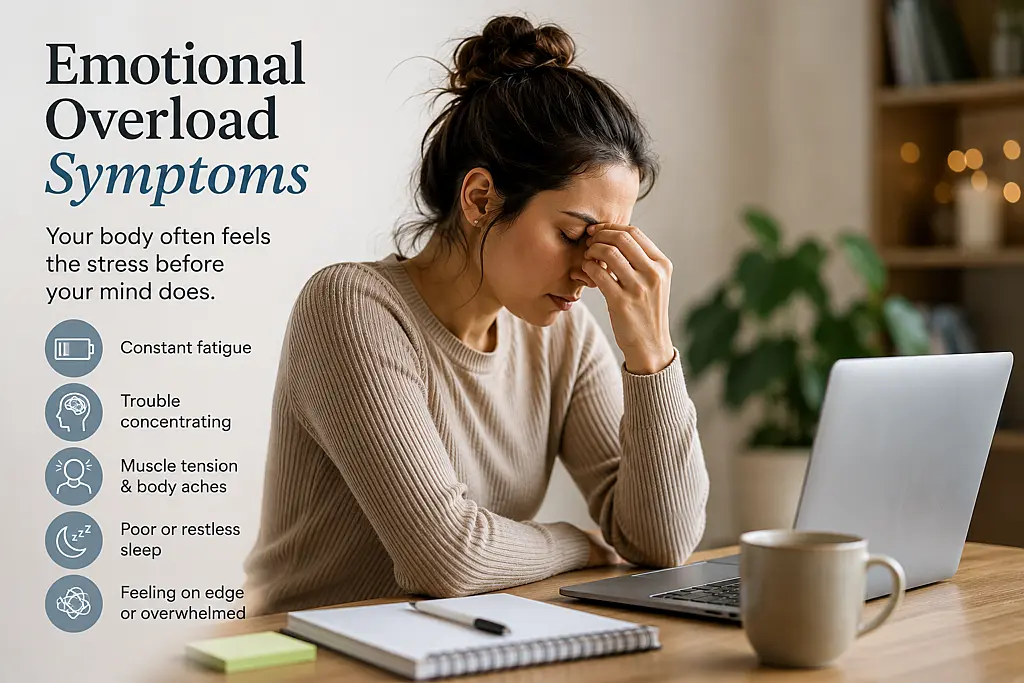
Many people expect emotional stress to feel exactly that—emotional.
They expect sadness.
Worry.
Frustration.
Anxiety.
But emotional overload doesn’t always begin with obvious feelings.
Sometimes it starts with physical changes that seem unrelated.
You may notice you’re clenching your jaw without realising it.
Finding it harder to concentrate.
Feeling exhausted after simple tasks.
Or waking up in the morning feeling as though you never truly rested.
This happens because your brain and body are designed to respond together.
When your mind perceives ongoing stress, your nervous system helps prepare your body to deal with it. That response is incredibly useful during short-term challenges.
However, when emotional pressure continues for weeks or months, your body doesn’t always receive enough opportunities to return to a calm, balanced state.
Over time, that ongoing stress may contribute to physical discomfort, mental fatigue, and changes in your daily wellbeing.
Everyone experiences emotional overload differently, but recognising common patterns can help you respond with greater awareness and self-compassion.
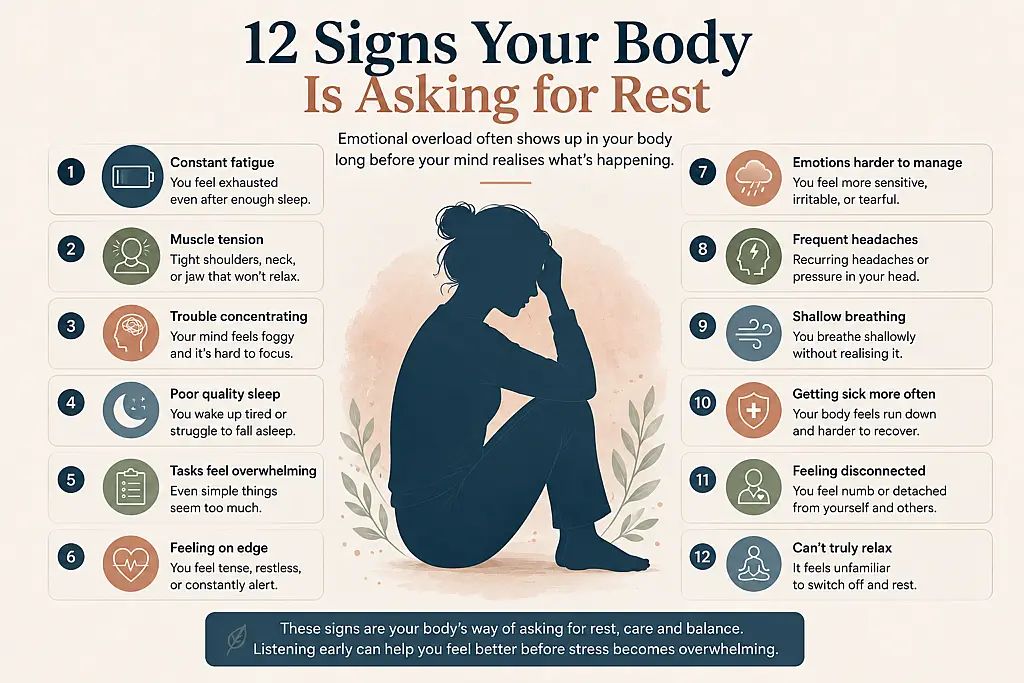
12 Emotional Overload Symptoms You Shouldn’t Ignore
Not everyone will experience every symptom on this list.
You may relate to only one or two.
Or you may recognise several.
The important thing isn’t counting how many you have—it’s noticing whether your body has been asking for more rest, balance, and emotional care than it’s currently receiving.
1. You’re Constantly Tired, Even After Sleeping
One of the most common emotional overload symptoms is feeling emotionally and physically drained despite getting enough sleep.
You wake up hoping to feel refreshed.
Instead, you already feel exhausted before the day has begun.
This doesn’t necessarily mean you’re not sleeping enough.
Sometimes your body is working so hard to manage ongoing emotional stress that it never feels like it fully switches off.
If you’ve been feeling this way for several weeks, it’s worth asking yourself whether you’re giving your emotional wellbeing the same attention you give your daily responsibilities.
2. Your Shoulders, Neck, or Jaw Always Feel Tight
Have you ever realised halfway through the day that you’ve been clenching your jaw without noticing?
Or that your shoulders have slowly crept towards your ears?
Physical tension is one of the body’s most common responses to prolonged stress.
Many people carry emotional pressure in their muscles long before they consciously recognise how overwhelmed they’re feeling.
Simple breathing exercises, stretching, and mindful movement can help release some of this tension. If you’re looking for gentle techniques, our guide to Healing Through Breath explores practical ways to relax both your body and your nervous system.
3. You Struggle to Concentrate
When your emotional energy is already stretched, focusing on everyday tasks can become surprisingly difficult.
You may find yourself reading the same sentence several times.
Forgetting why you walked into a room.
Or losing track of conversations more easily than usual.
Mental fatigue isn’t a sign of laziness.
Sometimes it’s simply your brain telling you it’s been processing more than you realize.
4. You Wake Up Feeling Like You Never Truly Rested
Sleep isn’t just about the number of hours you spend in bed—it’s also about how well your mind and body recover during that time.
When emotional stress has been building for weeks, you may sleep through the night but still wake feeling tired, sluggish, or mentally foggy. Others find it difficult to fall asleep because their minds won’t switch off, or they wake several times during the night thinking about work, relationships, or tomorrow’s responsibilities.
Poor-quality sleep is one of the more noticeable emotional overload symptoms because it can quickly affect every part of your day. If restful sleep has become difficult, creating a calming evening routine may help your mind and body gradually unwind before bed.
5. Everyday Tasks Suddenly Feel Overwhelming
Have you ever looked at a simple to-do list and felt like you didn’t know where to begin?
When you’re emotionally overloaded, even routine responsibilities can seem far more demanding than they really are.
Replying to emails.
Cooking dinner.
Making a phone call.
Tidying the house.
Tasks you’ve completed countless times may suddenly feel exhausting because your emotional energy has already been stretched thin.
This doesn’t mean you’ve become less capable. It often means your mind has been working harder than you realise and needs an opportunity to recover.
6. You Feel Constantly On Edge
Sometimes emotional overload doesn’t feel like sadness.
It feels like you’re always waiting for something else to go wrong.
You may startle more easily, feel restless, become impatient in queues, or struggle to relax even during quiet moments.
Your body remains alert as though it’s preparing for another challenge, even when you’re sitting safely at home.
This constant state of vigilance can become physically and emotionally draining over time, making it difficult to experience genuine moments of calm.
7. Your Emotions Feel Harder to Manage
Do you find yourself becoming upset more easily than usual?
Perhaps small frustrations lead to tears, or minor disagreements leave you feeling unusually hurt.
Emotional overload can reduce your capacity to cope with everyday challenges because you’ve already been carrying so much internally.
Feeling more emotional than usual doesn’t mean you’re weak or “too sensitive.”
It may simply be your body’s way of letting you know that your emotional reserves are running low.
8. You Experience Frequent Headaches
Headaches can have many different causes, including dehydration, eye strain, illness, and underlying medical conditions.
However, prolonged emotional stress may also contribute to tension headaches for some people.
If you’ve noticed recurring headaches alongside other signs of emotional overwhelm, it’s worth considering whether stress could be playing a role.
If headaches are severe, persistent, or different from your usual pattern, it’s important to seek advice from a qualified healthcare professional.
9. Your Breathing Feels Shallow Without You Realizing It
Many people only notice their breathing when something feels wrong.
During periods of emotional stress, it’s common to take quicker, shallower breaths without even being aware of it.
Over time, this can leave you feeling tense, restless, or as though you can’t quite relax.
Simply slowing your breathing for a few minutes each day can help interrupt this pattern and encourage your nervous system to settle. If you’re new to breathwork, our Healing Through Breath guide introduces gentle techniques that are easy to incorporate into your daily routine.
10. You Keep Getting Minor Illnesses
While emotional stress doesn’t directly cause colds or infections, long-term stress can affect the way your body functions and may leave you feeling run down.
If it seems like you’re constantly recovering from one minor illness only to catch another, it may be worth looking at your overall wellbeing.
Rest, balanced nutrition, regular movement, and managing emotional stress all play an important role in supporting your health.
11. You Feel Disconnected From Yourself
One of the less obvious emotional overload symptoms is feeling like you’re simply existing rather than truly living.
You still go to work.
You still look after your family.
You still meet your responsibilities.
But you’ve lost your sense of joy, curiosity, or connection to the things that once made you feel like yourself.
This emotional disconnect often develops gradually, making it easy to overlook until you realise you’ve been operating on autopilot for weeks or even months.
12. Your Body Feels Like It’s Asking You to Slow Down
Perhaps the biggest sign isn’t one specific symptom.
It’s the feeling that your whole body is asking for a break.
You’re tired.
You’re tense.
Your patience feels shorter.
Your motivation is fading.
Deep down, you know you’ve been pushing through for longer than you should have.
Listening to your body doesn’t mean giving up on your responsibilities.
It means recognizing that taking care of yourself isn’t a luxury—it’s part of maintaining your overall health and wellbeing.
What Should You Do If You Recognize These Symptoms?

Experiencing one or two of these emotional overload symptoms from time to time is a normal part of life. Stressful periods happen to everyone, and our bodies are remarkably resilient.
However, if several of these signs have become part of your daily routine, it may be time to slow down and give yourself permission to recover.
An emotional reset doesn’t have to involve making dramatic life changes. Often, small, consistent habits can help your mind and body feel more balanced again.
Consider trying a few of these simple steps:
- Prioritise quality sleep by keeping a consistent bedtime and limiting screen time before bed.
- Take short breaks throughout the day, even if it’s only for five minutes of quiet reflection or fresh air.
- Practice mindful breathing to calm your nervous system during stressful moments.
- Move your body regularly, whether that’s walking, stretching, yoga, or another activity you enjoy.
- Talk to someone you trust instead of carrying everything on your own.
- Set healthy boundaries if you’re constantly taking on other people’s responsibilities.
- Make time for activities that help you recharge, even if it’s only for a few minutes each day.
If you’re feeling emotionally overwhelmed, our guide to Emotional Reset: How to Recover When You Feel Emotionally Overwhelmed offers practical strategies to help you regain balance and build emotional resilience.
Most importantly, be patient with yourself.
Recovery isn’t about eliminating stress completely—it’s about giving yourself enough space to recover from it.
When Should You Seek Professional Help?
While emotional overload is common, ongoing physical symptoms should never be ignored.
If you’re experiencing persistent fatigue, recurring headaches, chest pain, significant changes in your sleep, or any symptom that’s severe, worsening, or affecting your daily life, it’s important to speak with a qualified healthcare professional. Many physical health conditions can cause symptoms similar to emotional stress, so receiving the right assessment is essential.
Likewise, if feelings of anxiety, hopelessness, or emotional distress continue for several weeks or begin interfering with work, relationships, or daily activities, seeking support from a doctor or licensed mental health professional is a positive and proactive step.
Asking for help isn’t a sign of weakness—it’s an important part of taking care of your overall wellbeing.
Frequently Asked Questions
What are the most common emotional overload symptoms?
Common emotional overload symptoms include persistent tiredness, muscle tension, headaches, poor sleep, difficulty concentrating, irritability, feeling constantly on edge, emotional sensitivity, and a sense of mental exhaustion. Everyone experiences emotional stress differently, so symptoms can vary from person to person.
Can emotional overload cause physical symptoms?
Yes. Emotional stress can affect the body as well as the mind. Some people experience tight muscles, tension headaches, digestive discomfort, fatigue, or changes in sleep. However, these symptoms can also have other medical causes, so it’s important to consult a healthcare professional if they persist or become severe.
How long does emotional overload last?
It depends on the cause and how quickly you can reduce stress and prioritise recovery. Some people notice improvement within a few days, while others may need several weeks of consistent self-care, healthy routines, or professional support.
What’s the difference between emotional overload and burnout?
Emotional overload usually refers to feeling overwhelmed by ongoing emotional demands and can happen over a relatively short period. Burnout is often associated with prolonged, unmanaged stress—particularly in work or caregiving roles—and is characterised by deep exhaustion, reduced motivation, and feeling detached from daily life.
How can I help my body recover from emotional overload?
Recovery often starts with the basics: getting enough restorative sleep, eating nourishing foods, staying active, practising relaxation techniques, setting healthy boundaries, and making time for activities that restore your energy. Small, consistent changes are often more sustainable than trying to fix everything at once.
Final Thoughts
Your body has an incredible ability to adapt to life’s challenges, but it also knows when it’s been carrying too much for too long.
The signs of emotional overload aren’t there to make you feel guilty or worried. They’re reminders that your emotional wellbeing deserves the same care and attention as your physical health.
By recognising these signals early and making space for rest, healthy boundaries, and emotional recovery, you can support both your mind and body before stress becomes overwhelming.
Listening to your body isn’t selfish—it’s one of the most important ways to protect your long-term wellbeing.
Feeling Emotionally Drained or Overloaded?
When other people’s emotions, constant demands or sensory overload leave you running on empty, it can be difficult to understand what you actually need. The free gives you simple printable pages to identify triggers, check in with yourself and create a calmer reset routine.
References
American Psychological Association. (2024). Stress effects on the body.
National Center for Complementary and Integrative Health. (2024). Stress and your health.
World Health Organization. (2022). Mental health: Strengthening our response.
National Institute of Mental Health. (2024). Caring for your mental health.

Cite or share this page
Want to reference this guide? Please link to the canonical page rather than copying the article.