
Empath burnout is a state of emotional, mental, and physical exhaustion that can develop when highly sensitive people absorb too much stress, emotional responsibility, or other people’s problems without enough rest, boundaries, or recovery.
Many empaths spend years believing they simply need to become stronger, more resilient, or better at protecting their energy. In reality, burnout often develops because they have been carrying more emotional weight than their mind and body can comfortably sustain.
If you frequently feel drained after social interactions, overwhelmed by other people’s emotions, exhausted by conflict, or responsible for keeping everyone around you happy, you may be experiencing empath burnout rather than ordinary tiredness.
Unlike a busy week or temporary stress, empath burnout can affect every area of life. It may influence your mood, relationships, concentration, physical health, motivation, and overall sense of well-being.
The challenging part is that many empaths don’t recognize burnout until they are already deeply exhausted.
What Is an Empath?

An empath is generally described as someone who is highly sensitive to the emotions, moods, and experiences of other people.
Many empaths naturally notice things that others miss. They often pick up on emotional shifts quickly, sense tension before it becomes obvious, and feel deeply affected by the energy of their environment.
Common empath traits include:
- Strong emotional awareness
- Deep compassion for others
- Sensitivity to conflict
- Intuitive understanding of people
- A tendency to absorb emotional atmospheres
- A need for regular solitude and recovery
It is important to understand that the term “empath” is not a formal psychological diagnosis. Instead, it is commonly used within personal development and spiritual communities to describe individuals who experience heightened emotional sensitivity and awareness.
Whether you view empathy through a psychological, spiritual, or self-growth lens, the challenges associated with emotional overload are very real.
If you’ve ever wondered whether you’re an empath or simply highly sensitive, explore Highly Sensitive Person vs Empath to better understand the similarities and differences between these two experiences.
Signs of Empath Burnout
Empath burnout rarely appears overnight.
More often, it develops gradually through months or even years of emotional overextension.
Emotional Signs
You may notice:
- Feeling emotionally numb
- Increased irritability
- Compassion fatigue
- Mood swings
- Feeling disconnected from yourself
- Constant concern for other people’s well-being
- Feeling guilty when prioritizing your own needs
Mental Signs
Burnout often affects your ability to think clearly.
Common symptoms include:
- Brain fog
- Difficulty concentrating
- Overthinking
- Mental exhaustion
- Decision fatigue
- Constant mental clutter
Physical Signs
Emotional exhaustion frequently shows up in the body.
Examples include:
- Persistent fatigue
- Frequent headaches
- Muscle tension
- Sleep disturbances
- Digestive discomfort
- Feeling physically drained after social interaction
- Increased sensitivity to stress
Many people are surprised to discover that emotional overload can contribute to physical symptoms. Chronic stress and emotional exhaustion often affect the body long before we consciously recognize burnout.
If headaches and emotional overwhelm often occur together, you may also find value in reading Spiritual Awakening Headaches: Why Personal Growth Can Feel Physically Intense.
Spiritual Signs
Many empaths also report:
- Feeling disconnected from intuition
- Losing interest in spiritual practices
- Difficulty meditating
- Feeling emotionally depleted after energy work
- A desire to withdraw from others
- Struggling to feel grounded
Why Empaths Experience Burnout
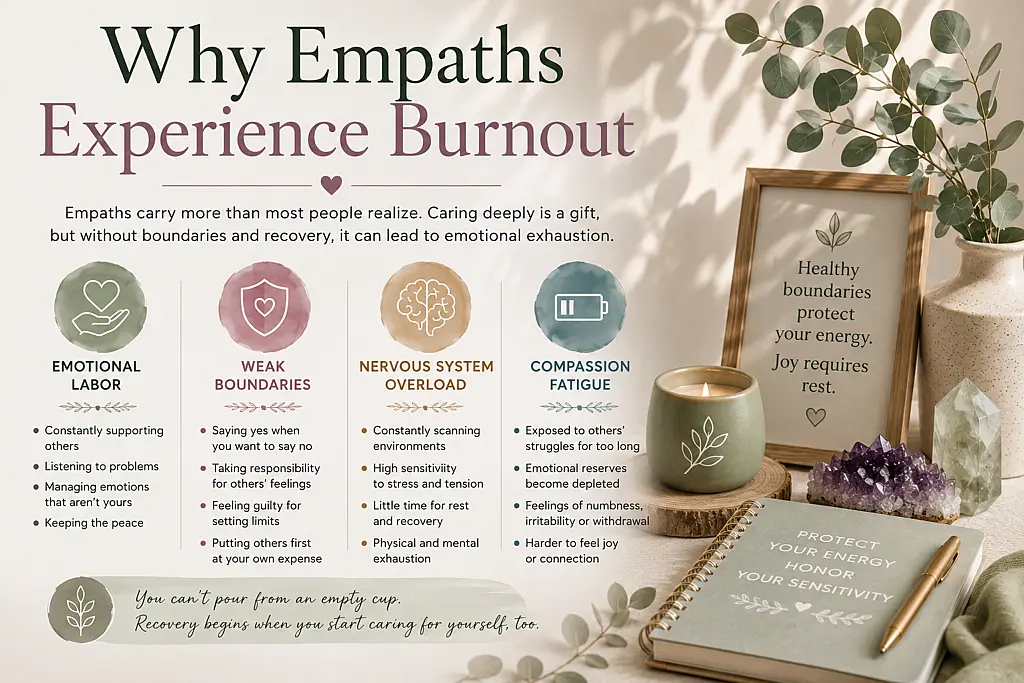
Understanding what causes burnout is one of the most important steps toward recovery.
Emotional Labor
One of the most overlooked causes of empath burnout is emotional labor.
Many empaths naturally become emotional caretakers for friends, family members, coworkers, and partners.
They spend significant emotional energy:
- Listening to problems
- Managing conflict
- Supporting others through difficult situations
- Keeping relationships functioning smoothly
- Helping people process their emotions
Over time, this emotional workload can become exhausting.
Weak Boundaries
Many empaths struggle to distinguish compassion from responsibility.
Compassion means caring.
Responsibility means believing it is your job to fix someone else’s situation.
When those two become blurred, burnout often follows.
You may find yourself:
- Saying yes when you want to say no
- Feeling responsible for other people’s emotions
- Ignoring your own needs
- Feeling guilty for setting limits
Compassion Fatigue
Compassion fatigue occurs when prolonged exposure to other people’s struggles begins affecting your own emotional well-being.
You still care deeply.
You simply no longer have the emotional capacity you once had.
This can create feelings of numbness, frustration, emotional withdrawal, or exhaustion.
Why the Nervous System Matters
Many discussions about empath burnout focus solely on energy.
However, understanding the nervous system provides a much more complete picture.
Many empaths become highly skilled at reading people and environments. They constantly scan for emotional cues, tension, conflict, disappointment, or signs that someone needs support.
While this awareness can be helpful, it can also create a state of ongoing vigilance.
The brain never fully switches off.
The body never receives enough opportunities to completely rest and recover.
Over time, this heightened awareness may contribute to:
- Emotional exhaustion
- Anxiety
- Sleep disruption
- Physical tension
- Mental fatigue
- Increased sensitivity to stress
When the nervous system remains overloaded for extended periods, burnout often follows.
This is one reason grounding practices can be so helpful for empaths. If emotional overwhelm has become a recurring pattern, these Mindfulness Grounding Techniques for Manifestation may help calm an overactive mind and restore a greater sense of balance.
Why Empaths Often Miss Burnout Until It’s Severe
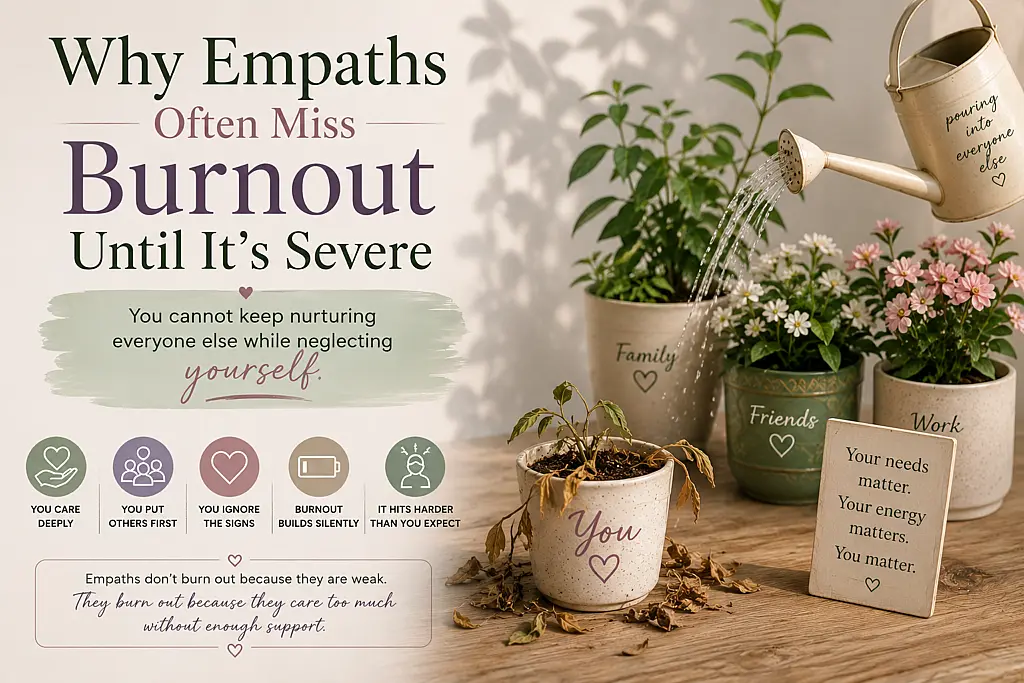
One of the most challenging aspects of empath burnout is that many empaths do not recognize it while it is happening.
Instead of paying attention to their own exhaustion, they remain focused on everyone else’s needs.
They tell themselves:
- “Things will settle down soon.”
- “I just need a weekend off.”
- “They’re struggling more than I am.”
- “I don’t want to let anyone down.”
Because caring comes naturally, emotional overextension often feels normal.
Gradually, caring turns into carrying.
You begin carrying:
- Other people’s worries
- Other people’s stress
- Other people’s expectations
- Other people’s emotional reactions
The problem is that emotional overload rarely arrives all at once.
It accumulates quietly through hundreds of small moments where your own needs take a back seat.
Recognizing burnout early is one of the most valuable skills an empath can develop.
Struggling to care without carrying everyone else’s emotions? Read Empath Boundaries to learn how to protect your peace, say no without guilt, and support others without losing yourself.
Hidden Signs of Empath Burnout
Not all burnout symptoms are obvious.
Some of the most important warning signs are often overlooked.
You may be experiencing empath burnout if you find yourself:
- Ignoring text messages for days
- Dreading social interactions
- Feeling resentful when people ask for help
- Losing interest in hobbies
- Avoiding phone calls
- Feeling emotionally flat
- Struggling to make simple decisions
- Wanting to withdraw from everyone
Many empaths mistakenly assume these changes mean something is wrong with them.
In reality, they are often signs that emotional reserves have been depleted.
The Difference Between Empathy and Emotional Absorption
Many people assume empathy means feeling everything another person feels.
Healthy empathy and emotional absorption are very different experiences.
| Healthy Empathy | Emotional Absorption |
|---|---|
| I care about their struggle. | I must fix their struggle. |
| I can support them. | I am responsible for their outcome. |
| I understand their feelings. | Their emotions become my emotions. |
| I can be compassionate. | I feel guilty when I step back. |
Many empaths believe burnout happens because they care too much.
More often, burnout develops because healthy empathy gradually shifts into emotional absorption.
Learning the difference can transform the way you care for others.
How Empath Burnout Affects Relationships
Burnout doesn’t just affect your energy levels.
It can significantly impact relationships as well.
Many empaths become known as the reliable friend, supportive partner, or family member who is always available.
However, when emotional exhaustion builds, resentment often follows.
You may begin to feel:
- Unappreciated
- Overextended
- Emotionally drained
- Frustrated by constant demands
- Guilty for wanting space
Ironically, many empaths start withdrawing from the people they care about most.
Not because they care less.
But because they no longer have the emotional resources available to engage in the same way.
Healthy relationships require balance, not self-sacrifice.
Empath Burnout at Work
The workplace can be particularly challenging for empaths.
Jobs that involve constant interaction, emotional support, or problem-solving often create additional pressure.
This is especially common in:
- Healthcare
- Education
- Customer service
- Coaching
- Counseling
- Leadership roles
Empaths often become the unofficial emotional support person within a workplace.
Coworkers seek them out for advice, reassurance, or conflict resolution.
While this can be rewarding, it also increases emotional labor and can accelerate burnout if boundaries are not maintained.
Empath Burnout vs Depression
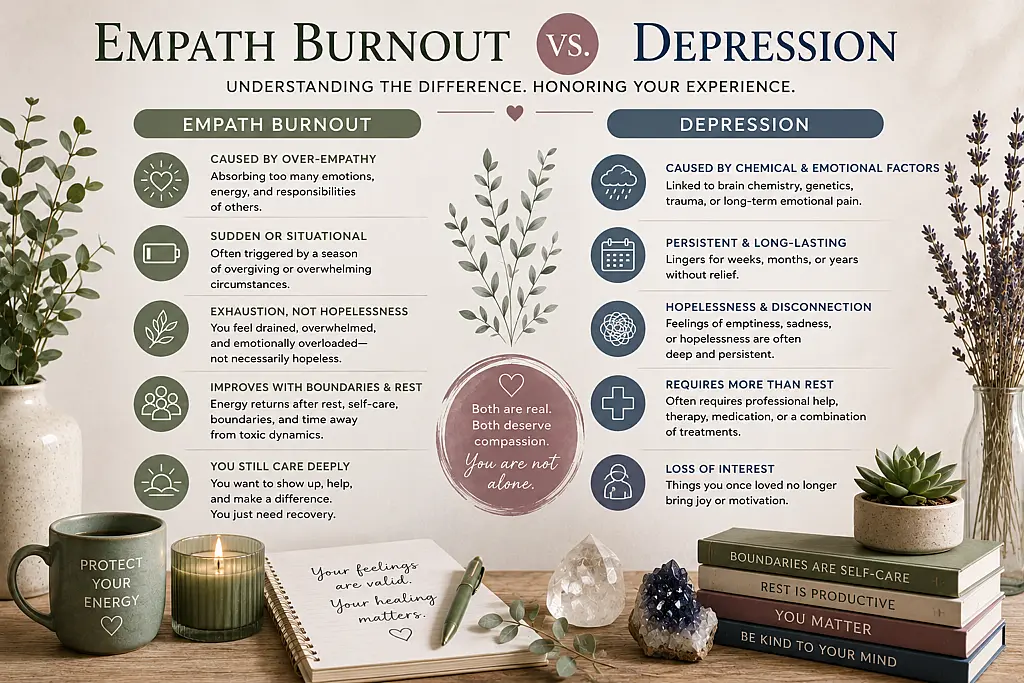
Some symptoms overlap.
Both conditions may involve:
- Fatigue
- Emotional withdrawal
- Reduced motivation
- Difficulty concentrating
- Changes in sleep patterns
However, empath burnout is often closely linked to emotional overload, chronic stress, and lack of recovery.
If symptoms become severe, persistent, or begin interfering with daily life, professional support is important.
How to Recover From Empath Burnout
Recovery begins when you stop treating exhaustion as a personal failure.
Burnout is not a sign of weakness.
It is often a sign that your needs have been ignored for too long.
Create Stronger Boundaries
Ask yourself:
- What am I responsible for?
- What belongs to someone else?
- Where am I overgiving?
- What am I afraid will happen if I say no?
Boundaries are not walls.
They are guidelines that protect your energy, time, and emotional well-being.
Learn to Disappoint People Occasionally
This may be one of the most important recovery skills for empaths.
Many empaths experience burnout because they spend years trying to avoid disappointing others.
They overcommit, overgive, and overextend themselves.
Eventually, the cost becomes their own well-being.
An important part of recovery is learning that other people’s disappointment is not always an emergency.
You can be kind and still say no.
You can be compassionate and still protect your energy.
Ground Yourself Daily
Grounding helps reduce overstimulation and reconnect you with the present moment.
Helpful practices include:
- Walking in nature
- Breathwork
- Mindful movement
- Body awareness exercises
- Sensory grounding techniques
If emotional overwhelm is becoming a pattern, these Mindfulness Grounding Techniques for Manifestation can help you reconnect with your own needs.
Reduce Emotional Input
Recovery often requires reducing unnecessary emotional stimulation.
Consider limiting:
- Social media
- News consumption
- Emotionally draining conversations
- Constant availability to others
Creating a calmer environment can also make a significant difference. These Energy Clearing Home Remedies offer simple ways to reduce mental clutter and create a more peaceful atmosphere.
Prioritize Rest
Many empaths only rest once they reach complete exhaustion.
A healthier approach is viewing rest as preventative care.
Rest is not a reward.
It is a requirement.
Spend Time Alone
Healthy solitude allows you to reconnect with your own thoughts and emotions.
Without regular time alone, it becomes increasingly difficult to distinguish your feelings from everyone else’s.
Journal Your Experiences
Journaling helps process emotional overload before it accumulates.
Writing creates space for reflection and self-awareness.
If you’re unsure where to begin, explore these Intuitive Journaling Techniques to better understand your emotions and patterns.
How Long Does Empath Burnout Last?
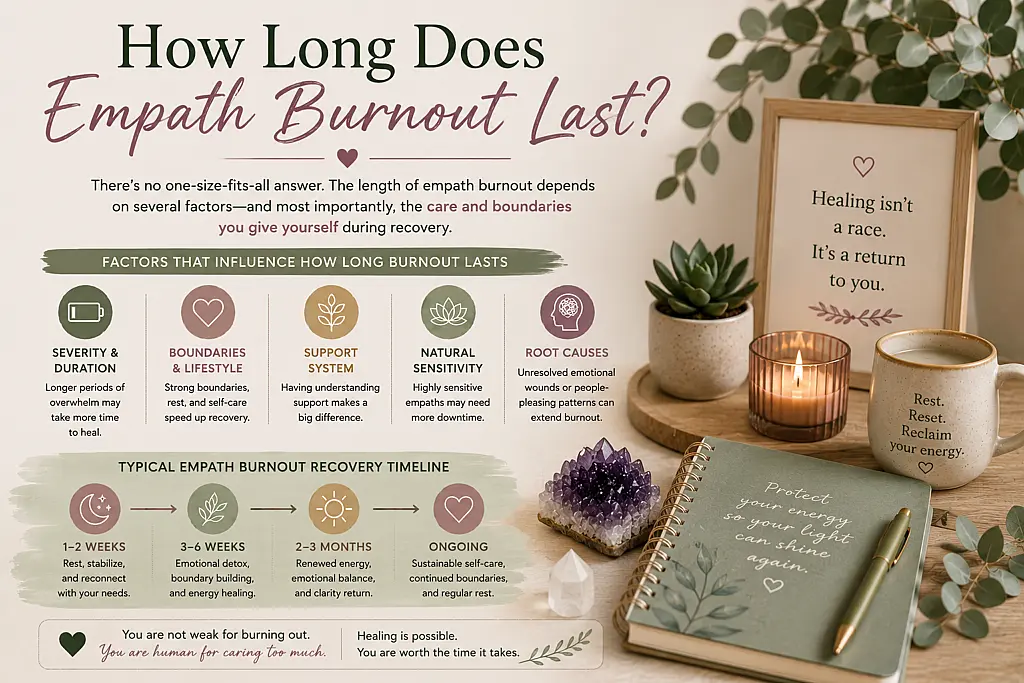
There is no universal timeline for recovery.
The length of empath burnout often depends on:
- How long burnout has been present
- Stress levels
- Quality of boundaries
- Lifestyle habits
- Available support
- Emotional awareness
Mild burnout may improve within weeks.
More significant burnout can take months of consistent recovery and boundary work.
The goal is not to rush healing.
The goal is to create sustainable habits that prevent burnout from returning.
Daily Habits That Protect Your Energy
Recovery is rarely built through dramatic changes.
More often, it is built through small, consistent actions.
Helpful habits include:
- Maintaining a regular sleep schedule
- Staying hydrated
- Spending time outdoors
- Moving your body daily
- Practicing grounding techniques
- Scheduling regular downtime
- Protecting personal boundaries
- Checking in with your emotional needs
Small habits practiced consistently often create the biggest long-term results.
When Empaths Need Professional Support
Sometimes burnout becomes too overwhelming to manage alone.
Seek professional support if you experience:
- Persistent exhaustion
- Ongoing anxiety
- Symptoms of depression
- Significant sleep disruption
- Difficulty functioning in daily life
- Emotional distress that continues despite self-care
Support is not a sign of weakness.
It is a sign of self-awareness and strength.
Recovery Starts When You Stop Carrying Everything Alone

Empath burnout is not caused by caring too much.
More often, it develops because you have spent too long carrying responsibilities that were never entirely yours to carry.
The goal is not to become less compassionate.
The goal is to learn how to care without absorbing, support without rescuing, and stay empathetic without abandoning yourself in the process.
Many empaths spend years trying to become less sensitive when what they truly need is better support for their sensitivity.
Your empathy is not the problem.
In many ways, it is one of your greatest strengths.
But even strengths need support.
Healthy boundaries, emotional awareness, grounding practices, rest, and self-respect allow empathy to remain a gift rather than becoming a burden.
If you’ve been feeling emotionally drained, this may also be a good time to create a gentle monthly reset. Many sensitive people find that a New Moon Ritual for Beginners provides an opportunity to reflect, release emotional clutter, and reconnect with themselves before overwhelm begins to build.
Healing often begins when you give yourself the same patience, compassion, and care that you so freely offer everyone else.
Disclaimer
This article is for educational and informational purposes only and should not be considered medical, psychological, or mental health advice. If you are experiencing persistent emotional distress, anxiety, depression, burnout symptoms, or difficulty coping with daily life, seek support from a qualified healthcare professional.
Feeling Burned Out Before You Even Realize It?
One challenge many empaths face is recognizing burnout before it becomes overwhelming.
🌙 Moon Planner Journal
This printable journal helps you track:
✓ Emotional patterns
✓ Energy levels
✓ Self-care habits
✓ Boundary challenges
✓ Monthly reflection and reset rituals
Many sensitive people discover recurring patterns only after they start recording how they feel over time. A simple monthly check-in can help you spot emotional overload earlier and make adjustments before burnout takes hold.
Explore the Moon Planner Journal →
feelbetterwithin.com participates in the Amazon Services LLC Associates Program, an affiliate advertising program designed to provide a means for sites to earn advertising fees by advertising and linking to Amazon.com and other affiliate programs.