

An empath parent morning shielding routine is a short boundary-setting practice used before family demands take over: settle your body, separate your responsibilities from other people’s feelings, choose one practical limit and, if it suits your beliefs, visualise a protective filter. It cannot create a proven energetic barrier, but it can provide a deliberate pause before noise, urgency and other people’s moods shape your response.
Use the two-minute routine on an ordinary morning, the 30-second reset once events are under way, or the five-minute version when you need to sort several competing demands. Some people understand shielding as a spiritual practice involving prayer or energetic symbolism; others use it as a simple attention and communication exercise.
Why mornings can feel especially demanding

Here, empath is a self-description for someone who feels strongly affected by interpersonal and sensory input. It does not establish that you literally absorb another person’s emotions.
Morning overload may look like:
- bracing when alarms, voices or kitchen noise begin
- feeling rushed even when the timetable is manageable
- tracking everyone’s mood and trying to fix it
- becoming irritable when several people speak at once
- struggling to decide what needs attention first
- snapping and then feeling guilty
- taking responsibility for the emotional tone of the whole household
These experiences can also reflect an ordinary lack of sleep, time pressure, family conflict, too many simultaneous tasks or a morning routine that is not working for the household. Shielding may help you pause, but a practical source of strain still needs a practical response.
What shielding can and cannot do
A child’s agitation or a partner’s urgency can affect how quickly you speak, move and make decisions. That does not prove their feelings have entered your body; it shows that people respond to emotional cues, noise and pressure. A shielding ritual gives you a moment to decide whether to match that pace.
If you use the phrase stop absorbing, let it mean that you are no longer accepting responsibility for every mood around you—not that emotions are substances that can be transferred or blocked.
Think of the shield as a filter for attention. You can notice that your child is upset without becoming frantic, listen to your partner without abandoning your own task, and care about a problem without solving it immediately.
The two-minute morning routine

Choose a repeatable cue, such as putting your feet on the floor, switching on the kettle or entering the bathroom. The practice is easier to remember when it is attached to something you already do.
Minute one: settle and orient
- Place both feet on the floor or sit with your body supported.
- Release your jaw and lower your shoulders without forcing them.
- Take three comfortable breaths. Let the exhale run slightly longer only if that feels natural.
- Name one fact about the moment: where you are, what time it is and the next task that genuinely matters.
Use a simple reminder such as: “I am here. I can take one thing at a time.” This is more realistic than telling yourself that everything is fine when it is not.
Minute two: set the filter and one boundary
If visualisation helps, picture a soft, clear layer around you, like a light jacket. Treat it as a reminder rather than a literal wall. If you do not visualise easily, touch a ring, mug or other familiar object while repeating one of these phrases:
- “I can care without carrying every problem.”
- “Another person’s urgency does not automatically set my pace.”
- “I can listen and still say not now.”
Finish by choosing one real boundary for the morning: no phone until breakfast is ready, one person speaking at a time, or postponing a non-urgent conversation until after drop-off. The boundary turns the ritual into an action.
The 30-second reset when the morning is already busy
- Pause what your hands are doing if it is safe to do so.
- Take one comfortable, unforced exhale.
- Release your jaw and shoulders.
- Ask: “What is actually mine to do in the next minute?”
- Say: “I can notice the rush without joining it.”
Then complete one concrete action: turn off unnecessary audio, ask for one voice at a time, finish packing one lunch or locate one missing item. The purpose is not instant calm; it is to reduce the number of demands you are answering at once.
The five-minute version for competing demands
Minute one: establish the facts
Notice the time, the next fixed deadline and what is happening without interpreting anyone’s mood. “It is 7.20 am, we leave in 25 minutes, and one child still needs breakfast” is more useful than “Everyone is losing it.” Take three comfortable breaths while you do this.
Minute two: sort what is yours, theirs and shared
Separate the demands mentally or write three short notes. For example:
- Mine: choosing my tone and stating the next step.
- Theirs: a child’s disappointment about an unavailable shirt or a partner’s worry about work.
- Shared: getting out of the house on time or agreeing when a conversation can continue.
This does not mean ignoring another person’s feelings. It clarifies which part you can reasonably handle.
Minute three: choose one spoken limit
Decide what you will say before the next interruption. Try: “I can help after I finish this,” “Tell me the most urgent thing first,” or “I want to discuss that when we both have time to listen.”
Minute four: add an optional spiritual shield
If shielding is part of your spiritual practice, picture a clear layer that allows affection and useful information through while reminding you that not every mood requires action. You might use a brief prayer such as: “May I meet this home with compassion and discernment. May I release burdens that are not mine to carry.” Treat this as prayer or symbolism, not proof of an energetic barrier.
Minute five: connect an intention to behaviour
Choose one quality—steady, patient or present—and pair it with something observable. Steady might mean finishing one sentence before answering the next request. Patient might mean asking a child to state one need at a time. Present might mean leaving your phone aside through breakfast.
Use the routine without shutting your child out
Shielding does not prevent children from having strong feelings, and their distress does not mean the routine failed. The useful distinction is between staying connected and matching their volume, speed or panic.
A three-part response
- Name what you understand: “You wanted the blue shirt and you’re disappointed.”
- State the limit or fact: “It isn’t clean, and we still need to get dressed.”
- Offer the next workable choice: “Choose green or grey, or I’ll choose in one minute.”
This hypothetical situation acknowledges the child’s feeling without turning the morning into an argument about whether they should have it.
Scripts for common pressure points
- When complaints arrive rapidly: “I want to understand. Tell me the most urgent thing first.”
- When a child’s volume is rising: “You’re allowed to be upset. I’m going to keep my voice low, and we’ll do one thing at a time.”
- When everyone speaks at once: “One voice at a time. Sam first, then Mia.”
- When your partner begins a heavy conversation: “I want to hear this, and I can’t give it proper attention during the school rush. Can we talk after drop-off?”
- When you need a brief pause: “I’m overloaded. I’m taking 30 seconds at the sink, then I’ll come back and help with shoes.”
Mistakes that weaken the routine
- Using visualisation instead of communication: Imagining a filter will not tell another person that you need less noise, more space or a later conversation. State the boundary as well.
- Assuming every uncomfortable feeling came from someone else: Hunger, poor sleep, your own worries and an unrealistic timetable also count. Check those possibilities before assigning the feeling to another person.
- Trying to block every emotion: The aim is not numbness. It is to notice feelings without treating all of them as instructions.
- Expecting perfect calm: A useful routine may create only enough pause to choose better words. It does not need to erase stress to be worthwhile.
- Using shielding to tolerate repeated disrespect: A symbolic practice is not a substitute for limits, support or practical safety.
Troubleshooting morning overload
When sensory input is the main problem
- Turn off unnecessary audio and silence non-essential notifications.
- Soften harsh lighting where practical.
- Give or request one instruction at a time.
- Step into a quieter space briefly only when children are safely supervised.
- If using noise-reducing earplugs, make sure you can still hear children, alarms and traffic.
When there is no private time
Keep your eyes open and attach the 30-second reset to an ordinary action such as washing your hands, filling a water bottle or waiting for the kettle. Privacy and silence are helpful, but they are not requirements.
When time pressure is the real issue
Choose one task that must happen and one that can wait. Skip the visualisation, use the short reset and state the next instruction clearly. Shielding cannot make an overloaded timetable realistic, so repeated rushing may call for fewer morning decisions or more preparation at another time.
When the overwhelm keeps returning
Do not treat persistent overload as a test of whether you are sensitive enough or doing the ritual correctly. Consider the actual load: sleep disruption, caregiving demands, recurring conflict, lack of help or a routine that does not suit the family. Adjusting that source or seeking appropriate support may be more useful than adding another visualisation.
When the environment is threatening or controlling
A shield visualisation cannot make an unsafe situation safe. If someone’s behaviour is threatening, violent or coercive, prioritise practical safety and seek suitable support from trusted people or local professional services. If anyone is in immediate danger, contact local emergency services.
Match the version to the morning
- Before anyone needs you: use the two-minute routine.
- Once noise and requests have begun: use the 30-second reset and take one concrete action.
- When several moods and responsibilities are competing: use the five-minute version to sort what is yours, theirs and shared.
Optional practical supports
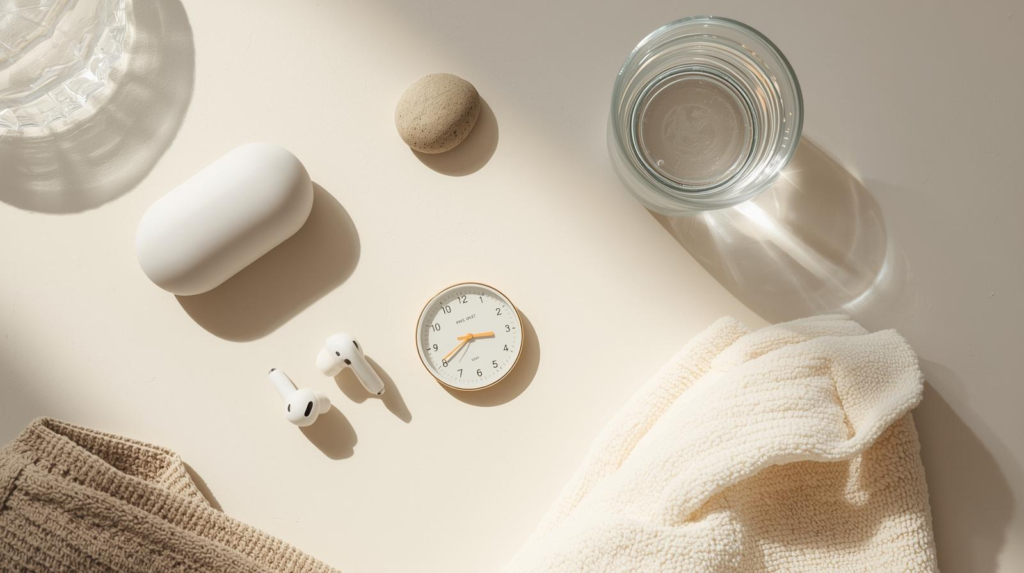
These items are not required for shielding, but they can serve as practical cues or reduce avoidable input.
- Noise-reducing earplugs: These may lower the intensity of household noise without shutting communication out. Select an option that still allows you to hear children, alarms and traffic. See reviews + options on Amazon
- A small tactile object: A stone, ring or fidget can act as a physical cue to pause before responding. See reviews + options on Amazon
- A visual timer: This can make a transition or agreed listening period visible to both parent and child. See reviews + options on Amazon
Related reading
- For additional centring practices, see Empath Grounding Rituals.
- For other optional visualisation methods, see Energy Shielding Techniques for Empaths.
- For longer-term exhaustion and boundary concerns, see Empath Burnout: Signs, Causes and Recovery.
- For difficulty settling at night, see Empath Sleep Problems Solutions.

Cite or share this page
Want to reference this guide? Please link to the canonical page rather than copying the article.