

The spiritual meaning of waking up at 3am is a personal interpretation, not something the clock can confirm. You may choose a quiet prayer or a moment of reflection, but waking at this hour does not establish that a spirit is contacting you, an organ is blocked or a hidden experience needs uncovering.
If you are awake right now, you do not need to solve the meaning before resting. First notice whether anything ordinary needs attention, such as noise, temperature or a worry you can leave until morning. Spiritual reflection can wait too.
Why waking at 3am does not have one fixed meaning
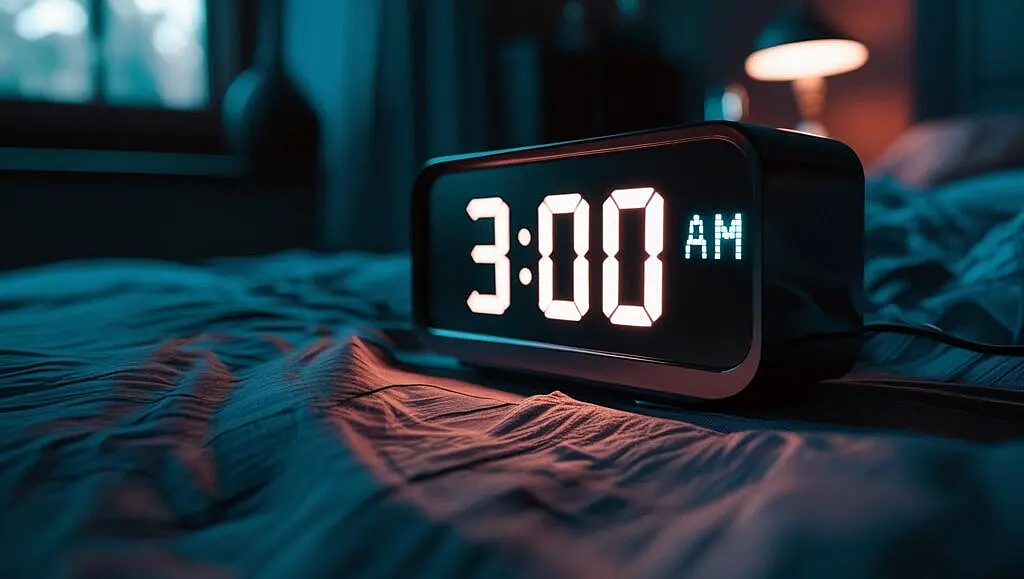
A time on the clock cannot distinguish a sleep problem from a personally meaningful moment. The NHS insomnia guide lists stress, noise, room temperature, caffeine, alcohol, medicines and other health factors among possible sleep difficulties. Those possibilities deserve attention without first ruling out a spiritual explanation.
1. The Chinese body clock is a traditional framework
You may encounter explanations linking a particular hour to an organ, an emotion or a meridian. Treat that language as a traditional interpretive framework. Waking at 3am alone cannot tell you how your liver is functioning, whether anger is being processed or whether you need a cleanse. Take a health concern to a clinician rather than diagnosing it from the hour.
2. Religious meaning depends on your own practice
If prayer is part of your life, you can choose a brief familiar prayer when awake. There is no need to describe the hour as dangerous, accept a “devil’s hour” explanation or assume that all members of a religion attach the same meaning to it. Let the practice offer comfort without making wakefulness an obligation.
3. Veil imagery can remain symbolic
Some spiritual writing uses a “thin veil” to describe closeness to the sacred. You can understand that as imagery. The image does not establish a biological peak in intuition or prove that a presence is in the room. If this language makes you more watchful or frightened, set it aside and choose an ordinary point of attention.
Optional ways to reflect on a 3am waking

The illustration above represents a spiritual belief. It is not evidence of what happens during sleep. If you want to reflect, choose a perspective that is useful to you; none of these interpretations is a test you need to pass.
1. Note an idea without treating it as an instruction
An idea can feel striking in the quiet of the night. If you want to remember it, write a few words and return to it in daylight. You do not have to decide whether it came from intuition, a dream or spiritual guidance. Give important decisions the same practical checks and time for thought that you would at any other hour.
2. Name a feeling without searching for hidden trauma
You might notice sadness, irritation, worry or no strong feeling at all. Describe what is present: “I am worried about tomorrow’s conversation.” That observation does not reveal a repressed memory or require you to search your past at night. If reflection becomes upsetting, stop and choose a different source of support.
3. Turn “overload” into an observable concern
If “energy overload” fits how you describe a demanding day, ask what that means in practical terms. Were there too many messages, too little downtime or an unresolved task? Choose one change to consider tomorrow. Waking does not prove that you absorbed someone else’s emotions or need to clear a chakra before sleeping.
4. Give life changes daytime attention
A change in your relationships, work or beliefs may deserve reflection. Make space for it when you are ready to think, write or talk. You do not need to label interrupted sleep a spiritual awakening, welcome it as progress or keep yourself awake to demonstrate commitment to personal growth.
5. Keep ancestral reflection separate from diagnosis
Remembering a relative or reflecting on family patterns can be personally meaningful. A wake-up time does not establish inherited energetic trauma or a past-life cause. If you choose an ancestral practice, let it be an expression of remembrance rather than a requirement to discover or repair an unseen problem.
What to do when you wake up at 3am

No ritual supplies are needed for these steps. The candle scene above is illustrative; use ordinary lighting if you need to move around or read. Choose the simplest response that fits what is happening, and leave deeper reflection for another time.
1. Attend to one immediate need
Notice whether you need the toilet, a different cover or less light or noise. Make a manageable adjustment. You can tell yourself, “I am awake, and I can decide what I need next.” Avoid turning the moment into a search for signs or a test of whether you can make yourself calm.
2. Leave a short note for morning
If one worry keeps returning, you could write, “Ask about the appointment tomorrow,” then put the notebook away. You do not need a long dream analysis or a phone recording. For optional daytime writing, our Intuitive Journaling guide offers a separate place to begin.
3. Keep breathing comfortable
There is no required count or breath hold. If attention to breathing feels helpful, let a few breaths come and go gently. The NHS breathing exercise emphasises comfort and avoiding force. If you dislike focusing on breathing, leave it out and notice a neutral detail around you instead.
4. Allow a quiet activity instead of forcing sleep
If you remain awake, the NHS sleep guidance suggests getting up after roughly twenty minutes, doing something restful and returning to bed when sleepy. Treat the timing as approximate rather than another reason to watch the clock. Choose an accessible place and an activity that suits your circumstances.
For subsequent nights, consider a consistent getting-up time, a comfortable bedroom and a wind-down you can sustain. A familiar prayer can be part of that routine if you enjoy it. You do not need to buy a weighted blanket, a sleep headband, oils or crystals to follow the steps in this article.
When to speak with a GP or sleep professional
Speak with a GP if changing sleep habits has not helped, the problem has lasted for months or poor sleep is making daily life hard to manage. Mention medicines, other symptoms and what you have tried; do not change prescribed treatment on the basis of a spiritual interpretation.
Breathing pauses, gasping or choking during sleep, or persistent marked daytime tiredness need assessment. The NHS sleep apnoea guidance explains these symptoms and how testing may be arranged. A ritual or journal cannot determine their cause. Avoid driving when sleepy.
A simple example: reflection can wait
You wake and immediately think about a difficult email. Instead of asking what the hour means, you adjust the cover and write, “Reread the email after breakfast.” You try a brief familiar prayer, then leave it there. If you remain awake, you choose some quiet reading. In the morning, you decide whether the email needs a reply, a conversation or no action.
You have responded to the experience without decoding it. The night does not need to produce a message, a breakthrough or a perfect return to sleep for that response to be reasonable.
Frequently asked questions
Is waking at 3am a sign from the universe?
You may attach personal meaning to it, but the hour cannot verify that explanation. You can keep a spiritual practice while considering ordinary sleep and health factors.
Does waking at 3am mean my liver is detoxing?
The time alone does not establish what your liver is doing or whether anything is wrong. Avoid using a clock-based explanation to diagnose yourself or choose a cleanse.
Should I stay awake to journal or meditate?
Only if a short optional practice is something you want to do. There is no spiritual duty to stay awake, and you can save reflection for daytime. If night waking keeps causing difficulty, seek appropriate sleep support.

Cite or share this page
Want to reference this guide? Please link to the canonical page rather than copying the article.