
Teachings inherited from the past still matter when they help with a present decision: where to place attention, what to accept, what to change, how much is enough and how to treat other people. Their age alone does not make them true. Their value lies in whether they offer a clear, humane practice that stands up in everyday life.
Modern tools intensify distraction, comparison and pressure to remain available, but the underlying questions are familiar. Older philosophical and spiritual traditions offer ways to examine those questions without requiring us to idealise the past or reject modern life.
Why inherited teachings remain useful

A phone can bring work, news, entertainment and other people’s opinions into the same moment. That setting is new, but the need to direct attention and choose priorities is not. Practices involving reflection, prayer, meditation, ethical conduct and community were developed in very different cultures, yet they can still provide useful starting points.
These teachings are best treated as conversation partners rather than unquestionable rulebooks. A useful lesson should help you see a situation more clearly, choose an appropriate action or recognise the limits of your control.
Return attention to what is happening now
Many contemplative practices train attention by returning it to the present activity. This does not mean emptying the mind, ignoring the future or pretending that a problem has disappeared. It means noticing when attention has moved into repetitive worry, comparison or distraction and deliberately bringing it back.
Try this during one ordinary part of the day:
- Choose a routine activity, such as making tea, walking to the car or washing dishes.
- Put your device out of reach and notice what you can see, hear and physically feel.
- When planning or remembering takes over, name it without criticism and return to the activity.
If a concern genuinely needs action, write down the next step and decide when you will address it. Presence and planning can support each other; the aim is to prevent every moment from becoming planning time.
For a wider structure for reflection and habit change, see How to Start Your Personal Growth Journey.
Distinguish influence from control

One influential example comes from Stoic philosophy, which distinguishes our judgements and actions from events that do not depend entirely on us. The point is not to become indifferent. It is to direct effort towards the part of a situation where a choice is possible.
When something feels uncertain, divide a page into two columns:
- Within my influence: what I say, what I prepare, the boundary I set and whether I ask for help.
- Outside my direct control: another person’s reaction, a past event, an organisational decision or the final outcome.
Hypothetical example: imagine that a colleague has not replied and your work depends on their answer. You cannot decide when they respond, but you can send a clear follow-up, state the deadline and prepare an alternative. A usable script is: “I need the figures by 3 pm to complete the report. If that timing is not possible, please let me know so I can adjust the plan.”
Acceptance in this sense is an accurate starting point, not approval or passivity. It can prevent effort being spent on an impossible form of control, although it cannot guarantee that a situation will feel calm or resolve as hoped.
For further practices centred on steadiness and reflection, see How to Find Inner Peace in a Busy World.
Decide what is enough
Several older philosophies warn against making possessions, status or praise the sole measure of a good life. This is not a demand to reject comfort or ambition. It is an invitation to notice when pursuing more has become automatic rather than purposeful.
An “enough” review can be practical rather than abstract. Choose one area—commitments, purchases, digital input or personal goals—and ask:
- Do I use or value this, or am I keeping it from habit or fear?
- Would more of it improve my life, or simply create more maintenance?
- What could I pause for one week to see whether I actually miss it?
The aim is not a perfectly minimal life. It is to create enough space for priorities that are easily crowded out.
Build character through small choices
Some traditions describe a worthwhile life in terms of qualities such as courage, patience, honesty, compassion and good judgement. These qualities are not possessions that someone either has or lacks. They are expressed through repeated choices, particularly when convenience and values point in different directions.
Before a difficult interaction, ask which quality the situation calls for. During it, choose the smallest action that expresses that quality: tell the truth without being cruel, pause before replying or admit what you do not know. Afterwards, consider whether anything needs to be clarified or repaired. This kind of review should support responsibility, not become a scorecard for shame.
Treat relationships as an ethical practice

Older teachings often place ethics in relationships rather than in private reflection alone. Listening, hospitality, reciprocity and care become meaningful through what people actually do for one another.
Listening well does not require agreeing with every statement or accepting unlimited demands. A helpful conversation can combine three moves: reflect what you heard, ask what the person needs and state your own limit clearly. For example: “I can listen for ten minutes, but I cannot take this on tonight. Would you prefer comfort, or help thinking through your options?”
Forgiveness also needs careful interpretation. It may mean releasing a wish for retaliation or refusing to let an injury govern every future choice. It does not automatically require restored trust, reconciliation or renewed access to someone who continues to cause harm.
Readers who identify as empaths may find it useful to separate compassion from responsibility. Noticing another person’s distress does not make you responsible for fixing it, and asking directly is more reliable than assuming you know what they think or need.
For a focused discussion of those patterns, see Recovery From Codependency for Empaths.
Make room for spiritual and symbolic meaning
For some readers, prayer is a relationship with the divine; for others, silence or ritual creates space for contemplation. Lunar observance, time in nature and symbolic objects may also mark intentions, transitions or values. Such practices can be personally meaningful without needing to function as proof of a supernatural cause.
A simple way to keep spiritual reflection grounded is to separate three things in a journal:
- Observation: what happened, in concrete terms?
- Interpretation: what meaning did I give it?
- Check: what could I ask, observe or verify before acting?
Intuition can be a prompt to examine an experience, but it does not establish what another person is thinking or guarantee what will happen. Spiritual interpretation can sit alongside ordinary explanations such as timing, expectations, relationships and changing circumstances.
Use the past with judgement
Not every inherited custom deserves to continue. The past also contains exclusion, rigid hierarchies and ideas shaped by circumstances that no longer apply. “Old” and “wise” are not interchangeable.
Before adopting a teaching, consider its original context, who benefits from it and what effects it has in practice. Preserve the useful principle while adapting its form when necessary. A traditional period of silence might become a notification-free meal; an emphasis on community might become a regular check-in with someone who would otherwise be isolated.
Test one lesson in real life
Rather than attempting a complete lifestyle overhaul, run a small experiment:
- Choose one current difficulty, such as distraction, overcommitment or a tense conversation.
- Select the most relevant lens: attention, influence, enough, character or relationship.
- Take one observable action that fits that lesson.
- At the end of the week, note what changed, what did not and what you would adjust.
This approach keeps reflection connected to experience. If a practice makes you more attentive, responsible or compassionate, it may be worth continuing. If it encourages avoidance, certainty without evidence or disregard for other people, it needs reconsideration.
Carry forward what proves useful
There is no need to choose between old teachings and modern life. Technology, ambition and convenience can remain while you become more deliberate about how they are used. The practical task is to retain what helps and question what does not.
Choose one lesson from this article and apply it to a decision you already need to make. You can explore related personal growth, mindfulness and spiritual wellbeing resources at Feel Better Within.
Optional journals for symbolic reflection
These resources may suit readers who already use lunar, crystal or chakra symbolism as part of a reflective spiritual practice.
Moon-based reflection
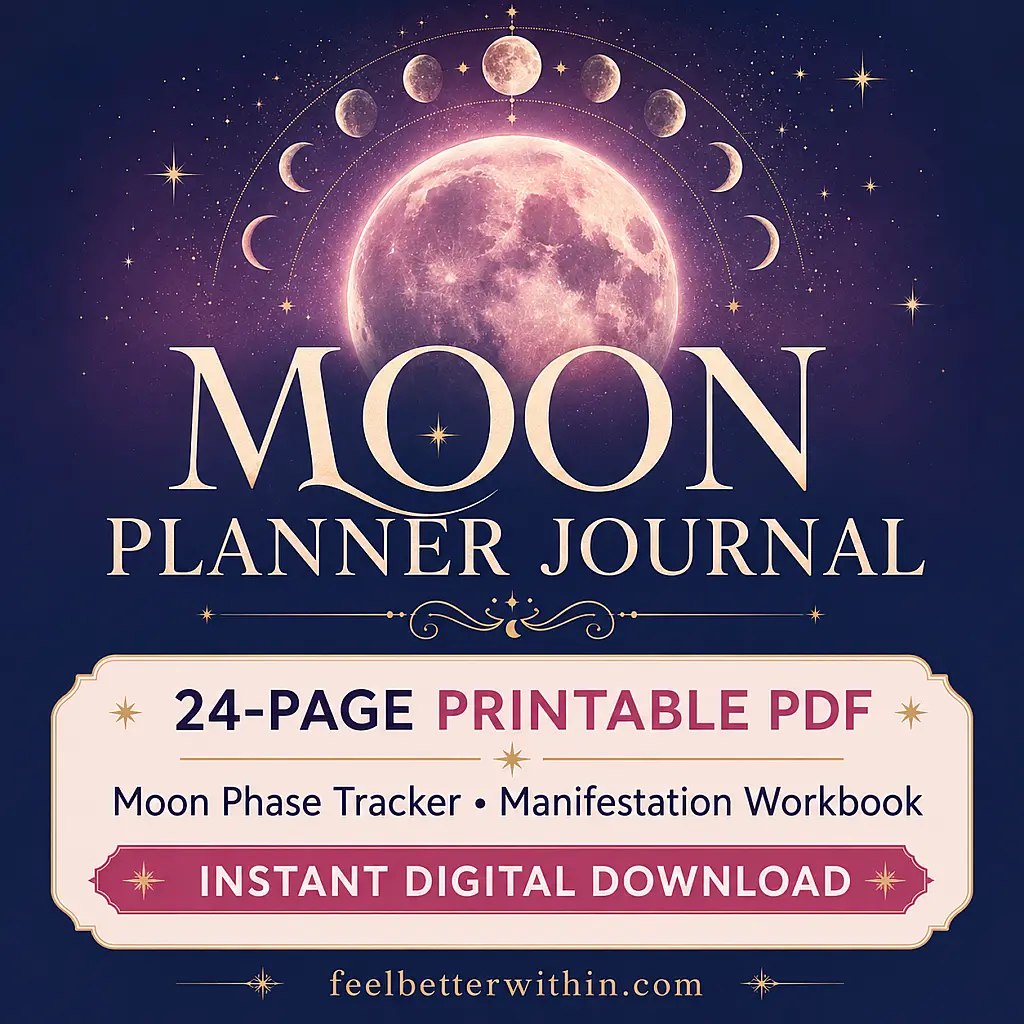
If lunar cycles hold spiritual or symbolic meaning for you, the Moon Planner Journal can be used to record intentions, emotions, self-care practices and personal observations. Patterns in a journal are starting points for reflection rather than proof that a lunar phase caused a particular feeling or event.

Crystal and chakra reflection
For readers who use crystals or chakra frameworks symbolically, the Crystal Journal can help organise a collection and record rituals, intentions and personal reflections. Any sense of grounding or healing should be presented as an individual or spiritual interpretation, not a guaranteed effect.

Cite or share this page
Want to reference this guide? Please link to the canonical page rather than copying the article.