
If you want one useful all-round starting point, choose The Empath’s Survival Guide. It directly addresses the empath identity while combining boundaries, grounding and spiritual interpretation. Choose The Highly Sensitive Person for a psychological lens, Set Boundaries, Find Peace for communication skills, The Untethered Soul for contemplative practice, or Self-Care for Empaths for manageable daily routines.
Here, empath describes a personal or spiritual way of understanding strong sensitivity to other people and environments; it is not a clinical diagnosis or proof that emotions literally pass between people. Experiences associated with the label can also involve close attention to tone and body language, compassion, conflict, noise, tiredness or stress. Keeping those ordinary factors in view makes the books easier to use without dismissing their spiritual meaning.
Each of these five reads can be transformative in a practical sense if it helps you make a specific change. The aim is not to collect more labels, but to understand a recurring difficulty and try a response that supports your wellbeing.
Choose according to the change you need
This is an editorial shortlist rather than an objective ranking. The five titles serve different purposes, avoiding a list in which every book repeats the same advice:
- A broad empath framework: The Empath’s Survival Guide
- An account of sensitivity and overstimulation: The Highly Sensitive Person
- Clearer limits in relationships: Set Boundaries, Find Peace
- A spiritual approach to thoughts and awareness: The Untethered Soul
- Small, repeatable care practices: Self-Care for Empaths
Before choosing, name the situation you most want to change. Is it exhaustion after social contact, sensory overload, guilt when saying no, persistent overthinking or a lack of restorative routines? A precise question will help you find the most relevant book.
For a practical companion on communicating limits, see Empath Boundaries: How to Protect Your Peace Without Feeling Guilty.
Compare the five approaches
Use the following panel for orientation, then read the fuller descriptions below before deciding. Its categories and star scores are editorial shorthand, not research measures or universal verdicts.
| Book | Best For | Spiritual | Practical | Beginner |
|---|---|---|---|---|
| The Empath’s Survival Guide | Overall best empath book | ⭐⭐⭐⭐☆ | ⭐⭐⭐⭐⭐ | ✅ |
| The Highly Sensitive Person | Understanding sensitivity | ⭐⭐☆☆☆ | ⭐⭐⭐⭐⭐ | ✅ |
| Set Boundaries, Find Peace | Healthy boundaries | ⭐☆☆☆☆ | ⭐⭐⭐⭐⭐ | ✅ |
| The Untethered Soul | Spiritual growth | ⭐⭐⭐⭐⭐ | ⭐⭐⭐⭐☆ | Intermediate |
| Self-Care for Empaths | Daily emotional wellness | ⭐⭐⭐☆☆ | ⭐⭐⭐⭐⭐ | ✅ |
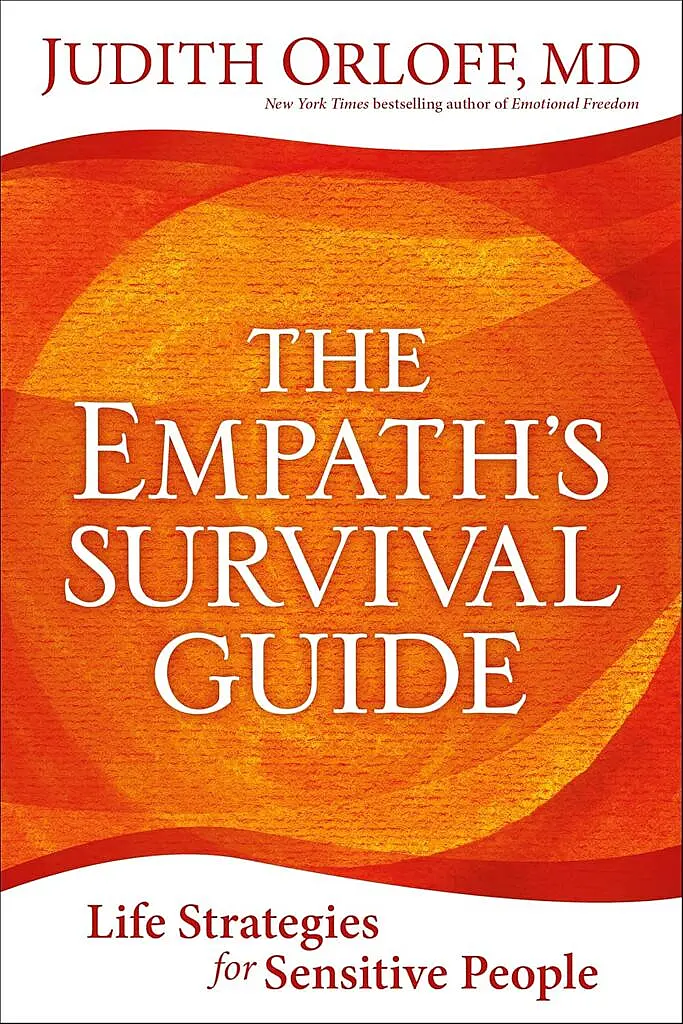
1. The Empath’s Survival Guide by Judith Orloff
Best suited to: Readers who identify with the empath label and want one broad introduction to overload, boundaries and recovery.
Judith Orloff’s The Empath’s Survival Guide is the most direct match for that need. It moves between everyday coping strategies and spiritual interpretations, making it more wide-ranging than a book devoted solely to sensitivity or communication.
A broad framework for emotional overload
The book’s practical value lies in breaking a difficult interaction into stages: noticing strain, responding while it is happening and recovering afterwards. That creates room for several kinds of action, including taking a pause, limiting the length of a conversation, grounding attention in the present and allowing time to decompress.
This approach does not require becoming less compassionate. Instead, it asks whether compassion has become confused with unlimited availability. That distinction is especially useful for readers who routinely stay in conversations long after they have reached their limit.
Use its energy language carefully
Some of the book’s language invites a spiritual reading. Terms such as “energy vampire” can be treated as shorthand for a recurring dynamic that leaves you tense or depleted, rather than as proof that someone literally removed energy from you. Describing the behaviour is usually more useful than assigning the person a fixed label.
To apply the material, keep a brief record of one demanding situation:
- Note the setting, people involved and practical conditions without assuming a cause.
- Identify the first sign that you needed a pause or limit.
- Choose one response, such as shortening the visit or taking quiet time afterwards.
- Review what changed rather than judging yourself for having the reaction.
The main limitation is also clear: readers who want a strictly psychological account may find the spiritual terminology too broad. It is most useful when you feel free to keep the concrete strategies and interpret the spiritual material according to your own beliefs.
For more direct help with limits after reading, continue with Empath Boundaries: How to Protect Your Peace Without Feeling Guilty.
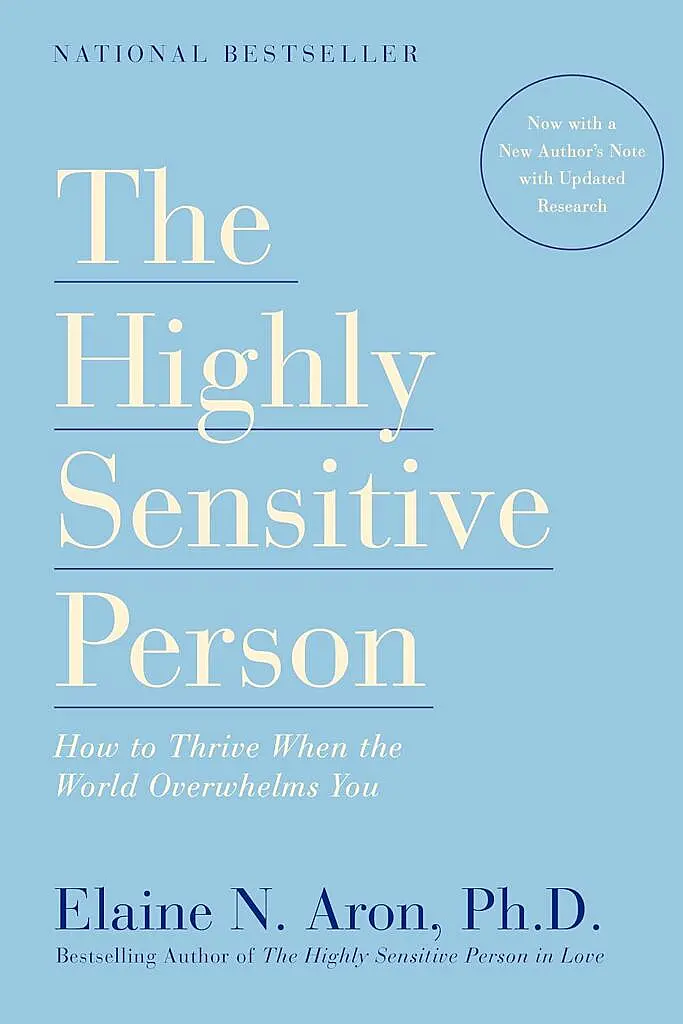
2. The Highly Sensitive Person by Elaine Aron
Best suited to: Readers who want to examine overstimulation and sensitivity without relying primarily on spiritual explanations.
Unlike books for empaths that focus on energy, The Highly Sensitive Person centres on the book’s psychological framework of high sensitivity. It asks how someone responds to stimulation, emotional intensity and demanding environments rather than assuming another person’s feelings have been absorbed.
Sensitivity without forcing an empath label
Empath and highly sensitive person need not be treated as interchangeable identities. Someone may relate to one description, both or neither. The useful question is whether the framework helps explain a repeatable pattern and suggests a reasonable adjustment.
For example, feeling depleted at a crowded gathering could involve noise, constant conversation, lack of breaks, social tension or poor sleep. Looking at those conditions gives you more options than attributing the entire experience to another person.
Observe conditions before drawing conclusions
For one week, record three details after a demanding setting:
- Conditions: noise, lighting, time pressure, conflict or lack of rest.
- Response: tension, distraction, irritability or a need for solitude.
- Helpful adjustment: a shorter visit, a quieter seat, preparation or recovery time.
This is an observation exercise, not a test. Its purpose is to identify useful patterns rather than prove that a particular identity explains every reaction.
The trade-off is that readers seeking mystical or intuitive guidance may find this approach less spiritually resonant. That difference is precisely why it complements the other choices rather than duplicating them.
For a companion discussion, Physical Empath Traits: 17 Powerful Signs You Feel Affected by Other People’s Energy describes bodily experiences in empath language. Treat such descriptions as reflection prompts, not evidence that another person caused a physical sensation; noise, heat, hunger, tiredness and anxiety can also affect how a situation feels.
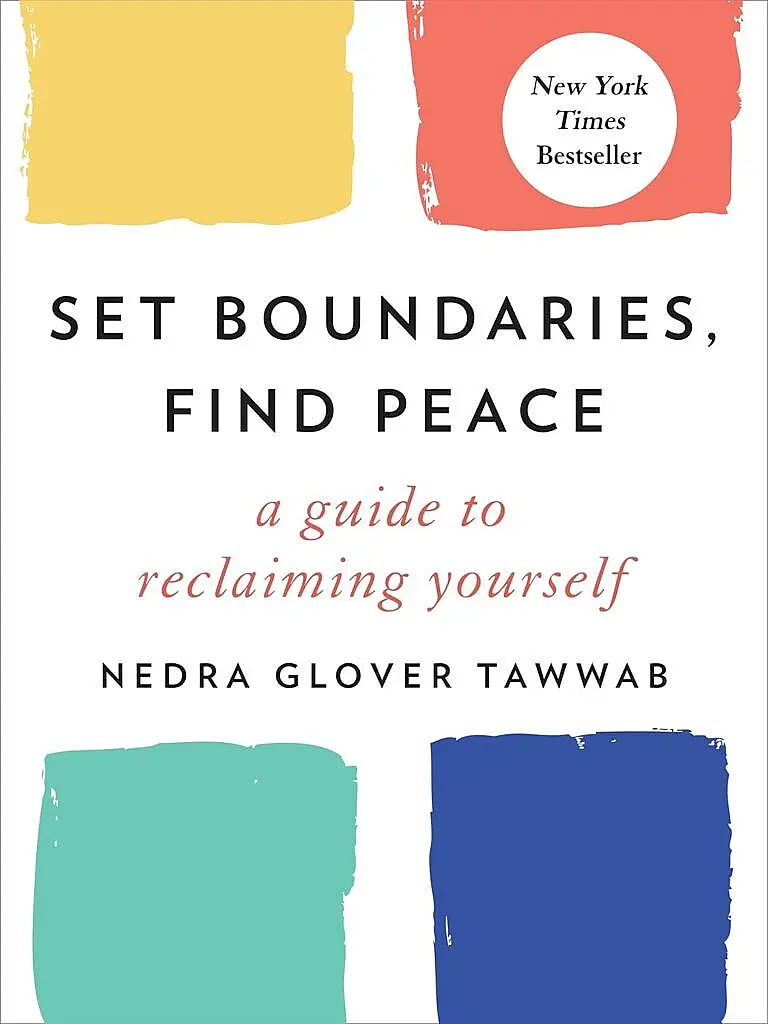
3. Set Boundaries, Find Peace by Nedra Glover Tawwab
Best suited to: Anyone whose main difficulty is saying no, limiting emotional labour or expressing a need without a lengthy apology.
Empathy does not require constant access to your time and attention. Set Boundaries, Find Peace turns that principle into communication: identifying a limit, stating it clearly and responding consistently when it is tested.
Boundaries become specific behaviour
A vague intention to protect your peace is difficult to act on. A boundary becomes usable when it names what you will do:
- Time: how long you can talk or when you are available.
- Topic: what you are not prepared to discuss.
- Responsibility: what help you can offer and what remains the other person’s decision.
This makes the book relevant even if you do not use spiritual language. Its subject is observable behaviour within families, friendships and workplaces.
A boundary script to practise
Consider this clearly hypothetical situation: a friend calls late at night and begins recounting a crisis when you need to sleep. Depending on the relationship, you might say:
- “I can listen for ten minutes, but I can’t stay on the phone longer tonight.”
- “I’m not able to talk this evening. I can check in tomorrow afternoon.”
- “I can help you think through the options, but I can’t make this decision for you.”
Each version combines care with a concrete limit. It does not control how the other person reacts, and it does not require proving that your need is important enough.
For empaths who constantly worry about disappointing other people, a boundary can initially feel like rejection. The book is useful because it shifts attention from preventing every disappointment to communicating honestly and respectfully.
Its direct style may feel blunt in relationships shaped by workplace authority, caring duties or long-established family expectations. Adapt the wording to the context without making the limit so vague that it disappears.
For guidance written specifically around the empath identity, follow with Empath Boundaries: How to Protect Your Peace Without Feeling Guilty.
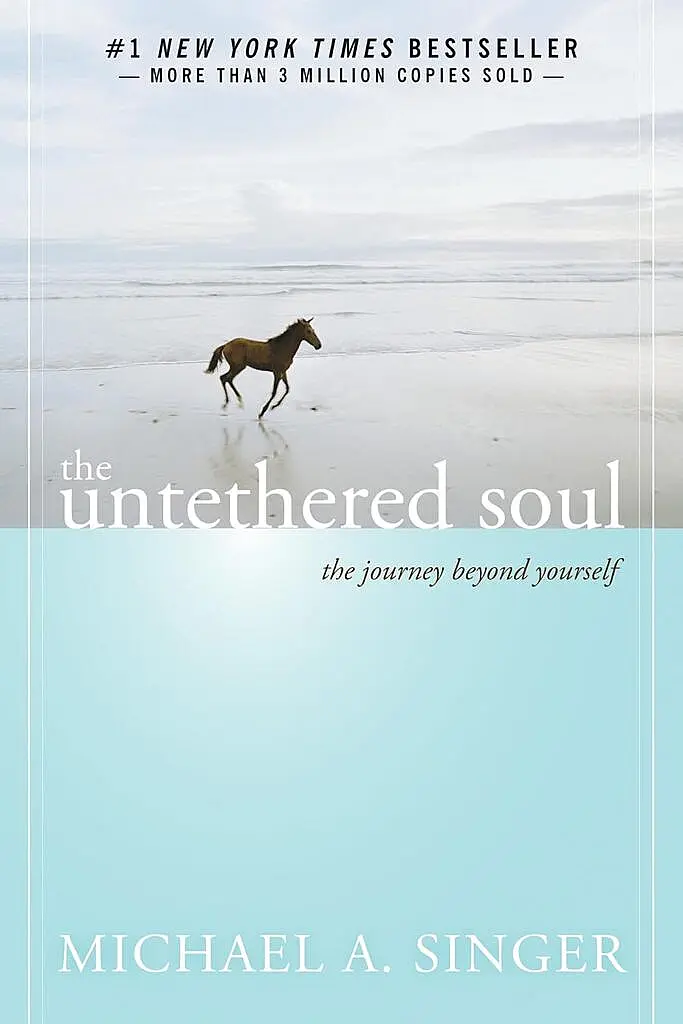
4. The Untethered Soul by Michael A. Singer
Best suited to: Spiritually inclined readers who become caught in repetitive thoughts after emotionally intense situations.
Many books for empaths focus on protecting themselves from difficult environments. Michael A. Singer turns attention inward and asks readers to notice the thoughts, stories and reactions that continue after an event has ended.
The book presents awareness as capable of observing mental activity without being identical to it. This is a contemplative teaching and spiritual interpretation, not a settled explanation of consciousness that every reader must accept.
Move from reaction to observation
A simple way to explore the book’s central idea is to pause after a charged interaction and separate four elements:
- The event: what was actually said or done.
- The thought: the interpretation your mind added.
- The feeling: the emotion present now.
- The next action: a boundary, conversation, pause or decision.
The point is not to suppress emotion or remain passive. It is to create enough space to choose a response instead of treating the first thought as unquestionable truth.
Keep contemplation connected to ordinary life
This approach can be helpful for rumination, but it cannot confirm what another person thinks or prove that a strong feeling is intuitive knowledge. Observation still needs to be paired with direct communication, evidence and practical boundaries.
For empaths who often become emotionally entangled with other people’s experiences, separating an event from the story about it can offer useful perspective. The concepts may nevertheless feel abstract if you prefer worksheets, scripts or a step-by-step programme.
For an explicitly symbolic perspective on difficult feelings, Anxiety Spiritual Meaning: What Your Emotions May Be Trying to Tell You offers one interpretation. A spiritual meaning is optional; it should not be treated as proof of what anxiety is, what caused it or what another person is experiencing.
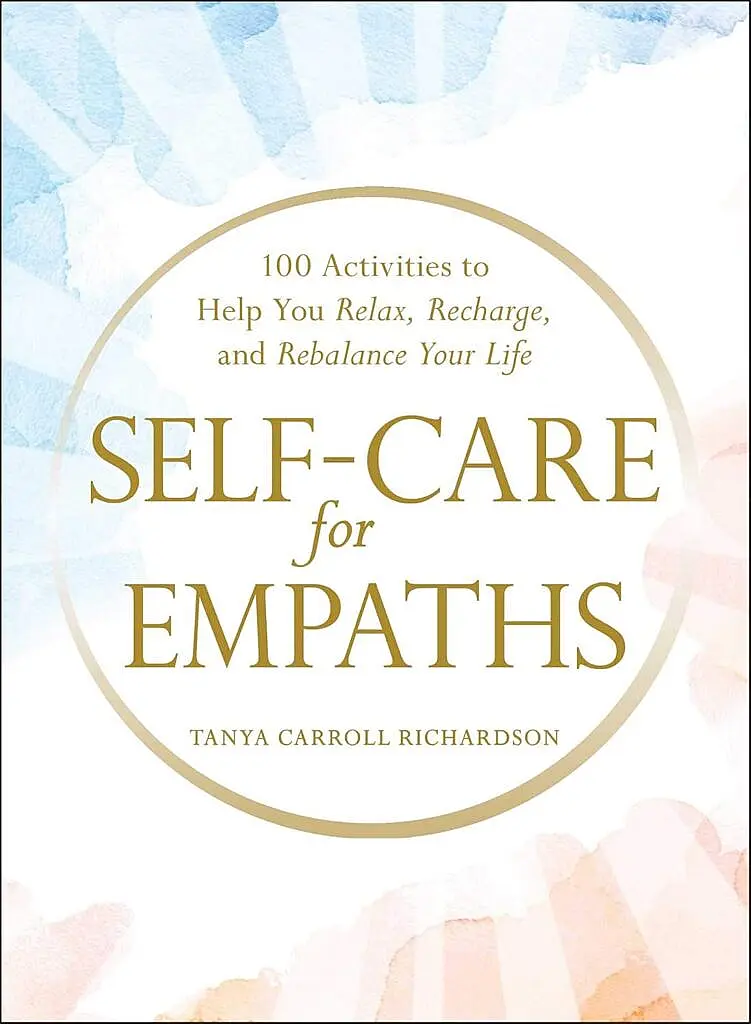
5. Self-Care for Empaths by Tanya Carroll Richardson
Best suited to: Readers who understand their patterns but need small practices they can repeat during ordinary days.
Self-Care for Empaths focuses less on finding one dramatic insight and more on making care easier to remember. This is useful when exhaustion tends to be noticed only after a demanding day, visit or conversation has finished.
Build routines around predictable moments
A practical routine can be organised around three points:
- Before: check your available time and decide any limit in advance.
- During: pause briefly to notice tension, distraction or the urge to agree automatically.
- After: choose a realistic reset, such as quiet, food, movement, journalling or reduced stimulation.
This specificity matters. “Recharge” is vague; ten quiet minutes after arriving home is something you can put into a day.
Run a seven-day self-care experiment
- Choose one situation that regularly leaves you strained.
- Select one small action for before, during or after it.
- Repeat the action when the situation occurs for one week.
- Record what was realistic, what helped and what created extra pressure.
- Keep, adapt or drop the practice according to your actual experience.
If you already use journalling, the Moon Planner Journal is one option for recording patterns and intentions; an ordinary notebook works as well.
The book’s accessibility is also its limitation. Readers seeking a detailed psychological theory may find it lighter than the other selections. Its value lies in helping turn broad self-care advice into repeatable action.
Turn one chapter into one change
Reading becomes more useful when it is connected to a real situation. Use this simple process with whichever title you choose:
- Name one recurring problem without turning it into a judgement about your personality.
- Choose the book whose main approach matches that problem.
- After each reading session, write one idea in your own words.
- Test one reasonable action rather than attempting a complete life overhaul.
- Review the result: did it create clearer communication, less avoidable strain or more realistic recovery?
If you remain unsure, start with The Empath’s Survival Guide for the broadest overview. Move to Set Boundaries, Find Peace if knowing what you feel is easier than communicating what you need.

Cite or share this page
Want to reference this guide? Please link to the canonical page rather than copying the article.