
Hey friend, take a breath. If life has been loud lately and you feel like you’re carrying other people’s moods home in your pockets, you’re not broken.
You’re sensitive, and that’s a gift.
You just need a setup that helps your nervous system feel safe and steady.
I’m sharing the simplest things that actually work for me, my family and closest friends, no over-complicated routines, just everyday supports you can put to work fast.
Think of this as your starter kit. We’ll look at eight practical categories, sound, light, air, grounding, sleep, scent, journaling, and space-clearing and I’ll show you how to choose well so you don’t waste money.
Take what helps, ignore the rest, and build at your pace. When you’re ready to browse, keep it simple and trust your gut as you explore empath tools on Amazon.
What Makes a Good Empath Tool (So You Actually Use It)
Here’s my quick criteria: it should lower stimulation, help you sense what’s yours (and not yours), and be effortless enough to use daily.
If setup is a chore, it will collect dust. I also want materials that are kind to your skin and lungs, controls you can work without thinking, and a form factor that fits your life, commute bag, desk drawer, nightstand.
As you compare listings, scan for honest photos, consistent reviews, and clear specs (room size for purifiers, tank size for diffusers, battery life for headphones).
If there are ongoing costs, filters, oils, replacement bulbs, make sure they’re easy to find and not a fortune. And don’t overbuy; choose one or two categories that target your biggest pain point and test for a week.
When you’re browsing empath tools on Amazon, trust patterns in reviews more than any single glowing (or rant) comment.
1. Noise-Canceling Headphones (Create Instant Space)

Okay, first lifeline: sound boundaries. Noise-canceling headphones give you a portable bubble so your brain isn’t processing every voice, fan, and footstep.
You don’t need loud music soft instrumentals, brown noise, or even silence with ANC on can settle your system. If you’re out and about, use transparency mode so you can hear what matters without drowning in the rest.
When choosing, pay attention to fit and feel. If the clamp force is too tight or the cups get sweaty, you won’t wear them.
Battery life matters if you’re commuting or on calls all day, and multi-point pairing is clutch if you bounce between phone and laptop.
Keep a tiny ritual: 10 minutes with eyes closed before a meeting, three songs between tasks, or a quick reset after social time.
It’s low effort “nervous system regulation” in your pocket and a great first pick from empath tools on Amazon.
2. Weighted Blanket (Steady the Nervous System)

A weighted blanket is like handing your body a calm, “you’re safe” message.
Start with roughly 8–12% of your body weight (err light if unsure), and pick fabric that matches your climate, cooling cotton or bamboo if you run warm, plush if you love cozy.
Removable covers make laundry painless, and evenly stitched pockets stop the weight from pooling in weird spots.
Use it when your mind won’t settle, or as an evening wind-down while you read. If a full blanket feels too much, try a lighter lap throw while you work, it’s surprisingly grounding.
Combine with warm, dim light and a gentle breath pattern (inhale 4, hold 4, exhale 6) for a quick mood shift. If sleep is your sticking point, pair this with these tips: 7 Best Empath Sleep Aids.
Take your time comparing reviews, especially comments about heat and stitching, when you explore empath tools on Amazon.
3. Essential Oil Diffuser + Calming Blends (Cue Your System to Relax)

Scent is a soft, reliable way to tell your body “we’re shifting gears now.” An ultrasonic diffuser is quiet, simple, and doubles as a tiny humidifier.
Look for a BPA-free water tank, auto shut-off, and timer options so you can run short sessions.
Smaller tanks are perfect for desks and nightstands; larger ones suit living rooms. If you’re scent-sensitive, keep it dilute and run it in short bursts with a window cracked.
Keep blends easy: lavender + chamomile to soften, cedar wood + frankincense to ground, or bergamot + a hint of ylang-ylang to lift without buzzing your nerves.
Rinse the tank often and do a weekly wipe with diluted vinegar so it doesn’t get funky. If scent is too much sometimes, try hydrosols or a light room spray instead.
Make it part of a “transition ritual” when ending your workday. You’ll see tons of options while skimming empath tools on Amazon, favor clear instructions, quiet operation notes, and replaceable parts.
4. Guided Journal (Sort What’s Yours From What You Picked Up)

You don’t need pages of prose, five honest minutes is enough. A guided journal keeps it simple on the days your brain doesn’t want to think.
Choose one that lays flat, with smooth, non-bleed paper. Prompts that really help: “What’s mine vs. what I absorbed?” “Where did I say yes when I meant no?” “One boundary I honored today.”
Keep it micro: morning intention (one line), midday check-in (what emotion did I pick up?), evening release (one sentence you’re putting down).
If you get stuck, use the same three prompts for a week to build a rhythm. Journaling isn’t about being “good”, it’s about clearing static so your own inner voice can be heard.
Pair this with our Empath Grounding Rituals if you want a few anchor practices.
If journaling tools feel right, you’ll find plenty of sizes and layouts when browsing empath tools on Amazon; choose the one you’ll actually reach for.
5. Warm Ambient Lamp or Himalayan Salt Lamp (Tell Your Brain It’s Evening)

Light has a direct line to your nervous system. Blue-heavy light says “go,” warm light says “rest.”
A small dimmable table lamp or a salt lamp on your nightstand changes the room in seconds. Aim for warm bulbs (around 2200K–3000K).
For electronics, look for UL-listed cords and stable bases; for salt lamps, a steady wooden base and a secure bulb housing matter.
Make it a habit: after dinner, switch off bright overheads and let the warm glow carry the evening. Use that cue to do quiet things, stretching, reading, journaling.
If you work late, flip your desk lamp to warm mode to ease your brain into “wind-down” without a crash. It’s a tiny change with a big effect on sleep and mood.
When you compare empath tools on Amazon, scan reviews for dimmer quality and flicker-free performance; replaceable bulbs are a plus for long-term use.
6. Grounding (Earthing) Mat (Steady Focus on Screen-Heavy Days)
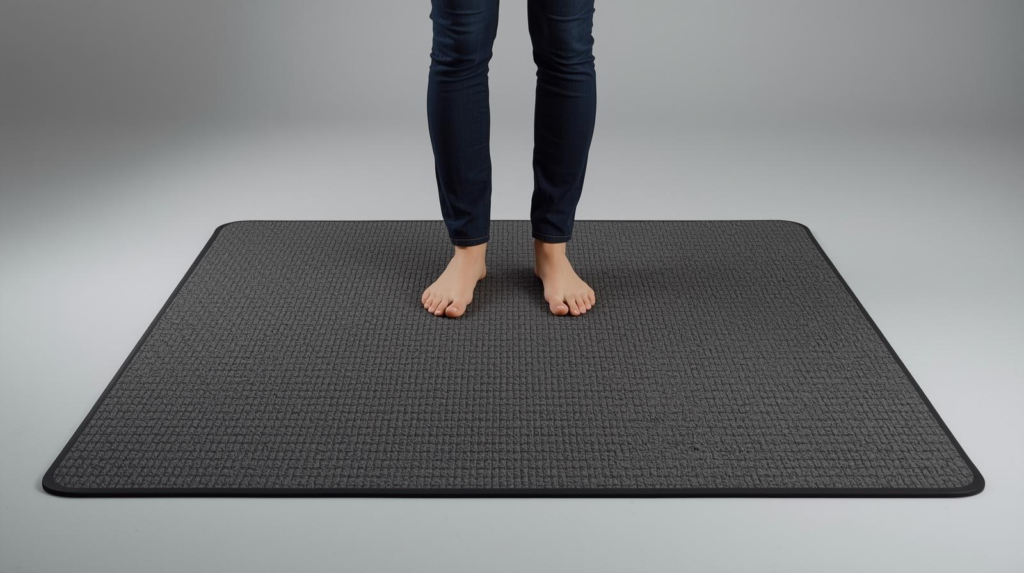
If you spend hours at a computer, a grounding mat can feel like a steadying anchor.
It connects to the ground port of a wall outlet (not live power) and may help discharge static and settle that buzzy, untethered feeling some of us get after too much screen time.
Start with short sessions and pay attention to how your body responds, calm is the goal, not intensity.
Choose a mat with clear setup instructions, a quality cord, and durable conductive material. An outlet tester is handy to confirm your home outlets are properly grounded.
Place it under your bare feet while you work, or try a smaller mat for your wrists. You can also use it during five-minute meditations when you need to reset between tasks.
If grounding tools for empaths speak to you, you’ll find a range of sizes and finishes among empath tools on Amazon, prioritize safety details and straightforward user guides.
7. True HEPA Air Purifier (Clean Air, Quieter Mind)
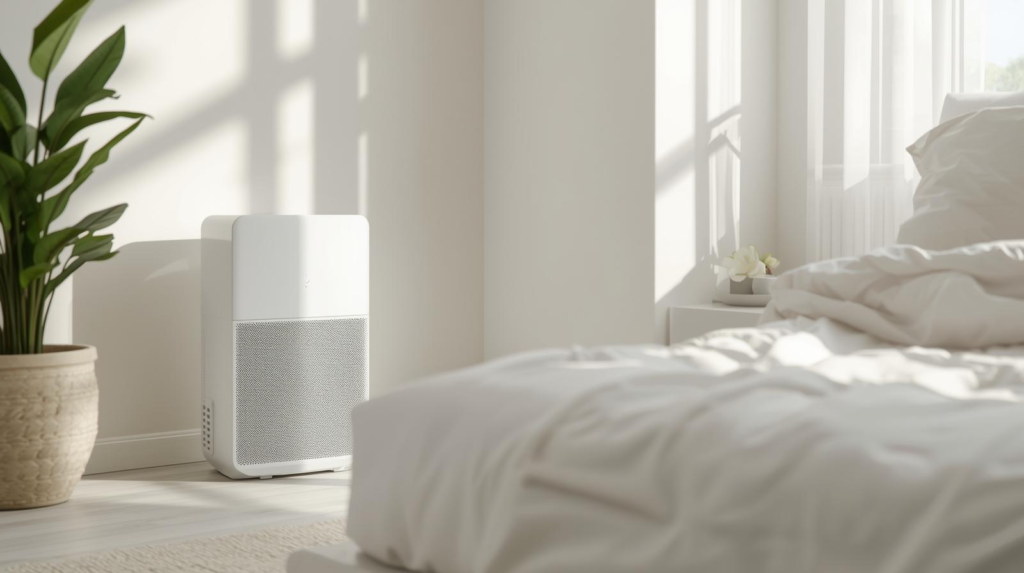
Cleaner air means fewer irritants quietly stressing your system. A true HEPA purifier (not “HEPA-like”) captures fine particles like pollen, dust, and pet dander. A carbon layer helps with odors and some VOCs.
Match the purifier’s CADR and rated room size to your actual space, and check noise levels, sleep mode should be a soft hum you forget about.
Place it where you spend the most time (often the bedroom). Let it run on low continuously for consistent results, and set reminders for filter maintenance so performance doesn’t slide.
If you have allergies or live in a city, you’ll likely feel the difference within a few days, deeper sleep, less congestion, calmer mornings.
Energy Star models save on power if you run them 24/7. As you compare empath tools on Amazon, look for transparent filter costs and reviews that mention real-world noise and room coverage.
8. Smokeless Energy Clearing Spray

Sometimes a room just feels heavy, and you want to reset it without smoke. A gentle, sage-free spray with clear ingredients is perfect for apartments, offices, or shared spaces.
Look for a water or hydrosol base, a bit of alcohol or witch hazel for dispersion, and essential oils that feel grounding and clean, think cedar, lavender, citrus. A fine mist is key so you’re refreshing the space, not drenching it.
Use it at transitions: after guests leave, when you shut the laptop, or anytime you notice you’re carrying someone else’s mood.
A few spritzes in corners and doorways, then one in the center of the room while you set a simple intention: “I release what’s not mine and welcome calm.” Follow with 60 seconds of slow breathing.
Patch-test if you’re sensitive, and avoid delicate fabrics or pet bedding.
If respectful cleansing is on your list, explore empath tools on Amazon with full ingredient lists and reviews that highlight a light, natural scent rather than strong perfume.
Put It Together | A Tiny, Realistic Daily Flow
Let’s make this easy.
Morning: two minutes with the diffuser and one line in your journal. If the house is loud, pop on headphones for a track or two while you set your intention.
Midday: three-minute reset, breathe, quick journal check-in, maybe feet on the grounding mat.
Evening: switch to warm lamps, turn the purifier to sleep mode in the bedroom, spritz the doorway, and curl up under the weighted blanket for a chapter of something gentle. Keep it scrappy if you need to, consistency is what moves the needle.
On packed days, scale down: travel-size spray, earbuds with soft noise, one journal sentence. If something feels like a chore, swap it out.
You’re building a custom kit for your nervous system, not trying to win at self-care. If you want more structure, weave in these simple practices:
When you feel ready to add or upgrade, take five minutes to compare empath tools on Amazon and choose the next easiest win.
Key Takeaways (Pin These in Your Mind)
- Start with one or two categories that hit your biggest pain point: noise, sleep, air, or transitions.
- Comfort and ease beat fancy. If it’s simple to use, you’ll actually use it.
- Match specs to your reality: room size, battery needs, fabric and climate, filter costs.
- Build tiny rituals around transitions, before meetings, after work, pre-sleep.
- Track how you feel for seven days. Keep what helps; let go of what doesn’t.
Ready When You Are
You don’t need to overhaul your life, one small support can change your whole day. Pick the tool that answers today’s biggest stressors and try it for a week. If you want a calm, step-by-step path to pair with your setup, explore these next:
You’ve got this, and I’ve got you, take what helps, leave the rest, and keep refining your mix of empath tools on Amazon until your days feel kinder and your nights feel soft.
Love and Light,
Donna & Iain
Medical Disclaimer: The information provided in this post is not intended to diagnose, treat, or cure any medical condition or disease. Always consult with a qualified healthcare provider before starting any new health or wellness practice, including grounding rituals and breath-work. If you experience any discomfort or adverse effects during or after these practices, stop immediately and seek medical attention.The author and publisher of this post are not responsible for any adverse effects or consequences resulting from the use of any of the suggestions or recommendations contained in this post. The information provided is for educational and general informational purposes only.
feelbetterwithin.com participates in the Amazon Services LLC Associates Program, an affiliate advertising program designed to provide a means for sites to earn advertising fees by advertising and linking to Amazon.com and other affiliate programs.