Healing through breath is the practice of using intentional breathing techniques to support physical relaxation, emotional balance, and mental clarity. Slow, controlled breathing has been shown to help regulate the body’s stress response, while many spiritual traditions also view the breath as a bridge between the mind, body, and spirit.
Whether your goal is to reduce anxiety, feel more grounded, or deepen your spiritual practice, mindful breathing offers a simple yet powerful way to reconnect with the present moment.
Breathing is something we do automatically, yet few of us pay attention to how it changes when we’re stressed, overwhelmed, or emotionally drained. Our breath often becomes shallow and rapid without us realizing it.
By learning to slow down and breathe with intention, you can create moments of calm, increase self-awareness, and cultivate a greater sense of inner peace.
For many people, this daily practice becomes not just a relaxation technique, but a meaningful part of their healing journey.
What Does Healing Through Breath Mean?
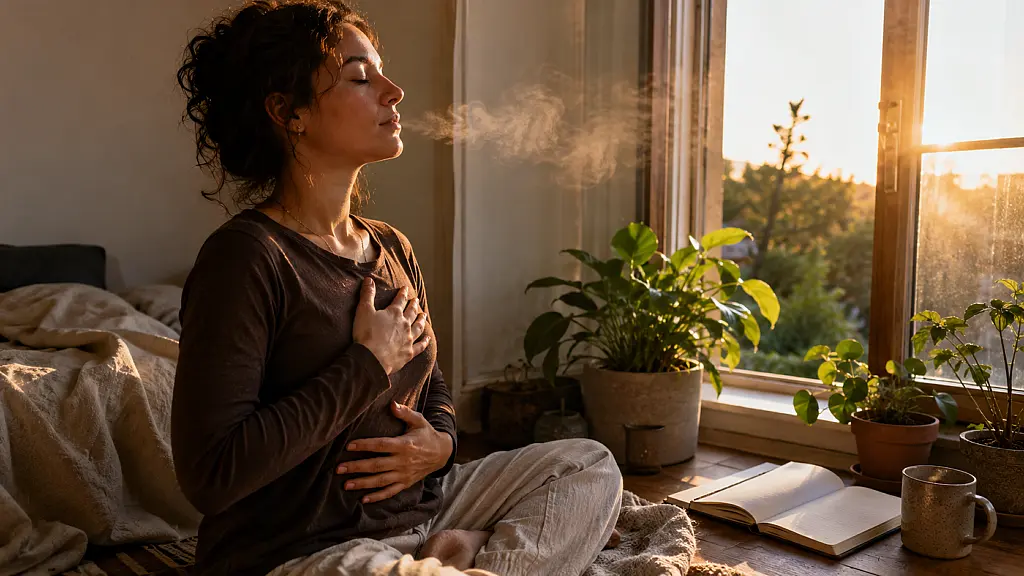
Healing through breath isn’t about learning a special way to breathe.
It’s about becoming aware of something your body has been doing all along.
Every breath sends signals throughout your body.
Fast, shallow breathing often accompanies stress, urgency, or anxiety.
Slow, steady breathing encourages your body to shift towards a calmer, more balanced state.
This is why intentional breathing has become part of many wellbeing practices around the world, including meditation, yoga, mindfulness, and relaxation techniques.
Rather than trying to force your mind to become quiet, mindful breathing gives your attention a simple place to rest.
One breath.
Then another.
Gradually, the noise begins to soften.
Healing through breath also creates space between your thoughts and your reactions.
Instead of immediately responding to stress, you learn to pause.
That pause may only last a few seconds.
Yet those few seconds often become the difference between reacting automatically and responding with intention.
If you’re beginning your mindfulness journey, our guide to Daily Spiritual Meditation Practices for Inner Peace explores how breathing and meditation naturally complement one another.
One of the biggest misconceptions about breathwork is that it needs to be complicated.
It doesn’t.
Some of the most effective breathing practices involve nothing more than slowing your inhale, gently extending your exhale, and paying attention to the present moment.
Like meditation, healing through breath isn’t about perfection.
It’s about returning to yourself—one breath at a time.
According to the American Psychological Association (APA), mindfulness and meditation practices may help support stress management and emotional wellbeing when practiced regularly. Mindful breathing is often used as one of the simplest ways to cultivate that awareness.
Why Healing Through Breath Works
Your breath is one of the few body functions that happens automatically but can also be controlled intentionally.
That makes it unique.
When life feels busy, stressful, or emotionally overwhelming, our breathing often becomes quicker without us even noticing.
By consciously slowing your breathing, you’re sending gentle signals throughout your body that it’s safe to relax.
Over time, these small moments of awareness can help you:
- Feel calmer during stressful situations.
- Become more aware of emotional triggers.
- Respond rather than react.
- Improve your sense of focus.
- Create healthy moments of pause throughout your day.
Healing doesn’t happen because breathing is magical.
It happens because consistent, mindful breathing encourages you to slow down, reconnect with yourself, and support your body’s natural relaxation response.
Why Your Breath Matters More Than You Think
Most of us breathe around 20,000 times every day.
Yet very few of those breaths receive our full attention.
Breathing is automatic.
Which means it’s easy to overlook just how closely it’s connected to the way we feel.
When your brain senses stress, your body prepares for action.
Your breathing becomes quicker.
Your heart rate increases.
Your muscles tense.
This response can be incredibly helpful in genuinely dangerous situations.
The challenge is that modern life often triggers the same response through work deadlines, financial pressure, difficult conversations, information overload, and everyday worries.
Your body reacts as though there’s an emergency—even when you’re simply answering emails or sitting in traffic.
Slow, intentional breathing acts as a gentle reminder that you’re safe.
Research into breathing exercises and mindfulness continues to grow. According to the National Center for Complementary and Integrative Health (NCCIH), meditation and mindfulness practices may help some people manage stress, improve emotional wellbeing, and support overall quality of life when practiced regularly. While everyone’s experience is different, these findings help explain why mindful breathing has become part of many evidence-informed wellbeing programs.
It encourages your nervous system to shift away from constant alertness and towards a more relaxed state.
You can’t always control what happens around you.
But you can influence how your body responds.
That’s one of the reasons mindful breathing has become such a valuable daily practice for so many people.
If emotional overwhelm is something you experience regularly, you may also find our guides Micro Breathwork Practices and Why Do I Feel Drained After Being Around Certain People? helpful as you learn simple ways to restore a sense of calm throughout the day.
Signs Your Body May Be Asking You to Slow Down
Stress doesn’t always announce itself with obvious warning signs.
Sometimes it builds quietly over days, weeks, or even months.
You may assume you’re simply tired or busy, when in reality your mind and body are asking for a chance to rest.
One of the remarkable things about mindful breathing is that it encourages you to notice these signals before they become overwhelming.
Your body is constantly communicating with you.
The question is whether you’ve had enough quiet moments to hear it.
Here are some common signs that you may benefit from healing through breath.
- You frequently feel overwhelmed, even by small tasks.
- Your breathing becomes shallow during stressful moments.
- You find it difficult to relax, even when you have free time.
- Racing thoughts make it hard to fall asleep.
- You often feel emotionally exhausted after busy days.
- You notice tension in your neck, shoulders, or jaw.
- You struggle to stay focused on one task at a time.
- You feel like you’re constantly rushing from one thing to the next.
- You rarely take a full, slow breath throughout the day.
None of these experiences automatically mean something is wrong.
They’re common responses to modern life.
The good news is that even a few minutes of intentional breathing can help interrupt the cycle of constant busyness and create moments of calm throughout your day.
If emotional exhaustion is something you experience regularly, our guide to How to Know If You’re Absorbing Someone Else’s Emotions explores why highly sensitive people sometimes carry emotional stress that doesn’t belong to them. If you often find yourself feeling emotionally overwhelmed in certain relationships, you may also find How Do Empaths Protect Themselves From Narcissists? helpful, as it shares practical ways to build healthy boundaries while protecting your emotional wellbeing.
Your Breath Reflects How You Feel
Have you ever noticed yourself holding your breath while reading an email?
Or taking short, quick breaths during a stressful conversation?
Most people do.
They simply don’t notice it.
Your breathing naturally mirrors what’s happening inside your mind.
When you feel calm, your breathing often becomes slower and deeper.
When you’re anxious, worried, or overwhelmed, your breaths usually become shorter and faster.
This isn’t a personal weakness.
It’s part of the body’s natural stress response.
The encouraging news is that this relationship works both ways.
Just as your emotions influence your breathing, intentionally slowing your breathing can help create a greater sense of calm.
That’s why many mindfulness teachers encourage people to begin with the breath.
It’s always available.
It requires no equipment.
And it gently brings your attention back to the present moment.
Healing doesn’t always begin with changing your thoughts.
Sometimes it begins with changing the rhythm of your next breath.
Why Awareness Comes Before Change
Many people believe they need to “fix” themselves before they can feel better.
Mindful breathing teaches something different.
Before you change anything, you simply notice.
Notice how you’re breathing.
Notice where you’re holding tension.
Notice how your body feels.
Notice your thoughts without immediately reacting to them.
This gentle awareness is often the first step towards lasting change.
You can’t calm what you never notice.
And you can’t release tension that you’re unaware you’re carrying.
That’s one of the greatest gifts of healing through breath.
It doesn’t ask you to become someone different.
It simply helps you become more present with who you already are.
What Happens Inside Your Body During Calm Breathing?
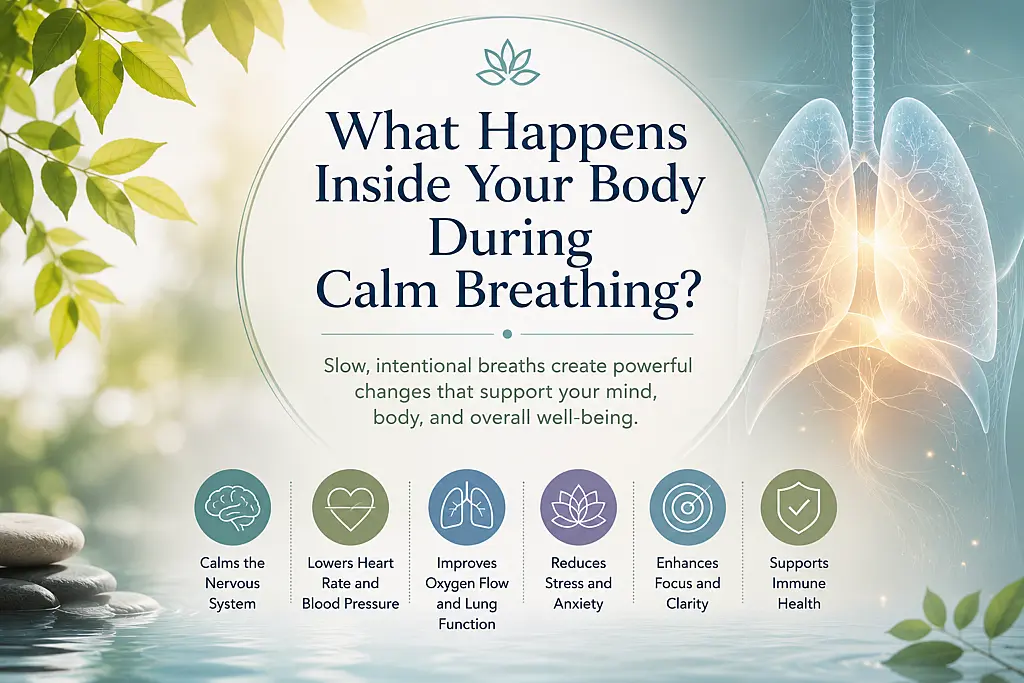
Every breath you take sends information throughout your body.
When you’re feeling stressed, anxious, or overwhelmed, your breathing often becomes quicker and shallower without you even noticing.
This is part of your body’s natural stress response.
Your heart beats faster.
Your muscles become tense.
Your mind becomes more alert.
In genuinely dangerous situations, this response is incredibly helpful.
But when everyday challenges like work deadlines, financial worries, or information overload keep your body in this heightened state for long periods, it can become mentally and physically exhausting.
Calm, intentional breathing helps interrupt that cycle.
As your breathing slows, your body receives gentle signals that it’s safe to begin relaxing.
Your heart rate may begin to settle.
Muscle tension can gradually ease.
Your thoughts often become clearer.
This is one of the reasons slow breathing is commonly included in mindfulness, meditation, yoga, and many evidence-informed stress management practices.
According to the National Center for Complementary and Integrative Health (NCCIH), mindfulness and meditation practices may help reduce stress and improve overall wellbeing for many people when practiced consistently.
Slow Breathing Helps You Pause Instead of React
Think about the last time you felt overwhelmed.
Perhaps someone said something upsetting.
You received unexpected news.
Or everything simply felt like too much.
Our first reaction is often automatic.
We rush to respond.
We overthink.
We become caught in a cycle of stress.
Mindful breathing creates a small but incredibly valuable pause.
It doesn’t remove the challenge.
It changes how you respond to it.
Instead of immediately reacting, you give yourself a moment to breathe.
That pause often creates enough space to make calmer, more thoughtful decisions.
Over time, those small pauses become one of the greatest benefits of developing a regular breathing practice.
Healing Begins With Awareness
Many people think healing starts with finding the perfect technique.
In reality, it often starts much earlier.
It begins with noticing.
Noticing when your shoulders feel tense.
Noticing when your breathing becomes shallow.
Noticing when your thoughts begin racing.
Noticing when your body is asking for rest instead of pushing through another busy day.
Awareness doesn’t solve every problem overnight.
But it gives you the opportunity to respond differently.
That’s one of the reasons healing through breath is such a powerful daily practice.
It gently brings your attention back to the present moment—where real change begins.
Small Changes Can Have a Lasting Impact
One slow breath won’t transform your life.
Neither will one meditation session.
Or one good night’s sleep.
Real wellbeing is usually built differently.
It’s created through small choices repeated consistently.
One mindful breath before answering the phone.
One quiet moment before opening your laptop.
One slow exhale before walking into a difficult conversation.
These moments may seem almost insignificant.
Yet over time, they begin changing the way you move through your day.
Healing through breath isn’t about finding a quick fix.
It’s about creating a habit that gently reminds your mind and body that peace is something you can return to—one breath at a time.
If you’re ready to put this into practice, the next section shares nine simple breathing techniques you can begin using today, whether you have one minute or twenty.
When to Use Healing Through Breath
You don’t have to wait until you’re feeling overwhelmed before practising mindful breathing.
In fact, many people experience the greatest benefits when it becomes part of their everyday routine.
Try using healing through breath:
- Before starting work.
- After a difficult conversation.
- Before an important meeting.
- During moments of anxiety or overwhelm.
- Before meditation.
- After exercise.
- While walking in nature.
- Before going to sleep.
- Anytime you notice your breathing becoming fast or shallow.
The more often you return to your breath, the more naturally it becomes a source of calm during challenging moments.
9 Healing Breath Practices for Everyday Life
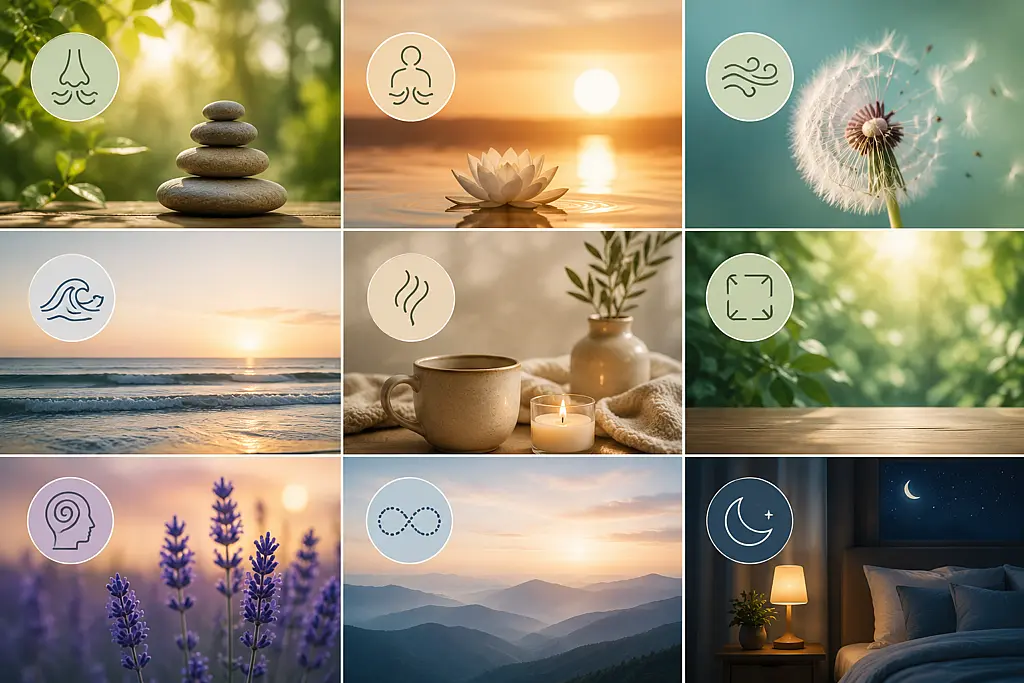
One of the most encouraging things about healing through breath is that it doesn’t require hours of your day.
Some breathing exercises take less than two minutes.
Others can become part of a morning meditation, an evening wind-down routine, or a quiet moment during a busy afternoon.
The goal isn’t to master every breathing technique.
It’s to discover one or two practices that help you feel calmer, more present, and better able to navigate everyday life.
Let’s begin with one of the simplest.
1. Natural Breath Awareness
Best for: Beginners and reducing mental overwhelm.
If you’ve never practised mindful breathing before, this is the perfect place to start.
Instead of changing your breath, simply observe it.
Notice the gentle movement of air entering your nose.
Feel your chest or abdomen rise and fall.
If your thoughts wander, gently return your attention to your breathing.
No judgement.
No pressure.
No need to “do it perfectly.”
Spend five minutes simply noticing your breath.
Sometimes awareness itself is the practice.
2. Extended Exhale Breathing
Best for: Relaxing after a stressful day.
Many people naturally breathe out more quickly than they breathe in.
This exercise gently reverses that pattern.
Try this:
- Inhale slowly through your nose for a count of four.
- Exhale gently for a count of six.
- Continue for one to three minutes.
The slightly longer exhale encourages your body to relax and can become a calming ritual before sleep or after emotionally demanding situations.
If winding down in the evening is something you’d like to improve, our Spiritual Bedtime Routine offers simple habits that pair beautifully with this practice.
3. Belly Breathing
Best for: Releasing physical tension.
Place one hand on your chest.
The other on your abdomen.
As you inhale, allow your belly to gently expand.
As you exhale, feel it soften again.
Rather than lifting your shoulders, allow the movement to come from your diaphragm.
Many people notice this feels slower, deeper, and more calming than shallow chest breathing.
4. Box Breathing
Best for: Improving focus and emotional balance.
Box breathing follows four equal steps.
- Inhale for four seconds.
- Hold for four seconds.
- Exhale for four seconds.
- Pause for four seconds.
Repeat for several rounds.
Its simple rhythm makes it an excellent practice before meetings, presentations, or moments that require concentration.
5. Morning Reset Breathing
Best for: Beginning the day with intention.
Before reaching for your phone, spend two or three minutes breathing slowly.
With each inhale, imagine welcoming a new day.
With each exhale, let go of yesterday’s worries.
This gentle habit helps create a calmer mindset before the demands of the day begin.
Many people enjoy following this with a few minutes of journaling or gratitude reflection.
6. Walking Breath Meditation
Best for: Combining movement with mindfulness.
You don’t always have to sit still to practise mindful breathing.
Take a slow walk outdoors.
Match your breathing to your footsteps.
Notice the sounds around you.
Feel the ground beneath your feet.
Allow nature to become part of your meditation.
If spending time outdoors helps you feel grounded, our guide to Daily Spiritual Meditation Practices for Inner Peace explores other simple ways to bring mindfulness into everyday life.
7. Gratitude Breathing
Best for: Cultivating a positive mindset.
As you inhale, quietly think of something you’re grateful for.
As you exhale, imagine releasing stress or worry.
Repeat with a different thought during each breath.
This practice gently combines mindful breathing with gratitude and can shift your attention away from constant busyness.
8. Five-Minute Calm Practice
Best for: Busy days.
If life feels overwhelming, try this simple routine:
- One minute of natural breathing.
- One minute of slower breathing.
- One minute noticing physical sensations.
- One minute practising gratitude.
- One minute sitting quietly.
Five minutes.
No special equipment.
No complicated techniques.
Just a chance to reconnect with yourself.
9. Evening Release Breath
Best for: Letting go before sleep.
As your day comes to an end, find a quiet place to sit comfortably.
Take slow, gentle breaths.
With each exhale, imagine releasing the worries, conversations, and responsibilities you’ve carried throughout the day.
You don’t need to solve everything tonight.
Sometimes the greatest act of self-care is allowing yourself to rest.
This practice works beautifully alongside our Micro Breathwork Practices, which includes several gentle breathing exercises designed to calm the nervous system before bedtime.
Choose Progress Over Perfection
Looking at nine breathing techniques might feel overwhelming.
Please don’t feel like you need to practise them all.
Choose one.
Practise it consistently for a week.
Notice how your mind and body respond.
Then decide whether you’d like to explore another.
Healing through breath isn’t about finding the perfect exercise.
It’s about creating small moments of calm that naturally become part of your everyday life.
A few mindful breaths practiced consistently will almost always have a greater impact than an elaborate routine you only follow occasionally.
How to Build a Healing Through Breath Practice You’ll Actually Keep
Starting a breathing practice is surprisingly easy.
Keeping it going is where most people struggle.
The good news is that you don’t need perfect discipline.
You simply need a routine that fits naturally into your life.
Many people give up because they believe they need twenty or thirty uninterrupted minutes every day.
Others think they’re “doing it wrong” because their mind keeps wandering.
Neither is true.
Like any healthy habit, healing through breath becomes easier the more naturally it fits into your daily routine.
Begin With Just Two Minutes
One of the biggest mistakes beginners make is trying to do too much too soon.
Instead of committing to a long breathing session, start with just two minutes.
Two minutes before getting out of bed.
Two minutes before starting work.
Two minutes before going to sleep.
Small habits are easier to repeat.
And repeated habits are the ones that create lasting change.
Remember…
You aren’t trying to complete the perfect breathing exercise.
You’re creating a daily ritual that reminds your body it’s okay to slow down.
Attach It to Something You Already Do
One of the easiest ways to build a new habit is to connect it to one you already have.
For example, practise mindful breathing:
- Before your morning coffee.
- After brushing your teeth.
- Before opening your laptop.
- While waiting for the kettle to boil.
- Before eating lunch.
- After arriving home from work.
- Before turning the lights out at night.
These small moments already exist in your day.
Adding mindful breathing to them requires very little extra effort.
Over time, your brain begins linking those everyday activities with a feeling of calm.
Create a Space That Invites You to Pause
You don’t need a dedicated meditation room.
A peaceful corner is enough.
Consider adding a few simple items that encourage relaxation.
For example:
- A comfortable meditation cushion.
- A journal for reflection.
- Soft lighting.
- An essential oil diffuser.
- A candle.
- A favourite blanket.
- A small indoor plant.
The goal isn’t to create the perfect wellness space.
It’s to create an environment that gently reminds you to pause and breathe.
If you’re looking for simple products that support mindfulness without adding clutter, our guide to Empath Tools shares some of our favorite calming essentials.
Common Mistakes That Make Breathing Exercises Feel Less Effective
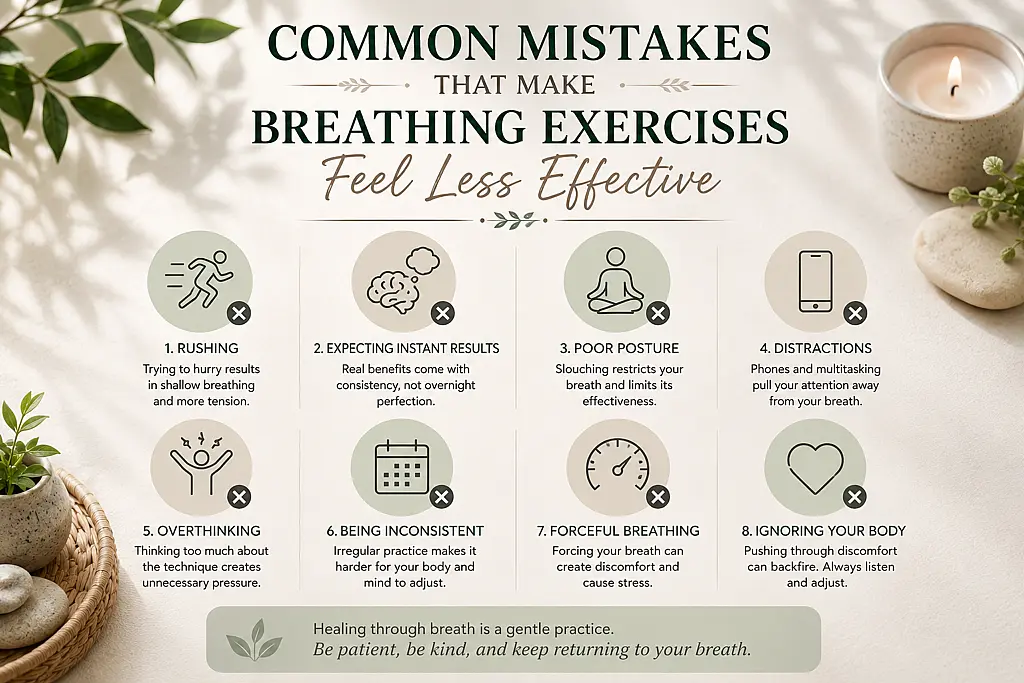
Mindful breathing is wonderfully simple.
Sometimes we accidentally make it much harder than it needs to be.
Here are a few common misconceptions.
Trying Too Hard
Breathing isn’t a performance.
You don’t need to force enormous breaths or breathe unnaturally deeply.
Allow your breathing to slow comfortably.
Gentle, relaxed breathing is often more effective than trying to control every inhale and exhale.
Expecting Instant Results
Some people feel calmer after their first breathing session.
Others notice gradual changes over several weeks.
Both experiences are completely normal.
Healing through breath isn’t about one perfect session.
It’s about building a healthy relationship with your breath over time.
Only Practicing During Stress
Many people only remember breathing exercises once they’re already overwhelmed.
While they can certainly help during stressful moments, the greatest benefits often come from practising when you’re already feeling relatively calm.
That way, mindful breathing becomes a familiar habit your body naturally returns to when life becomes more challenging.
Judging Yourself
It’s perfectly normal for your thoughts to wander.
Every time you gently bring your attention back to your breath, you’re practising mindfulness.
There is no perfect meditation.
No perfect breathing session.
Progress isn’t measured by having an empty mind.
It’s measured by your willingness to return to the present moment again and again.
Healing Through Breath Is a Lifestyle, Not a Technique
Many people begin breathing exercises hoping to reduce stress.
They stay with them because something much deeper begins to change.
They become more aware of their thoughts.
More patient with themselves.
More present in everyday life.
Instead of rushing from one task to another, they begin creating small moments of stillness throughout the day.
Healing through breath isn’t about escaping reality.
It’s about becoming more present within it.
A single breath may seem insignificant.
But thousands of intentional breaths, practised consistently over weeks, months, and years, can gradually transform the way you experience your life.
That’s why healing through breath isn’t really about breathing.
It’s about learning to return to yourself—one mindful breath at a time.
How Long Does It Take to Notice the Benefits?
One of the most common questions people ask is:
“How long before breathing exercises actually make a difference?”
The honest answer is…
It depends.
Some people notice they feel calmer after just a few minutes of slow, intentional breathing.
Others begin noticing more subtle changes over several weeks of consistent practice.
You might find that:
- You recover more quickly after stressful situations.
- You pause before reacting.
- Your breathing feels slower during busy moments.
- You sleep more peacefully.
- You feel more emotionally balanced throughout the day.
- Small frustrations no longer feel quite as overwhelming.
These aren’t dramatic overnight transformations.
They’re quiet improvements that gradually become part of everyday life.
That’s one of the beautiful things about healing through breath.
You don’t have to wait until everything in your life changes before experiencing the benefits.
Each mindful breath becomes an opportunity to care for yourself in the present moment.
Progress Looks Different for Everyone
It’s easy to compare your journey with someone else’s.
Perhaps you’ve read stories about people experiencing immediate breakthroughs through breathwork.
While those experiences certainly happen, they’re not the standard everyone should expect.
Healing isn’t a race.
Some days you’ll feel deeply relaxed.
Other days your thoughts may wander constantly.
Both are part of the process.
The goal isn’t to achieve the “perfect” breathing session.
The goal is simply to keep returning.
One breath.
One moment.
One day at a time.
Over weeks and months, those small moments often become lasting habits that support both emotional and physical wellbeing.
Frequently Asked Questions
What is healing through breath?
Healing through breath is the practice of using slow, intentional breathing to support relaxation, reduce stress, and increase awareness of the present moment. Many people combine breathing exercises with mindfulness or meditation as part of their daily wellbeing routine.
Can breathing exercises really reduce stress?
Many people find that slow, mindful breathing helps them feel calmer during stressful situations. Research also suggests that breathing and mindfulness practices may support stress management and emotional wellbeing when practiced consistently, although individual experiences vary.
How often should I practice mindful breathing?
Daily practice is ideal, even if it’s only for a few minutes.
Consistency is far more important than the length of each session.
What’s the best breathing exercise for beginners?
Natural Breath Awareness is an excellent place to begin.
Rather than changing your breathing, simply observe it.
This gentle practice helps build awareness without feeling overwhelming.
Can I combine breathwork with meditation?
Absolutely.
Mindful breathing and meditation naturally complement one another.
In fact, many meditation practices begin by focusing on the breath before expanding into mindfulness, gratitude, or quiet reflection.
Can healing through breath improve sleep?
Many people include slow breathing exercises as part of their evening routine because they find it helps them unwind before bed.
When combined with healthy sleep habits, mindful breathing can become a calming way to prepare both your mind and body for rest.
Is breathwork safe for everyone?
Gentle breathing exercises are suitable for many people.
However, if you have a respiratory condition, cardiovascular condition, or any medical concerns, it’s always best to speak with your healthcare professional before beginning more intensive breathwork practices.
If you ever feel dizzy or uncomfortable, return to your normal breathing and stop the exercise.
Do I need special equipment?
Not at all.
One of the greatest strengths of healing through breath is its simplicity.
Your breath is always with you.
You can practise almost anywhere without spending money or purchasing equipment.
Final Thoughts
Healing through breath isn’t about learning a complicated technique.
It’s about rediscovering something that has quietly supported you since the day you were born.
Every slow inhale invites awareness.
Every gentle exhale creates an opportunity to let go of a little tension.
Over time, those moments begin to add up.
Not because life suddenly becomes easier.
But because you begin meeting life differently.
With greater patience.
Greater presence.
And greater compassion for yourself.
Remember…
You don’t need to master every breathing exercise.
You don’t need to meditate for hours.
You don’t need the perfect routine.
Simply begin.
Take one slow breath.
Then another.
Allow those quiet moments to become part of your day.
Because healing rarely happens all at once.
More often, it begins with one intentional choice repeated consistently over time.
If you’d like to continue building a calmer, more mindful lifestyle, these guides may also help:
- Micro Breathwork Practices – Learn simple breathing exercises that fit into even the busiest days.
- Daily Spiritual Meditation Practices for Inner Peace – Discover how meditation and mindful breathing naturally work together.
- Spiritual Bedtime Routine – Create a relaxing evening ritual that encourages deeper rest.
- Empath Tools – Explore calming products that support mindfulness and emotional wellbeing.
- How to Know If You’re Absorbing Someone Else’s Emotions – Learn how emotional awareness and healthy boundaries can protect your energy.
- Why Do I Feel Drained After Being Around Certain People? – Understand emotional exhaustion and practical ways to restore your balance.
Key Takeaways
- Your breath naturally reflects how you feel.
- Slow, mindful breathing can help calm your nervous system.
- You don’t need long sessions—just a few minutes each day.
- Consistency matters more than perfection.
- Healing through breath works best when it becomes part of your daily routine.
- Combining breathing exercises with meditation and healthy sleep habits can support overall wellbeing.
As you continue your journey, remember that your breath is more than something your body does automatically.
It can become one of the simplest, most accessible tools for creating calm, clarity, and resilience—one breath at a time.

Cite or share this page
Want to reference this guide? Please link to the canonical page rather than copying the article.