

Spiritual awakening books can help you examine awareness, identity, purpose and meaning, but different titles serve different needs. Choose The Power of Now for present-moment attention, The Untethered Soul for observing mental chatter, A New Earth for examining ego and identity, The Alchemist for a symbolic story about purpose, or Siddhartha for a philosophical novel about learning through experience.
If you are unsure where to begin, The Power of Now offers the clearest introduction to this list’s central themes. Readers who learn more readily through fiction may prefer The Alchemist or Siddhartha. No title can guarantee an awakening, so treat each author’s ideas as material for reflection rather than proof of what you are experiencing.
What these books can—and cannot—offer
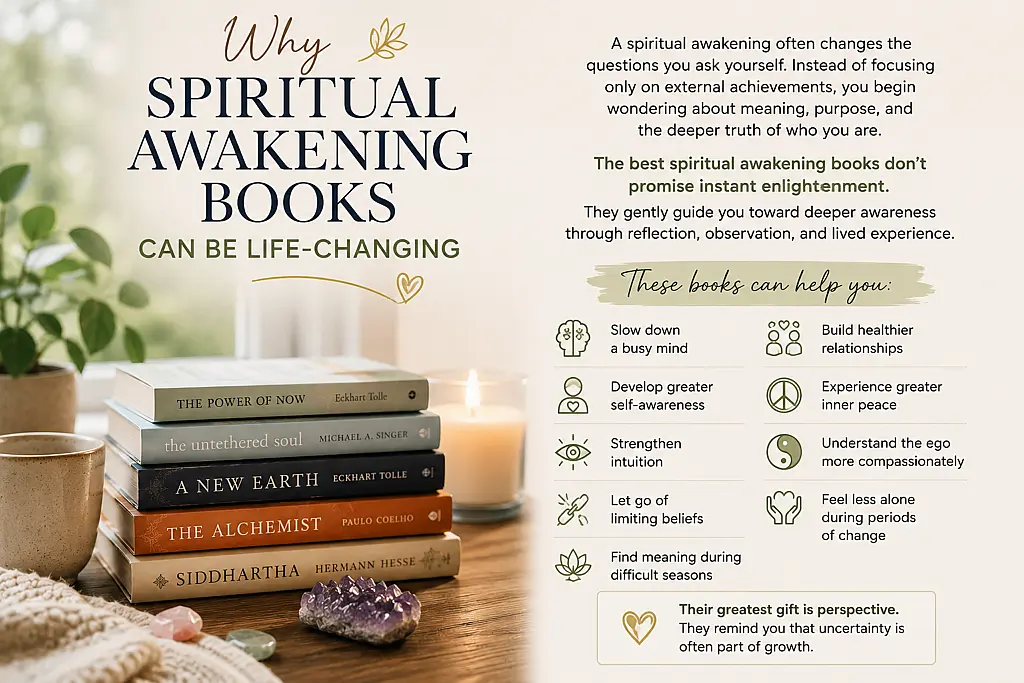
A book can give you language for questions that are difficult to express. It can also introduce a practice, challenge an assumption or show how another person has interpreted experiences involving awareness and meaning.
Used thoughtfully, these five books may help you:
- Notice recurring thoughts without immediately acting on them.
- Distinguish present circumstances from stories built around them.
- Explore purpose without expecting one universal answer.
- Consider how identity affects choices and relationships.
- Build a regular habit of reflection.
They cannot determine whether a difficult period has a spiritual cause, reveal what another person is thinking or replace practical information about your circumstances. Their value lies in the questions and practices they offer, not in certainty.
Our guide to Spiritual Awakening Symptoms discusses experiences some people report during periods of spiritual growth. Those descriptions are reflective frameworks rather than a test or confirmation of awakening.
How this five-book shortlist is organised
The list deliberately combines three works of spiritual or personal-development writing with two novels. This makes it possible to compare direct instruction with ideas conveyed through character, symbolism and story.
Each selection has a distinct purpose:
- The Power of Now introduces present-moment awareness.
- The Untethered Soul examines the relationship between awareness and the internal narrator.
- A New Earth applies Tolle’s ideas to ego, identity and conflict.
- The Alchemist explores purpose, uncertainty and courage through allegory.
- Siddhartha considers the difference between received teaching and lived wisdom.
This is a guided selection rather than an objective ranking. A book’s usefulness will depend on the question you bring to it and whether you prefer practical instruction, philosophical discussion or fiction.
Compare the five reads
| Book | Best For | Beginner Friendly | Spiritual Depth |
|---|---|---|---|
| The Power of Now | Living in the present | ✅ | ⭐⭐⭐⭐⭐ |
| The Untethered Soul | Inner peace | Intermediate | ⭐⭐⭐⭐⭐ |
| A New Earth | Understanding the ego | ✅ | ⭐⭐⭐⭐⭐ |
| The Alchemist | Finding purpose | ✅ | ⭐⭐⭐⭐☆ |
| Siddhartha | Self-discovery | Intermediate | ⭐⭐⭐⭐⭐ |
Use the comparison as orientation rather than a fixed score. Labels such as “beginner friendly” and “spiritual depth” are subjective, and a short novel may prompt deeper reflection for one reader than a direct teaching text does for another.
The Power of Now by Eckhart Tolle
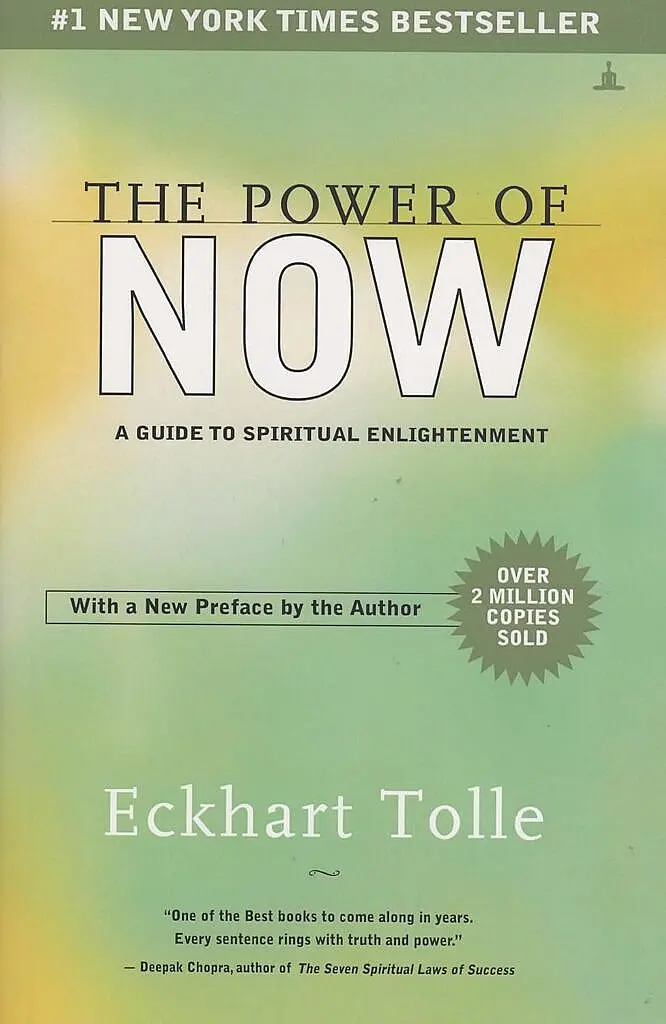
Best fit: Readers who want an accessible introduction to present-moment attention and their relationship with thought.
Tolle’s central argument is that distress can be intensified when people become completely identified with memories, worries and internal commentary. He invites readers to notice thought as it occurs and return attention to immediate experience.
What presence means in this book
Presence is not presented as forgetting the past or refusing to plan. A grounded application is to recognise when mental replay has replaced contact with the current situation, then pause before choosing a response. Planning a difficult conversation is useful; rehearsing the same imagined argument for an hour may not be.
The book is especially relevant if you want to explore:
- The difference between a thought and the awareness noticing it.
- How attention moves between the present, memory and anticipation.
- Why ordinary sensory experiences can interrupt automatic reactions.
- How to make room for a feeling before deciding what to do.
A two-minute practice from its central idea
- Notice three sounds without naming them good or bad.
- Feel one physical point of contact, such as your feet on the floor.
- When a thought appears, silently note “thinking” and return to sensation.
- After two minutes, identify any practical action the situation still requires.
The final step matters: awareness should support engagement with life, not become a reason to ignore responsibilities.
Limits to consider before choosing it
The style can feel repetitive, and some spiritual concepts may seem abstract if you prefer concrete examples. Reading a few pages at a time is likely to be more useful than rushing through the book. It may not suit readers who want a conventional programme with worksheets or sequential goals.
Choose this first if overthinking is your main concern and you are willing to practise the ideas between chapters. If you need plot and character to stay engaged, one of the two novels below may be a better entry point.
If you are trying to understand a broader period of change, Spiritual Awakening Symptoms presents experiences often discussed in spiritual communities. It should not be used as proof that every emotional or physical change has a spiritual explanation.
The Untethered Soul by Michael A. Singer
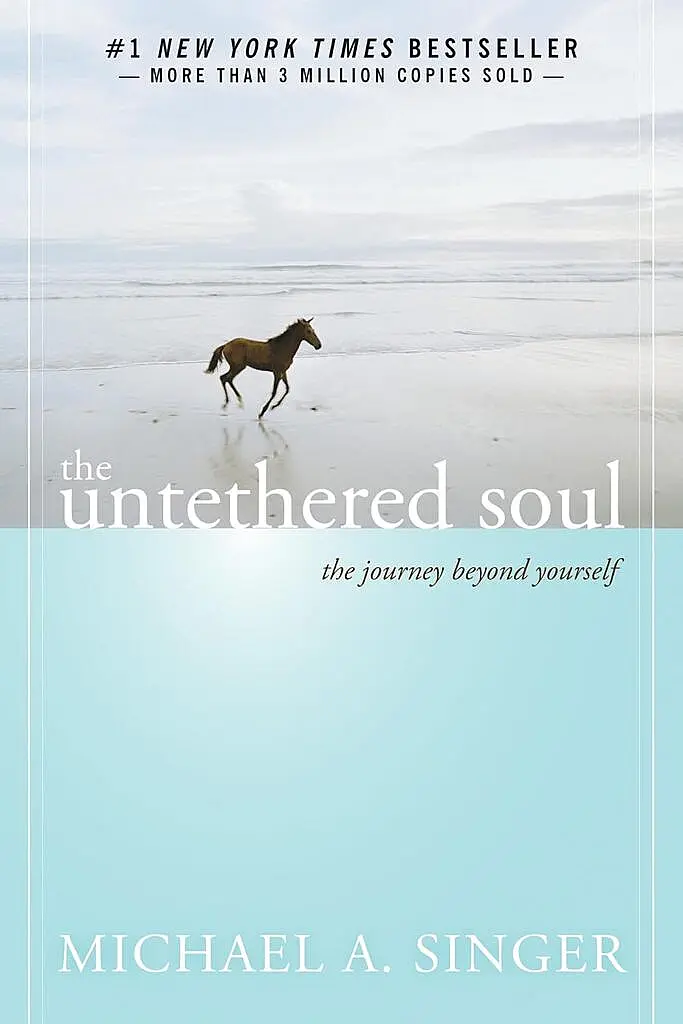
Best fit: Readers who are interested in the internal narrator, emotional reactivity and the possibility of observing thoughts without accepting each one as fact.
Although it shares some ground with The Power of Now, Singer places more emphasis on the persistent voice that comments on events. The book asks who is aware of that voice and what becomes possible when its commentary is noticed rather than obeyed automatically.
The internal narrator as an object of attention
Consider the thought, “I made one awkward comment, so everyone thinks badly of me.” The awkward comment may be an observable event; the conclusion about everyone else’s thoughts is an interpretation. Singer’s approach encourages space between those two things.
This makes the book useful for examining:
- Mental commentary that repeats after an event.
- Fear-based predictions presented as certainty.
- Attachment to a preferred outcome.
- The urge to resist or suppress an uncomfortable feeling.
Test the idea on one recurring thought
Write the thought exactly as it appears. Underneath it, make three notes: what you directly observed, what you inferred and what reasonable action is available now. This preserves the book’s reflective purpose while preventing a feeling or intuition from being mistaken for evidence about someone else’s intentions.
A caution about detachment
Some passages can feel abstract, and the language of “letting go” may be misread as a direction to dismiss emotion. A more practical reading is to allow a feeling to be present without letting it make every decision. Observation is a pause, not emotional suppression.
This is a strong choice if you already understand basic mindfulness ideas but want to examine why the mind continues narrating, judging and predicting.
If anxiety is part of what brought you to this subject, Anxiety Spiritual Meaning considers a spiritual interpretation of distress while leaving room for ordinary context. A symbolic meaning does not establish the cause of an experience.
A New Earth by Eckhart Tolle
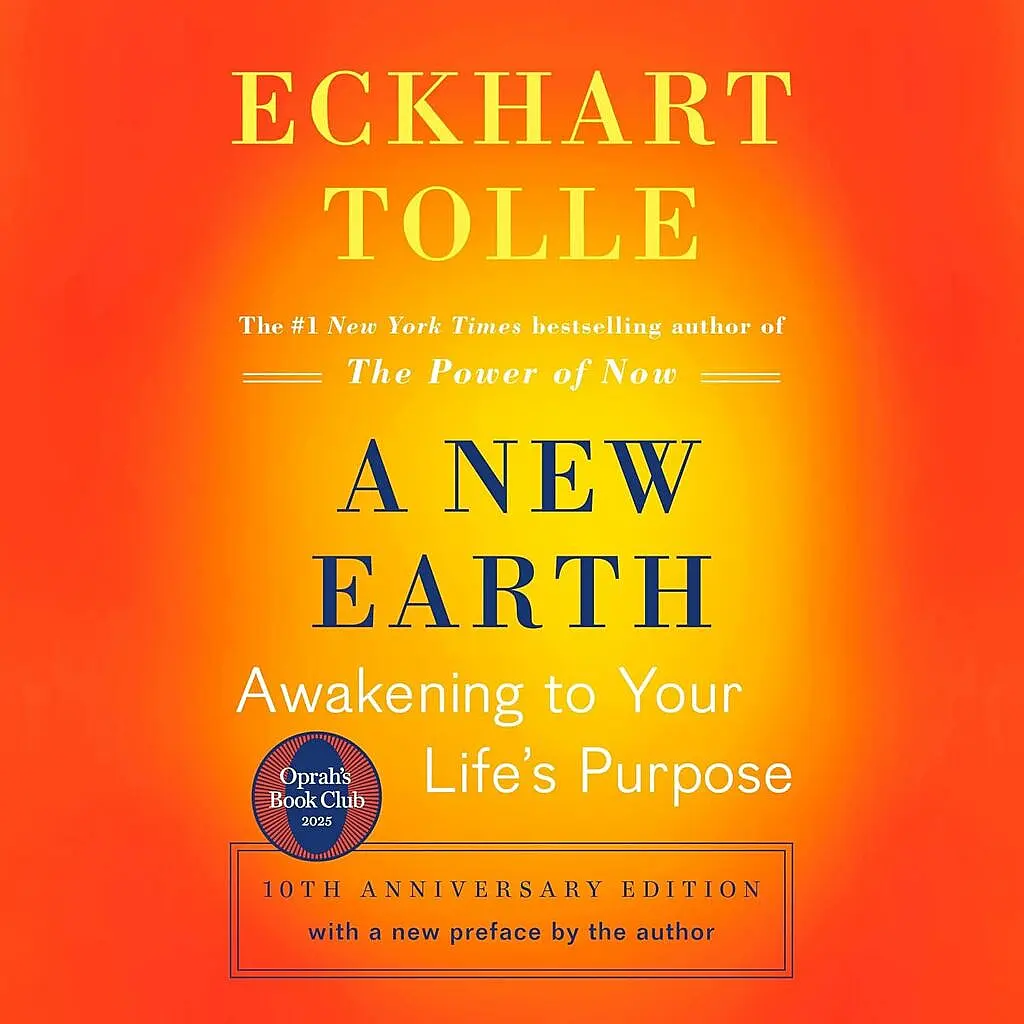
Best fit: Readers who want to examine identity, defensiveness and the role Tolle assigns to the ego.
Where The Power of Now concentrates on attention, A New Earth looks more closely at the identities people construct around roles, possessions, status, beliefs and grievances. “Ego” is the author’s spiritual and philosophical framework here, not a clinical diagnosis or a label to apply to people you dislike.
Use identity stories to understand conflict
The book is most practical when it helps you catch the story attached to an event. A missed deadline, for example, may quickly become “They do not respect me” or “I always have to do everything”. The deadline is a fact; the wider conclusion still needs checking.
A hypothetical conversation without assumptions
Imagine that a colleague has not sent work expected on Tuesday. Instead of treating your first interpretation as certain, you could say: “I was expecting the draft on Tuesday and haven’t received it. Is there a delay, and what delivery time is realistic?” This addresses the practical issue without pretending to know the other person’s motive.
That distinction also helps prevent spiritual ideas from becoming weapons. Calling another person “unconscious” or “driven by ego” usually closes conversation rather than deepening awareness.
Where its broader claims require discernment
Tolle extends his discussion from personal identity to collective consciousness and social change. Readers may find that spiritually meaningful, but it remains a philosophical interpretation rather than an established account of how societies change. The book is most useful when its large claims are brought back to observable behaviour: listening, noticing defensiveness and responding more deliberately.
Read this after The Power of Now if you want to apply similar ideas to roles, relationships and recurring disputes. It may be less suitable if you prefer narrowly defined terms and evidence-led argument.
For descriptions of changes often discussed in awakening narratives, see Spiritual Awakening Symptoms . If you want a quieter way to put reflection into practice, the Spiritual Bedtime Routine offers an optional evening structure.
The Alchemist by Paulo Coelho
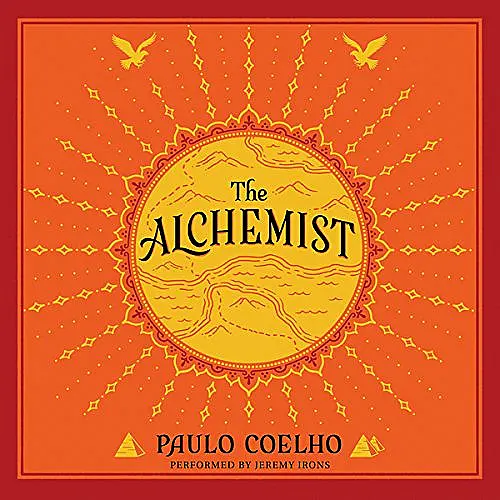
Best fit: Readers who prefer an accessible story about purpose, uncertainty and the courage to leave familiar ground.
The novel follows Santiago, a young shepherd who sets out in response to a recurring dream. Its mentors, setbacks, omens and journeys function as symbols, allowing readers to consider purpose without working through a direct self-help lesson.
Read the omens symbolically, not as instructions
The story treats dreams and coincidences as meaningful parts of Santiago’s journey. Outside fiction, a grounded approach is to use such experiences as prompts for reflection rather than proof that a particular choice is destined or that the universe has confirmed your interpretation.
For example, repeatedly noticing a place after considering a move may reveal that the idea has your attention. It does not, by itself, establish that moving is wise. Finances, responsibilities, relationships and other available information still matter.
Use the story to examine a real decision
- Name the possibility you are considering.
- Write down what attracts you and what frightens you.
- Separate reversible next steps from irreversible commitments.
- Choose one small action that gathers useful information.
This translates the novel’s emphasis on courage into a practical experiment without demanding blind faith.
When the novel may frustrate you
Readers seeking exercises, detailed philosophy or a realistic account of difficult decisions may find the allegory too simple. Its suggestion that people should pursue a personal calling can also feel incomplete when responsibilities restrict their options. Read it as a fable that opens questions, not a rulebook for major life choices.
Choose this if story and metaphor help you reflect more readily than direct instruction.
If uncertainty is showing up as anxiety, Anxiety Spiritual Meaning explores one spiritual way of interpreting that experience. Keep that interpretation alongside, rather than in place of, the facts of your situation.
Siddhartha by Hermann Hesse

Best fit: Readers drawn to philosophical fiction about self-discovery, patience and the limits of second-hand wisdom.
The novel’s protagonist moves through disciplined spiritual seeking, material comfort, disappointment and contemplation. Its central tension is between knowledge received from teachers and understanding developed through experience.
Experience without borrowed certainty
Siddhartha does not argue that teachers or traditions have no value. Instead, it explores what cannot simply be transferred from one person to another. Advice can describe a path, but it cannot live the consequences or make a choice on someone else’s behalf.
This makes the novel useful for readers who keep collecting answers but struggle to decide which ideas hold up in daily life. Its response is not to reject learning; it is to test what has been learned through attention, conduct and experience.
A reflection exercise for the protagonist’s stages
After each major stage of the story, note:
- What the protagonist expected to find.
- What the experience actually taught him.
- Which attachment or certainty changed.
- Where a similar gap between expectation and experience appears in your life.
A literary novel rather than a doctrine
The slow, contemplative pace will not suit everyone. It is also a work of literature, not a comprehensive guide to Buddhism, history or religious practice. Readers looking for formal instruction will need a different kind of text, while those comfortable with ambiguity may value the space it leaves for interpretation.
Choose this when you want a book to sit with and revisit rather than a sequence of techniques to complete.
Which book should you read first?
Match the starting point to the question you actually want to explore:
- You want an introduction to present-moment attention: The Power of Now. Begin here if mental replay and future-focused worry are your main concerns.
- You want to understand the voice commenting on everything: The Untethered Soul. It develops the distinction between awareness and internal narration.
- You want to examine defensiveness, roles or identity: A New Earth. It is particularly relevant to conflict and the stories attached to status or grievance.
- You want an encouraging story about purpose: The Alchemist. Choose it if metaphor helps you approach uncertainty.
- You prefer slower philosophical fiction: Siddhartha. It leaves more room for ambiguity and reflection.
The books do not need to be read in sequence. The clearest pairing is The Power of Now followed by A New Earth, because the second expands the first book’s treatment of ego and identity. Otherwise, one carefully chosen title is more useful than reading all five without applying anything.
A simple way to read reflectively
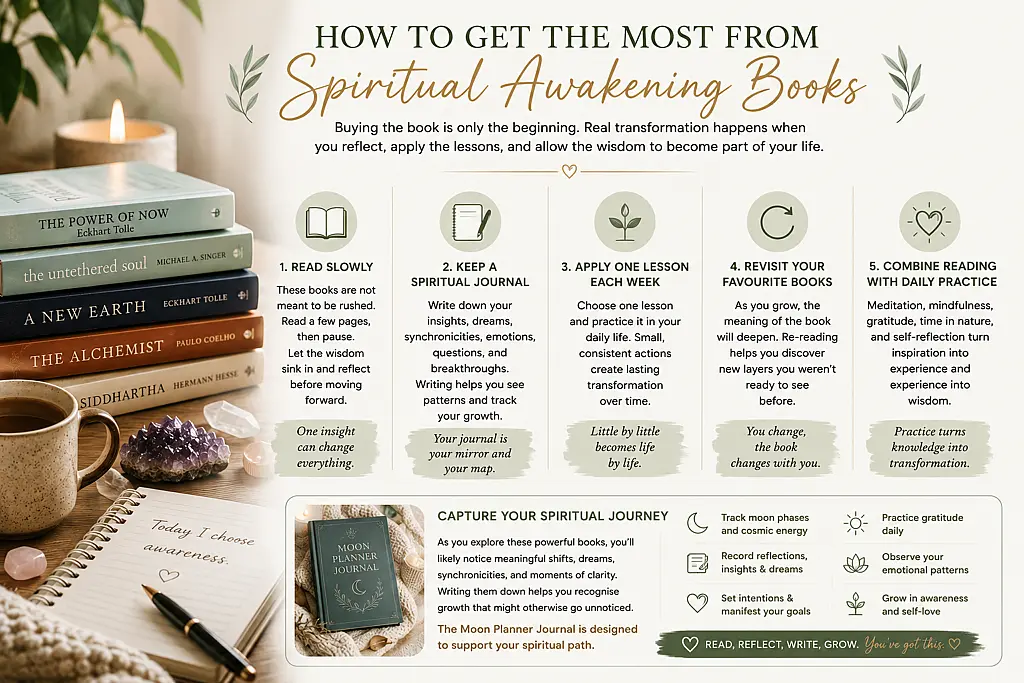
Reading alone does not guarantee change. Use a repeatable process that connects an author’s claim to your own observations and behaviour:
- Begin with one question. Write what you want the chapter to help you understand.
- Paraphrase one idea. Explain it in your own words instead of copying an inspiring sentence.
- Try one small practice. Keep the experiment specific and manageable.
- Review what happened. Note what helped, what did not and what alternative explanation might fit.
If a chapter discusses presence, for example, try drinking one daily cup of tea without using your phone. Notice temperature, taste and any urge to move on. At the end of the week, ask whether the pause affected one identifiable response or decision. This is more informative than deciding in advance that the practice must be transformative.
Separate observation from interpretation
A useful journal page has five prompts:
- What happened?
- What did I think and feel?
- What spiritual interpretation did I consider?
- What ordinary explanations also fit?
- What sensible next action remains available?
This is especially helpful when recording dreams, intuitions or coincidences. “I dreamed about changing jobs” records an experience. “The dream proves I must resign” is a conclusion that the experience alone cannot support.
Avoid using spiritual language as a shortcut
- Do not treat every metaphor as a factual claim.
- Do not use labels such as “ego” or “unconscious” to dismiss another person’s perspective.
- Do not confuse feeling certain with having evidence.
- Do not buy the next book merely to avoid testing an idea from the current one.
- Do not use reflection as a substitute for a practical conversation, boundary or decision that is already clear.
Look for useful change, not proof of awakening
A book may be helping if you can explain its ideas clearly, disagree with parts of it, pause before reacting and make more deliberate choices. You may also notice that you ask better questions or communicate assumptions more directly. These are useful developments, but they are not a diagnostic test or confirmation of a spiritual state.
Choose a journal format you will actually use
A blank notebook is enough for the process above. If you prefer guided pages, the Moon Planner Journal is an optional format for recording reflections and intentions.
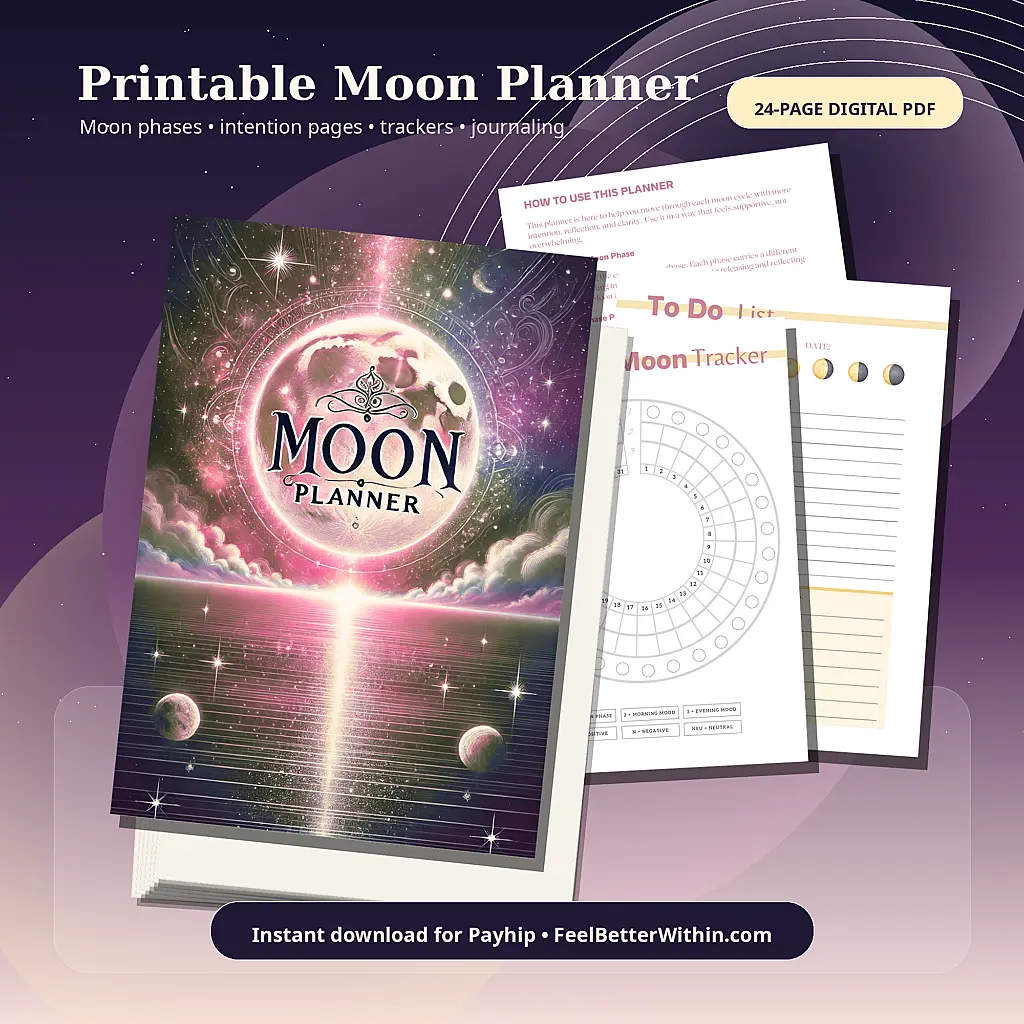
The format matters less than consistency and honest review. A simple weekly page can record the passage you considered, the action you tried, the result you observed and the question you still have.

Start with the book that addresses your present question, read it slowly and test one idea in ordinary life. Keep what leads to greater clarity, responsibility and care; leave aside claims that require you to ignore evidence or force meaning onto every experience.
Cite or share this page
Want to reference this guide? Please link to the canonical page rather than copying the article.