

You do not have to sit still to meditate. If you identify as an empath or highly sensitive person, movement, sound and touch can give your attention somewhere concrete to return when silent sitting feels uncomfortable or frustrating. The five practices below keep the essential meditation skill—notice, return and begin again—without demanding complete stillness.
Here, empath describes someone who feels strongly affected by other people’s moods, busy environments or emotional situations. It does not mean you literally absorb another person’s energy. When this article refers to energy, you can treat it as spiritual language, a metaphor for emotional load or simply a description of how activated or depleted you feel.
Start with two to five minutes rather than forcing a long session. Meditation does not require a blank mind or instant calm; noticing that your attention has wandered is part of the practice.
Why stillness can feel harder, not calmer

When external input drops away, thoughts, emotions and physical sensations can become more noticeable. Restlessness may also reflect an uncomfortable position, sensory overload, stress or a simple preference for movement. It is not proof that you have absorbed someone else’s emotions or that you are failing at meditation.
A movement-based meditation still needs an anchor. Choose a sensation, sound or repeated action; notice when your mind leaves it; then return without criticising yourself. Moving slowly enough to pay attention matters more than performing any exercise perfectly.
Energy tracing as a symbolic body scan
Energy tracing is a spiritually framed body scan performed with the hands above the skin. You do not need to believe in a measurable aura to use it. The hand movement can simply help you notice tension, temperature and emotion in a clear sequence.
A slow hand-scan sequence
- Stand or sit in a stable position and take one comfortable breath.
- Notice the contact between your feet and the floor or your body and the chair.
- Hold your palms several centimetres above your head, then move them slowly down the front or sides of your body.
- Pause where you notice a clear sensation, such as warmth, coolness, tightness or ease. You do not need to invent a meaning for it.
- Ask, “What am I noticing, and what do I need next?” If the phrase “Is this mine to carry?” is meaningful to you, use it as a boundary prompt rather than evidence about where a feeling came from.
- On an easy exhale, sweep your hands down and away. Let the gesture represent setting down what does not require your attention now.
- Finish by naming one observable fact, such as “My shoulders have dropped” or “I still feel tense, but I completed the scan.”
Optional ritual cues
- If scented products are comfortable for you, frankincense or clary sage oil can mark the beginning of the ritual. Use any product only as directed and stop if it irritates you.
- A selenite wand can be used as a ceremonial pointer instead of your hand. It does not need to cleanse an aura objectively for the gesture to hold personal meaning.
- Close with a phrase such as, “I can release what does not need my attention and respond to what does.”
What the hand sweep can offer
The sequence turns a vague sense of overload into specific observations: clenched hands, a raised jaw, fast thoughts or tiredness. The final sweep also gives the exercise a definite ending. If you use spiritual language about clearing energy, keep it as a personal interpretation; the scan cannot establish who or what caused a feeling.
Elemental movement using earth, water, fire and air
Elemental movement uses four natural images as prompts for different qualities of motion. The elements can be part of a spiritual ritual, but they do not need to be treated as forces acting on your body. Choose one movement or combine all four into a short sequence.
Build an elemental flow
Clear enough space to move without striking furniture or slipping. Select the element whose motion feels workable today rather than the one you think you ought to need.
Earth: steady pressure
- Stand with footwear on if the surface is cold, rough or unsafe.
- Press each foot into the floor, then gently stamp or shift your weight from side to side.
- Notice pressure in your heels, toes and legs.
- If visualisation helps, imagine roots beneath you and repeat, “I am here, and the ground is supporting my weight.”
Water: fluid motion
- Sway your hips, shoulders or upper body within a comfortable range.
- Let your arms trace slow curves rather than aiming for a particular shape.
- Follow one movement for several repetitions, noticing where it begins and ends.
- If an emotion arises, acknowledge it without forcing tears or trying to explain it immediately.
Fire: controlled intensity
- Shake out your hands, step more firmly or push the air away from you.
- Add a sigh or short sound if privacy and comfort allow.
- Keep every movement under your control. This is not an invitation to hit objects, yourself or another person.
- No flame is required; a battery-operated candle is a safer visual symbol while moving.
Air: spacious movement
- Circle your arms or walk lightly around the room.
- Notice the air on your skin and the space around your hands.
- Breathe at your ordinary, comfortable pace rather than repeatedly forcing deep breaths.
- Use the phrase, “I can make room before I decide what to do next.”
Turn the sequence into a personal ritual
- Mark out a movement area with a scarf or mat, making sure it cannot become a trip hazard.
- Choose one intention, such as “I will move with attention” or “I can set down one demand for now.”
- Spend roughly one minute with each element, or stay with a single movement for the whole practice.
- Finish by standing or sitting still for one breath and noticing the room around you.
- Stop if a movement causes pain, dizziness or increasing agitation, and return to an ordinary seated or standing position.
How the elemental frame supports attention
The four images provide a simple structure when deciding how to move feels difficult. Rhythm offers a repeated anchor, while the contrasting qualities—steady, fluid, intense and spacious—let you adjust the practice without abandoning it. The exercise may help you describe your present experience, but it does not guarantee a particular emotional outcome.
Treat the elements as metaphors, not rules
- Earth can represent support or steadiness.
- Water can represent flexibility or softness.
- Fire can represent determination or intensity.
- Air can represent space or perspective.
Your associations may be different. If an image does not help, change it or return to the physical movement alone.
Vocal toning: give your attention a sound
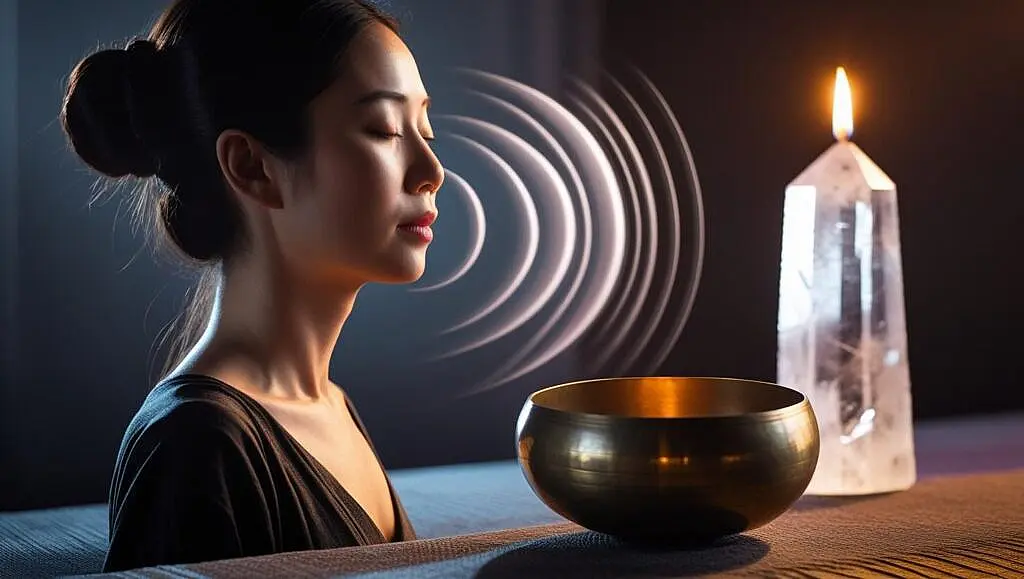
Vocal toning means sustaining a comfortable hum or vowel sound. Because you can hear and feel your voice, it offers an anchor when silence leaves too much room for competing thoughts. Some spiritual traditions use sacred syllables, but their meanings vary and no particular sound is required.
A five-minute humming practice
- Stand, sit or walk slowly in a safe space. Keep your eyes open if closing them feels disorienting.
- Place a hand on your chest or abdomen if that helps you follow the movement of your breath.
- Inhale comfortably through your nose or mouth.
- On the exhale, hum or use a gentle vowel such as “ah”. If “OM” or “HU” belongs in your spiritual practice, you may use it respectfully without assigning it a guaranteed effect.
- Notice where the sound is easiest to feel—perhaps the lips, cheekbones, chest or throat.
- Let the tone finish before taking the next easy breath. Repeat for five rounds or for as long as your voice remains comfortable.
Tools that can mark the beginning or end
- Strike a Tibetan singing bowl gently as an opening or closing cue, keeping it at a comfortable distance and volume.
- Rest your hands on a cushion or folded blanket if you want an additional touch anchor.
- Use a timer with a quiet chime so you do not need to monitor the clock.
Three ways to vary the sound
- Say your name quietly between tones as a simple orientation cue.
- Alternate one hum with a few seconds of listening to the room.
- Match a soft tone to slow footsteps, allowing the sound to end before the next breath.
Why sound can be easier than silence
A tone gives the mind an audible object and the body a noticeable vibration. A comfortable, unforced exhale also provides a natural rhythm. This can make attention easier to organise, but it does not literally shake out trapped emotion or guarantee changes in hormones or the nervous system.
Use sound as an anchor, not a test
A simple script is: “Feel the floor. Breathe in comfortably. Hum as you breathe out. Listen until the sound ends. Begin again.”
You do not need a strong voice, a particular pitch or an emotional release. Avoid straining, shouting or holding your breath, and stop if your throat hurts or you become dizzy.
Sensory sculpting: meditate through touch
If restlessness shows up as tapping, picking or clenching, a tactile anchor may feel more workable than asking your hands to remain still. That behaviour alone does not reveal its cause; it simply gives you information about which type of practice might be easier to try.
Sensory sculpting becomes meditation when you pay deliberate attention to pressure, temperature, texture and movement. The aim is not to produce an impressive object.
Choose a manageable texture
- Soft clay or putty: useful for pressing, rolling and flattening.
- Kinetic sand: best contained in a tray to reduce distraction from spills.
- Modelling wax: use it at the temperature and in the manner specified by the maker.
- Folded fabric: suitable for rubbing, pleating or smoothing without mess.
- A smooth stone or crystal: useful as a simple tactile object; any spiritual significance is optional and personal.
Choose a material that feels neutral or pleasant. There is no benefit in pushing through a texture that makes you more uncomfortable.
Build an intentional touch meditation
- Set up a washable surface and choose a session length of five to ten minutes.
- Hold the material and identify three neutral details, such as weight, firmness and temperature.
- Begin one repeated action: roll, press, smooth, fold or turn.
- When your attention wanders, name what happened—“thinking”, “planning” or “hearing”—and return to the sensation in your hands.
- If you want to shape a feeling, treat the result as a personal metaphor rather than a diagnosis or hidden message.
- Finish by resetting the material and cleaning your hands or workspace according to the product instructions.
Keep the practice easy to repeat
- Store a few tactile materials in a small grounding box, keeping products and small objects away from children or pets where relevant.
- Use a texture journal to record concrete observations: “The clay felt cool” or “Fast rolling made it harder to pay attention.”
- Pair the movement with a realistic phrase such as, “I can notice this feeling without solving everything now.”
- Use a timer if a clear ending helps you stay with the exercise.
What tactile attention changes
A physical object provides an immediate present-moment anchor. Repeated hand movement also gives restlessness a defined task, while optional sculpting offers a non-verbal way to represent a feeling. These are practical features rather than proof that touch removes emotional energy. If a material is irritating or distracting, choose another object or a different meditation.
Shadow dance: combine movement, light and imagination
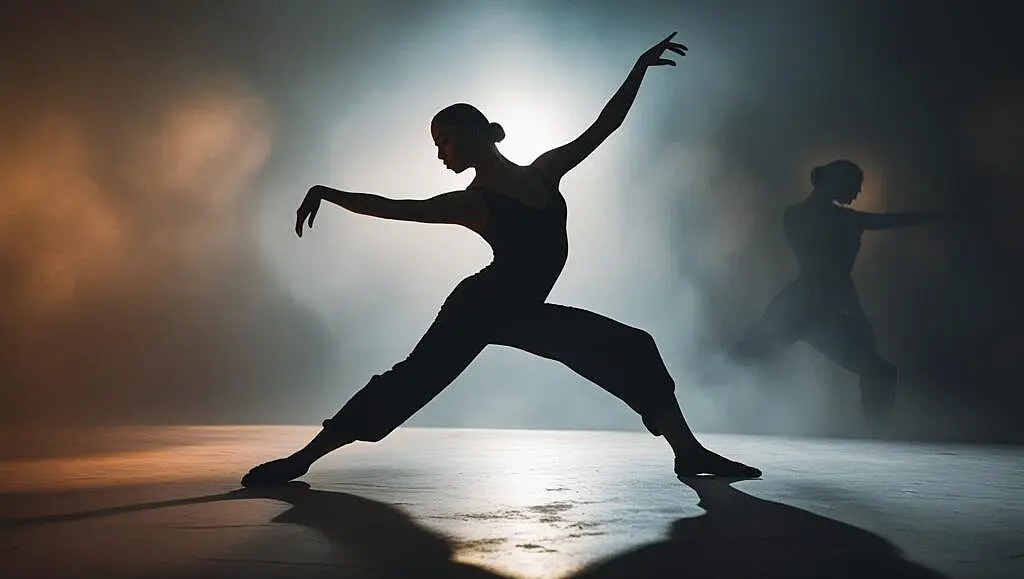
Shadow dance can be a creative or ceremonial movement meditation. When you dance with your own shadow, the changing outline gives your eyes and body a shared point of focus. Any images you notice are imaginative associations, not predictions or confirmed messages from the subconscious.
Set up a safe shadow practice
- Choose a dim room with enough light to see the floor and nearby furniture clearly.
- Use a stable lamp or battery-operated candle to cast a shadow. Do not place a live flame where clothing, hair or moving hands could reach it.
- Clear the movement area, then stand or sit facing the wall.
- Begin with one hand. Let it rise, curl, open or turn while you watch the outline.
- Add the other hand, shoulders or upper body if you have enough room.
- Notice shapes without forcing an interpretation. You might simply label them “wide”, “bird-like” or “angular”.
- Finish by turning on the main light and noticing your feet, the wall and three objects in the room.
Ways to adapt the movement
- Practise while seated if standing movement is uncomfortable.
- Use slow instrumental music, ordinary room sounds or silence.
- Sketch one shape afterwards or write down the movement you wanted to repeat.
- Ask, “What did this image suggest to me?” rather than assuming it has a universal meaning.
- If dim light or moving shadows feel unsettling, turn on the lights and choose a different practice.
Grounded ritual intentions
- “I will notice without needing to explain everything.”
- “I can make room for a feeling without treating it as fact.”
- “Let this movement mark the end of the day.”
- “I choose gentle curiosity over judgement.”
What the shadow adds to meditation
The shadow supplies a visual anchor that changes in direct response to movement. Watching it can introduce play and enough distance to explore an emotion symbolically. No single interpretation has authority; if an image prompts an insight, treat that insight as a possibility to consider rather than a fact revealed by the practice.
Stillness is an option, not the standard
All five exercises can function as meditation when they are paired with deliberate attention: choose an anchor, notice when the mind wanders and return. You do not need to become calm, receive a spiritual message or complete the practice without distraction.
- Try energy tracing when you want a structured check-in with physical sensations and personal boundaries.
- Try elemental movement when you want room for larger motions.
- Try vocal toning when sound is easier to follow than silence.
- Try sensory sculpting when your hands need a task.
- Try shadow dance when visual imagination helps you stay engaged.
A more useful measure than perfect stillness is one question: “Did I notice where my attention went and practise bringing it back?”
A five-minute plan for this week

- Choose one of the five practices based on the space, privacy and materials available.
- Set a five-minute timer.
- Name your anchor before starting: hands, feet, sound, texture or shadow.
- Each time you become distracted, label it briefly and return to the anchor.
- At the end, record one observable change—or note honestly that nothing changed. Completion matters more than manufacturing a result.
If the exercise makes you feel more distressed or physically uncomfortable, stop and orient yourself to the ordinary room around you. You can shorten the session, alter the movement or choose another approach next time.
Related spiritual perspectives
The following resources use spiritual frameworks. Read them as perspectives rather than proof, and do not use them to determine the cause of a symptom or confirm what another person is feeling.
- For a symbolic discussion of headache experiences, see Spiritual Awakening Headaches Can Feel Physically Intense. Physical symptoms do not confirm a spiritual awakening.
- For an inventory of possible demands and sources of overload, see Empath Burnout: Signs, Causes and Recovery.
- For an optional astrological framework, see Moon Signs and Emotional Absorption: Protect Energy by Element & Archetype.
- For a crystal-based symbolic practice, see 7 Crystals for Empaths That Actually Work.
- For visualisation and boundary rituals, see Energy Shielding Techniques for Empaths: Master Protection & Stay Grounded.
- For a broader spiritual protection framework, see Spiritual Protection for Empaths: A Practical Guide.

This article offers general wellbeing education and spiritual reflection. It is not medical or mental health advice, and a spiritual interpretation should not replace professional assessment. Seek qualified support for persistent fatigue, pain, sleep disruption, anxiety, low mood or other symptoms that concern you.
Tools that may help
A few practical options connected to the ideas in this guide. Choose only what genuinely fits your routine.
As an Amazon Associate I earn from qualifying purchases.
 Lifestyle image · see listing for exact item
Buckwheat Zafu Meditation Cushion
Best for: Beginners or experienced meditators who find hard floors, sofas or ordinary pillows distracting during practice
A zafu gives meditation a consistent physical place and can make a short sit feel more inviting. It is not necessary for meditation, and the best fit depends on your height, posture and preferred position.
Check before buying: Seat height, dimensions, filling and cover care.
Cite or share this page
Want to reference this guide? Please link to the canonical page rather than copying the article.