
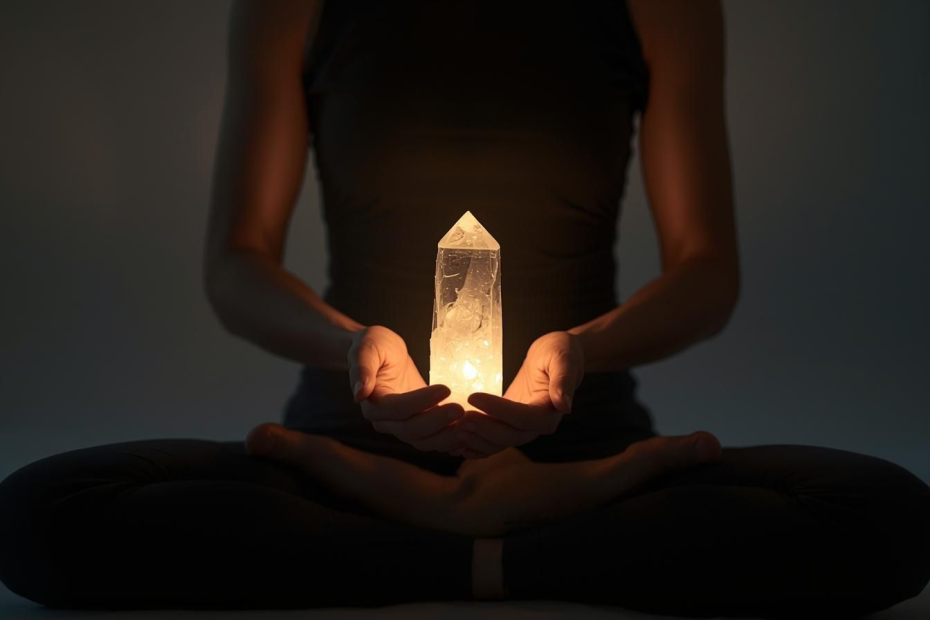
To use crystals in meditation, choose one comfortable stone, hold it loosely or set it beside you, and use its appearance or texture as a focus for attention. When your thoughts wander, return to one detail you can notice. Keep your breathing comfortable and finish whenever you want.
The crystal can be a personal symbol or an object you enjoy. You do not need to activate it, match a frequency or produce a special sensation. A plain pebble or another familiar object can serve the same role in the exercise below.
If you feel dizzy, faint or unwell, stop the exercise. Changing stones is not a response to a symptom that needs attention. The guidance below explains how to pause and when to seek advice.
Keep spiritual meaning separate from treatment claims. A 2025 randomised study of 138 adults compared rose quartz with a visually matched placebo over 14 days. It found no specific advantage for the crystal in reducing anxiety. That study examined anxiety outcomes; it does not measure every reason a person might enjoy a reflective ritual.
Choose one stone you can use comfortably

Start with an object you already have. Pick it up and notice whether its size, weight and surface are comfortable. If it is awkward to hold, put it on a stable surface within view. Keep fragile points and sharp edges away from your skin.
You may give a stone a meaning such as patience, kindness or a reminder to pause. Treat that meaning as something you bring to the practice. A colour or mineral name does not tell you what your emotions need or establish a healing effect.
If you already want to browse crystals, the existing options include Black Tourmaline, Clear Quartz, Amethyst and Howlite. Compare the seller’s current material description, size, finish and care instructions. Buying another stone is optional.
For symbolic associations, you can also read Top 10 Crystals for Protection and Grounding. If you are feeling affected by someone else’s emotions, consider the conversation, demand or boundary involved as well as any ritual you enjoy.
A four-step crystal meditation

Use these steps as a short practice you can adapt. Sitting in a chair is fine. There is no required hand, posture, moon phase or length of time, and you can keep your eyes open throughout.
1. Make a simple place to pause
Clear enough space to sit comfortably and put the stone down safely. A notebook and ordinary room lighting are enough. You do not need smoke, sprays, incense or a special arrangement before beginning.
If you like preparing the room as part of your ritual, explore Energy Clearing Home Remedies. For looking after your stones, keep the spiritual ritual separate from physical cleaning: check the material and its care instructions before using water, salt or another substance. The How to Cleanse Crystals Without Sage guide is a related spiritual resource; choosing a dry, no-contact ritual avoids applying substances to a stone you have not identified.
2. Let your breathing stay comfortable
Rest your feet and hands where they feel supported. Let your breath continue without a hold or a forced deep inhale. If following your breathing is uncomfortable, look at the stone, the table or another ordinary object instead.
The NHS breathing exercise for stress also emphasises comfortable, unforced breathing. A counted pattern is not needed for this crystal practice. Do not push through discomfort to complete a round.
3. Return to one detail or a simple phrase
Notice the stone’s colour, shape or the way light falls on it. If you are holding it, notice its weight without squeezing. When you realise you are planning dinner or replaying a conversation, return to that same detail.
A phrase can be useful if you prefer words: “I can pause before replying,” or “One thing at a time.” Choose something believable and relevant to your day. You can leave the phrase out; there is no need to connect it to a crystal’s energy.
4. Finish with one observation
Put the stone down and look around the room before moving on. Write what you actually noticed: “My attention wandered to tomorrow’s meeting,” or “Holding the stone became uncomfortable, so I placed it on the desk.” You do not have to find a message or a transformation.
Add one practical next step if it would help: check your meeting time, ask for a quieter moment or return to the task in front of you. If you enjoy writing, Shadow Work Journal Prompts for Beginners offers optional prompts; skip any question that feels unhelpful or too demanding.
If the practice feels uncomfortable or uneventful

A difficult session does not identify an energetic problem. Begin with what you can observe and change, such as your grip, seat, surroundings or whether you want to continue. There is no requirement to remain still or finish the exercise.
The crystal feels heavy, hot or awkward
Put it down. You can use a lighter object, look at it from a comfortable distance or leave the crystal out entirely. If you notice pain, irritation or another symptom, attend to that symptom rather than explaining it as a frequency mismatch.
You are not feeling anything special
You may simply notice an object and a wandering mind. That is enough information to record. A lack of sensation is not evidence that hidden changes are occurring, and you do not need to buy a stronger stone or repeat the practice until something happens.
You want to include the moon
You can use a lunar date as a personal reminder to pause, just as you might use a calendar appointment. Choose a time that fits your routine. There is no need to stay awake, go outdoors or wait for a particular phase to try this exercise.
For an optional symbolic practice, see Moon Phase Meditation Rituals. Keep any meaning you take from the moon separate from claims about what a stone can do for your health.
Keep the practice comfortable and easy to stop
Start with fewer demands
Try one object and one focus for attention. You can stop after a brief pause instead of aiming for a long session. A smaller stone is a matter of physical preference, not evidence of a gentler vibration.
Use practical boundaries
If imagining a circle of light has personal meaning for you, you can include it as visualisation. Also make any real-world adjustment you need: put a conversation on hold, move somewhere quieter or say that you are unavailable. A protective image does not establish that an unsafe situation has become safe.
Stop if you feel dizzy or unwell
Stop the exercise and put the stone down. Lie down safely until dizziness passes, then get up slowly. Avoid driving or other hazardous activities while dizzy. The NHS dizziness guidance advises seeking medical advice if you are worried, symptoms persist or dizziness keeps returning. Do not self-diagnose the cause as a crystal’s energy.
A worked example to keep the practice ordinary
You are about to answer a difficult email. Set a familiar stone on the desk, look at its outline and notice that you are already composing a defensive reply. Use the phrase “I can read it once more.” Then put the stone aside, reread the actual message and decide what needs answering.
Your note afterward might be: “I paused before replying and removed an assumption from my draft.” That describes your action. It does not require a claim that the crystal changed another person, blocked an emotion or treated a symptom.
Choose what helps you reflect
Learning how to use crystals in meditation can be a modest, personal practice: notice an object, return your attention and choose when to finish. You are free to enjoy its symbolism, adapt the exercise or decide that another focus suits you better.

Cite or share this page
Want to reference this guide? Please link to the canonical page rather than copying the article.