
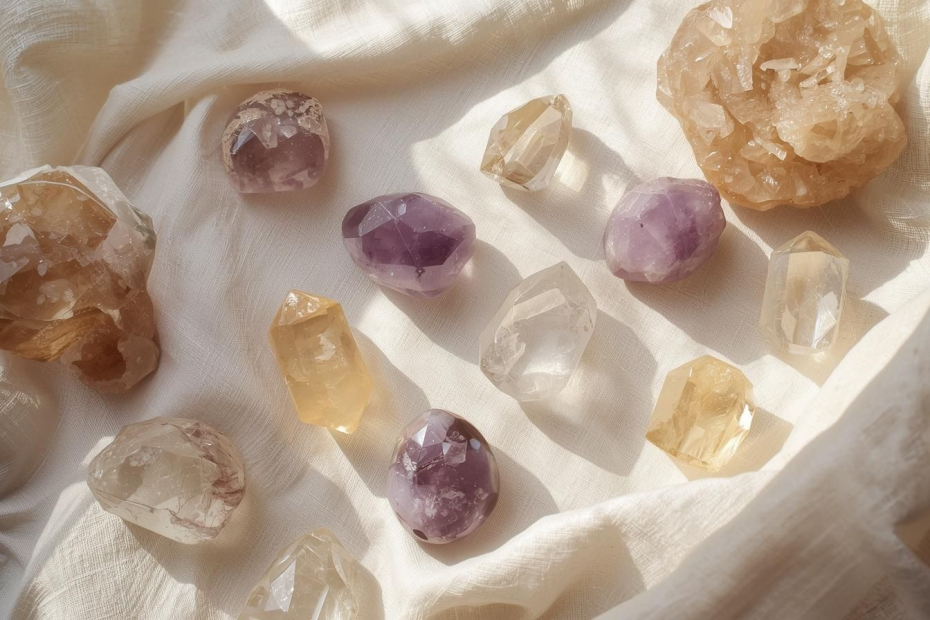
To cleanse crystals without sage, choose a smoke-free ritual such as sound, visualisation or a written intention. Keep unknown stones dry and separate from salt, sprays and other crystals. You do not need to soak, bury or heat a stone to give your practice a fresh beginning.
Here, “cleansing” means a symbolic reset: a way to mark the meaning you want to bring to your next practice. Removing dirt, treating a stain or caring for damaged material is a different task and needs advice suited to the particular stone and any treatments or settings.
The nine options below keep that distinction clear. Choose one that fits your space and interests; there is no need to combine them or continue until you feel a special sensation.
Check the stone before choosing a method
A familiar colour or trade name is not enough to choose a cleaning process. Before applying water, salt, oils or a cleaner, ask what the material is, whether it is treated or coated, and how its supplier recommends caring for it. If you cannot establish that, use a no-contact ritual.
GIA explains in its guide to gemstone durability that hardness, toughness and stability describe different things. Resistance to scratches alone does not settle how a gem tolerates heat, chemicals or changes in humidity. Its jewellery-care guidance also explains why light, heat, chemicals and treatments matter.
The choices here are conservative ways to avoid exposing an unidentified stone to those conditions. They are personal rituals, not tests of purification or treatments for how you feel. For a related setting, see hotel-room energy cleansing as separate spiritual reading.
1. Use sound to mark the beginning and end

Set the crystal on its own stable surface. Ring a bell once, play a short piece of music or use your voice at a comfortable volume. Let the sound mark the start of a pause, then choose one word for the practice you want to begin.
You do not need to strike the crystal, place it in a vibrating bowl or increase the volume. The action is a cue for your attention; it does not establish that sound has removed a substance or changed the mineral.
2. Take an indoor moonlight pause

If lunar symbolism matters to you, choose an evening to sit near your crystal and reflect. Keep the stone in a dry indoor place away from an open window, condensation and a position that will receive direct sunlight in the morning. Moonlight does not have to fall on it for your ritual to be meaningful.
You can use the lunar date as a reminder rather than a deadline. If you enjoy that symbolism, Moon Signs and Emotional Absorption is related reading. For recording thoughts or dreams, see Dream Journal Tools. Treat what you write as reflection rather than proof that the moon changed the stone.
3. Keep salt and earth as separate symbols
If earth is part of your ritual, place a small plant or a closed container of soil beside the stone’s separate tray. If you prefer salt as a symbol, a closed container of Sea salt can sit nearby. There is no need to buy either item for this purpose.
Keep the crystal out of soil and salt. Burying it can introduce moisture or grit and make it harder to retrieve, while a care method that suits one material may not suit another. This version uses a visual reminder without putting substances against the stone.
4. Use a short visualisation

Look at the stone or rest it on a table. If you enjoy imagery, imagine setting down an old intention and making room for a new one. For example: “Last week I wanted to do everything. This week I want to finish one task before beginning another.”
The illustration above represents imagination, not a visible energetic effect you need to produce. Keep your breathing comfortable; no deep breaths, breath holds or closed eyes are required. If visualisation feels unhelpful, write the sentence instead.
If this is part of your evening, choose a practice from a spiritual bedtime routine that fits your comfort. You can stop without completing a ceremony.
5. Keep water separate from the crystal
For a water-themed ritual, use a covered container of water as a display beside the stone. Keep the crystal dry. You can name what water symbolises to you, then put the container away when you finish.
Do not rely on a generic “water-safe crystals” list to decide how to rinse or soak your specimen. Treatments, coatings, fractures, settings and attached materials can affect care. Follow material-specific instructions for actual cleaning; a symbolic practice does not require adding water, mist or crystal chips to a bottle.
6. Arrange crystals with space between them
If you enjoy a group of crystals, arrange them so each has its own place and does not rub against another. A tray with separate compartments can make the arrangement easy to put away.
You can choose an order or pattern that has personal meaning. Do not balance a loose stone on sharp points or assume that a cluster is physically cleaning another stone. Keeping pieces separate also avoids unnecessary contact between materials that can scratch each other.
7. Use a dry botanical reminder instead of a spray
Choose a photograph of a plant, a botanical drawing or a dry item kept in its own closed container. Put it beside the crystal’s separate tray while you reflect on a quality you associate with it, such as patience or steadiness.
There is no need to make an herbal infusion, add essential oil or mist the crystal or your skin. A familiar scent may be part of someone’s spiritual practice, but it is not needed here, and “natural” does not establish that a substance suits a gemstone.
8. Notice colour in ordinary room light

Use indirect room light to look at a detail you have not noticed recently: a colour change across the surface, the outline of a point or a pattern. Place the stone on a stable tray out of a direct sunbeam, then return it to its usual storage place afterward.
The daylight photograph illustrates looking at a collection, not a timed sun bath. Avoid a universal exposure time such as “30–60 minutes”; a blanket time cannot account for every material and treatment. GIA notes that excess light and heat can fade or damage some gems.
9. Finish with a journal reset

Write the date, which stone you chose and the intention you want to revisit. Add one ordinary action that gives the intention a place in your day. You might write: “Patience: I will reread a message before replying.”
A short record is enough. If you want help beginning, explore Intuitive Journaling. You do not need to record a message, sensation or energetic change for the session to count.
A simple example of how to cleanse crystals without sage
You have an unfamiliar stone and want a fresh start before using it in meditation. Leave it dry on a stable tray, ring a bell once and write, “One thing at a time.” Put the bell away and choose the first task you will do. The ritual is complete without soaking the stone, buying supplies or waiting for a feeling to change.
For more reading about symbolic associations, see Top 10 Crystals for Protection and Grounding. If your main concern is exhaustion or overload, the practical guidance in Empath Sleep Problems or Spiritual Burnout may be a more useful starting point than adding another ritual task.
Common questions about smoke-free cleansing
How often should I do it?
Choose a reminder that suits you, or return to the ritual only when you want to reflect. There is no required cleansing interval in this guide. A feeling of heaviness is not a measurement that tells you a mineral needs a ritual.
What if I forget?
You can begin again another day. Keep ordinary care separate: respond to visible dirt, damage or a storage problem using advice for the material, rather than assuming an energetic cause.
Do I need to feel something afterward?
No particular sensation is required. You might notice an enjoyable pause, no change or that this practice does not interest you. Record that honestly and choose whether you want to repeat it. A crystal ritual should not become a task you must finish to feel permitted to move on.
Keep the practice yours: one stone, one optional ritual and one next action. If you would like a structured format for your notes, view the Crystal Journal product details before deciding whether to buy. A plain notebook is enough for the steps here.

Cite or share this page
Want to reference this guide? Please link to the canonical page rather than copying the article.