
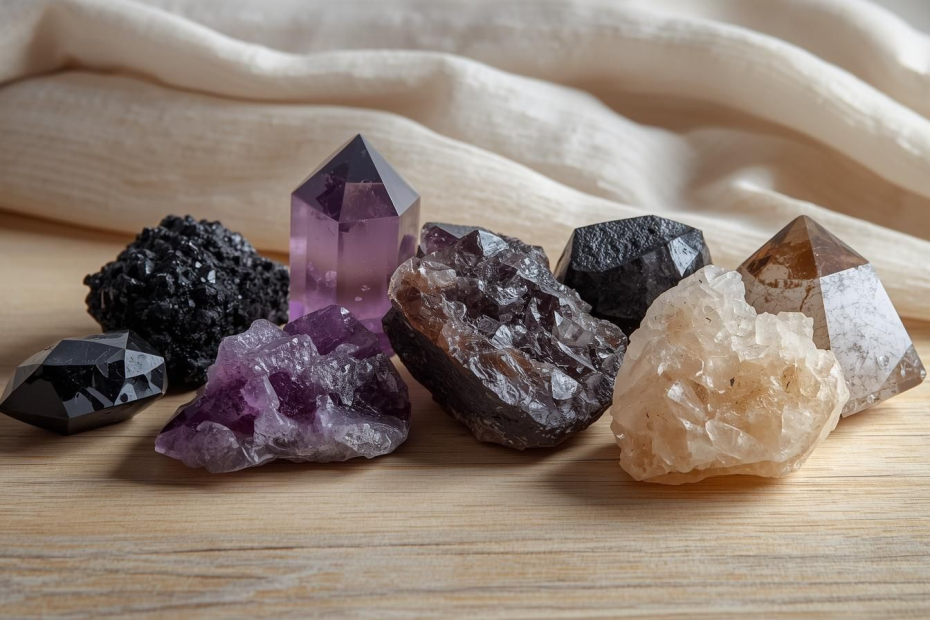
The top 10 crystals for protection and grounding in this guide are black tourmaline, obsidian, amethyst, onyx, tiger’s eye, shungite, hematite, smoky quartz, red jasper and agate. The first six are commonly associated with boundaries or protection, while the remaining four are used as symbols of stability, focus and connection to the present.
These associations come from spiritual practice and personal symbolism rather than a scientific ranking. A crystal cannot guarantee safety or remove difficult emotions, but it can serve as a tangible reminder of an intention or boundary.
Protection crystals are often used by empaths as a physical cue before crowded settings or emotionally demanding conversations. A stone can remind you to notice your limits; it does not establish that you absorb another person’s energy. For a separate relationship topic, see How Do Empaths Protect Themselves From Narcissists?.
Crystals can accompany meditation, journalling and calming routines, but they are not a replacement for medical or mental health support. A stone should also never substitute for practical action in an unsafe situation.
What protection and grounding mean in crystal practice

In spiritual use, protection usually means setting an intention around personal boundaries, while grounding means returning your attention to your body, surroundings and next practical action. Neither practice requires treating a mineral as a literal shield.
The stone’s colour, weight, texture or assigned meaning can make an intention easier to remember. For example, touching a pocket stone before answering a difficult request may create enough of a pause to consider what you can realistically offer.
Choose according to the purpose of your ritual and how you expect to use the stone. Jewellery is convenient for a portable reminder, while a larger piece may work better as a visual cue beside a desk, front door or journal.
Six crystals associated with protection and boundaries

1. Black tourmaline
Black tourmaline is traditionally associated with boundaries and protection from negativity. Rather than expecting it to create an invisible barrier, use it to represent a specific limit: silence notifications during focused work, step away from an escalating conversation or decline a request you cannot manage.
Carrying a Black Tourmaline crystal in a pocket makes the reminder portable. Touch it before opening your inbox or entering a busy place, then name the one boundary you intend to maintain.
2. Obsidian
Obsidian is volcanic glass, and its dark, reflective appearance has made it a symbol of honest self-examination in crystal practices. After a difficult interaction, hold it while writing three separate answers: What happened? What do I know for certain? What am I assuming? This keeps reflection from turning into certainty about someone else’s motives.
3. Amethyst
Amethyst is associated with calm, clarity and intuition. Intuition is most useful here as an invitation to reflect, not proof of what another person thinks or intends.
Use amethyst during a wind-down ritual: put your phone aside, take three unhurried breaths and decide what can wait until tomorrow. An Amethyst bracelet can act as the same reminder when you are away from home.
4. Onyx
Onyx traditionally represents resolve, restraint and firm boundaries. It is a practical choice when you know what you need to say but are tempted to over-explain. Hold or wear it while practising a direct sentence such as, “I can’t take that on today, but I can respond on Friday.”
5. Tiger’s eye
Tiger’s eye is linked symbolically with courage and discernment. Before making a pressured decision, place it beside a page divided into three columns: known facts, interpretations and the next verifiable step. The stone marks the intention to decide carefully rather than react to fear or wishful thinking.
6. Shungite
Shungite is used as a symbol of purification and protection. Keeping a piece near the entrance can create a transition ritual: put down your keys, release your shoulders and decide what concerns do not need to follow you further into the evening. Do not rely on a stone for electromagnetic, environmental or physical protection.
If you want an optional way to close the day, explore a spiritual bedtime routine. Treat any chakra associations as a symbolic system for reflection rather than a diagnosis or guaranteed effect.
Four stones used for stability and present-moment focus

Some spiritual traditions describe this settled state as balanced energy. Here, the aim is to notice where you are and choose the next manageable action. If your interest is bedtime symbolism, read Which Chakra Is Related to Sleep?.
7. Hematite
Hematite is traditionally connected with stability and the root chakra. A smooth piece can provide a simple sensory focus: notice its weight and surface, feel both feet on the floor and name three details in the room before returning to the task in front of you.
8. Smoky quartz
Smoky quartz is associated with letting tension and mental haze settle. A Smoky Quartz tumbled stone is small enough to keep beside a keyboard or in a bag. When you notice yourself jumping between tasks, pick it up and write down the single task you will complete next.
9. Red jasper
Red jasper symbolises endurance, physical presence and steady effort. It suits moments when a goal feels too large to begin. Place it beside your notes, define a ten-minute first step and start that step before planning the rest.
10. Agate
Agate is associated with consistency and balance. Its layered patterns can act as a reminder that progress is built gradually. Keep it beside an existing routine—such as morning journalling or an evening tidy-up—and use it to mark one small action performed consistently.
Where other popular stones fit
Clear quartz, selenite, labradorite and citrine also appear in crystal practices, but this guide keeps the numbered list to the ten stones above. A Citrine point may suit a ritual focused on optimism or motivation; selenite and clear quartz are often chosen for symbolic cleansing or clarity, while labradorite is associated with reflection and change.
Compare what supports your routine
Instead of trying to identify one universally “best” stone, record the context in which you used it, the intention you set and the action you took. The Crystal Journal provides a place to compare those observations without assuming every change was caused by the crystal.
How to build a practical crystal ritual

A useful ritual connects the stone with a clear behaviour. Start with one crystal and one situation rather than carrying several stones with broad or conflicting intentions.
- Name the purpose in practical terms. Replace “protect me from negativity” with an action such as “pause before agreeing”, “leave on time” or “focus on what I can verify”.
- Assign the stone a consistent place. Put it beside the object linked to the situation, such as your work notebook, house keys or journal.
- Use a brief reset. Touch or look at the stone, feel your feet against the floor, notice one sound and name your next action.
- Pair the ritual with a real boundary. Adjust a notification, move away from an overwhelming setting or state clearly what you can and cannot do.
- Review the result. Note whether the ritual helped you pause or act more deliberately. If it did not, change the routine rather than blaming yourself for choosing the wrong stone.
Clean and store crystals with care
A soft, dry cloth is a cautious starting point for physical cleaning. Before using water, salt, oil, heat or direct sunlight, check the care guidance for the exact stone and any jewellery setting, as treatments, dyes, adhesives and metal components can affect suitable care. Do not drink water that has been used to soak crystals.
If spiritual cleansing is meaningful to you, choose a non-contact ritual such as stating a new intention, using sound or leaving the stone indoors near a moonlit window. These are optional symbolic practices, not proven methods of changing a crystal’s frequency.
A boundary cue during a demanding conversation
Consider a hypothetical situation in which a colleague begins discussing a problem while you are facing a deadline. You touch an onyx stone as a reminder to pause, then say, “I can listen for five minutes, but I can’t take this on today. If you need me to act, please send me the specific request.”
The stone has not read the colleague’s energy or created the boundary. It has marked the pause in which you chose a clear, respectful response.
Related guides
- Crystal meditation: Read How to Use Crystals in Meditation for an optional practice using a stone as an attention cue.
- Spiritual change: Spiritual Awakening Symptoms discusses experiences some people interpret spiritually. Consider ordinary influences such as stress, workload and disrupted routines alongside that framework.
- Aura practices and personal boundaries: Read How to Protect Your Aura From Toxic Environments as spiritual reading, then connect any symbolic ritual with practical limits around your time and availability.
Create your own protection and grounding crystal practice
A written record can turn broad impressions into specific observations about which routines support calm, focus and clearer boundaries.
The Crystal Journal gives you space to list your collection, record traditional meanings, set intentions and plan care or symbolic cleansing rituals.
For each use, note the date, setting, stone, intended behaviour and what you actually did. Over time, this makes it easier to distinguish a helpful routine from a vague expectation.
If a structured format would be useful, you can download the Crystal Journal and adapt the prompts to your own practice.

The crystal meanings in this article describe spiritual interpretations and optional symbolic practices, not established protective effects.
Cite or share this page
Want to reference this guide? Please link to the canonical page rather than copying the article.