

The spiritual meaning of dreams is not a single, provable code. A dream may still hold personal spiritual value as a symbol, an intuitive impression, an invitation to prayer or a reflection that brings an unspoken concern into view. Its meaning depends on the dreamer, the feeling it leaves and the life surrounding it.
A useful interpretation separates four things: what happened, what you felt, what is happening now and what meaning you choose to explore. This leaves room for spiritual insight without treating every vivid dream as a prediction, warning or instruction.
Can dreams have spiritual meaning?

Many spiritual traditions and personal practices make room for dreams as a meeting point between ordinary awareness and the deeper inner life. A dream might inspire prayer, draw attention to a neglected truth or bring a meaningful symbol into focus.
Some people interpret a clear dream as intuitive guidance, a visit from someone who has died, contact with an ancestor or a nudge from a guardian angel. Others understand the same experience through memory, imagination, love or grief. The experience can be spiritually significant without proving where it came from.
A grounded approach to understanding spiritual dreams allows personal interpretation to sit alongside everyday influences, including recent conversations, interrupted sleep and emotionally charged events.
Read a dream through four separate layers
Before consulting a list of symbols, record these four layers separately. This reduces the temptation to force a dream into an explanation that does not fit.
- What happened: Write down the people, setting, actions, objects and spoken words. Describe the dream before trying to decode it.
- What you felt: Name the strongest feeling inside the dream, then note what remained after waking. Those emotions are not always the same.
- Your present context: Consider the changes, relationships, losses, choices or spiritual questions currently taking up your attention.
- The meaning you want to explore: Choose one or two possibilities rather than declaring a final answer. A useful interpretation can develop as your circumstances become clearer.
Suppose you dream of a locked room. The scene itself is simple, but its meaning changes with the emotional tone. Panic might bring up exclusion, restriction or a boundary imposed by someone else. Curiosity could suggest an unexplored part of yourself, while relief may indicate that you do not yet want to enter.
For readers who wake after a vivid dream with head pressure or a headache, this guide to the spiritual meaning people sometimes associate with headaches keeps spiritual interpretations in proportion. The sensation itself does not establish that a spiritual event occurred; an unsettled night or other everyday influences may also be relevant.
Intense dreams can coincide with emotional overload or a period of spiritual questioning. When the whole season feels charged, this guide to how to tell the difference can help you consider the wider context instead of treating one dream as decisive.
Spiritual Meaning Of Waking Up At 3am explores possible interpretations when a dream accompanies repeated waking at the same hour.
Signs that a dream may deserve closer reflection
No feature can confirm that a dream contains a message from beyond you. These qualities simply make a dream more useful to examine:
- Unusual clarity: One place, colour, voice or object remains distinct after the rest of the dream has faded.
- A lasting emotional echo: Peace, sadness, awe or unease follows you into the day and connects with something in waking life.
- Repetition: The same person, setting, decision or emotional pattern returns, even if the storyline changes.
- Meaningful timing: The dream appears during an ending, new responsibility, spiritual practice or change in identity.
- A shift in perspective: Reflecting on it helps you recognise a feeling, boundary or possibility you had not fully acknowledged.
These are reasons to pay attention, not proof of prophecy. A better measure is whether the interpretation reveals something honest without creating fear, urgency or false certainty.
Vivid dreams and recurring dreams
Vivid dreams often feel important because their detail survives the transition into waking. An exact sentence or striking image can seem charged with meaning. Yet intensity is not authority: recent experiences, strong emotions and broken sleep can all contribute to vividness. Ask why the detail matters to you rather than assuming it must predict an event.
A recurring dream can suggest that a theme continues to hold your attention, but it has no universal spiritual meaning. Being chased could relate to avoidance, pressure or a fear of confrontation. Missing a train might concern timing, regret or an opportunity you feel unprepared to take.
Compare each version of the dream by asking:
- What always stays the same?
- What changes each time?
- Which emotion keeps returning?
- Where does a similar pattern appear while I am awake?
- How would I like my dream-self to respond differently?
You might write an alternative ending in which you open the door, ask the pursuer a question or choose another route. This is a reflection exercise rather than a promise that the dream will stop. Its purpose is to reveal choices that the original storyline did not allow.
Common dream themes without fixed definitions
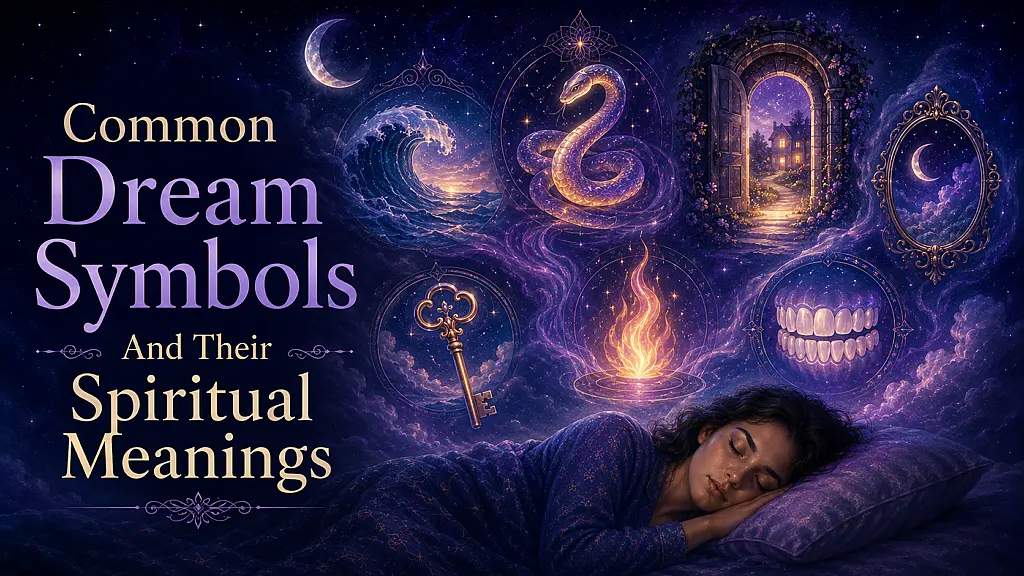
Shared symbols can offer a starting point, but personal history, culture and spiritual beliefs shape what they mean. Treat the following associations as prompts rather than definitions.
Water
Water is often linked with emotion, intuition, renewal or the unknown. A still lake creates a different experience from a rising flood. Notice the water’s condition, whether you entered it willingly and how safe or exposed you felt.
Houses, rooms and doors
A house might represent the self, family life, memory or security. Hidden rooms can suggest neglected interests or parts of the past that are returning to awareness. A door may signify an opening, a boundary or a decision, depending on what lies around it.
Being chased, late or lost
These dreams commonly raise themes of pressure, avoidance and uncertainty. Look beyond the chase itself. What are you trying to reach or escape? Is the pursuer known, hidden or more like a force than a person? Your answer will be more revealing than a generic symbol list.
Flying and falling
Flying can feel like freedom, spiritual expansion or distance from ordinary demands. It can also feel uncontrolled. Falling might suggest instability, surrender or fear of failure. The direction of movement matters less than your experience of it.
Snakes and other animals
A snake may evoke danger, healing, transformation, instinct or spiritual energy. Its meaning depends heavily on your beliefs and personal associations. Consider the animal’s behaviour and your relationship with it before applying a traditional interpretation.
Teeth, speech and exposure
Dreams of losing teeth, being unable to speak or appearing unprepared can bring up vulnerability, self-expression, confidence or loss of control. Ask what you were trying to communicate and who was present. The social setting often matters as much as the central image.
Death and people who have died
A death dream is not a prediction of physical death. It can symbolise an ending, a changed identity or fear of loss. Dreams of someone who has died may feel comforting, vivid and spiritually important. Some people interpret them as visitation dreams; others see love, memory and grief shaping the encounter. The dream can retain its meaning without either explanation being proved.
A five-minute dream-journal method
Dream memories fade quickly, so use a method brief enough to complete before the day’s distractions take over.
- Add a date and title. A simple name such as The Blue House will help you find repeated themes later.
- Record the scene. List the people, setting, actions, colours, objects and words without interpreting them yet.
- Name the emotional residue. Choose one or two feelings that describe the dream and your mood immediately after waking.
- Note your life context. Write one sentence about what currently feels important, uncertain, hopeful or unfinished.
- Offer a tentative reading. Begin with perhaps rather than definitely, then note one modest response such as praying, waiting, creating or setting a clearer boundary.
Ask yourself: What felt most significant? What does this image mean to me personally? Where have I encountered this emotion recently? Am I overlooking a simpler explanation? What response would be thoughtful rather than reactive?
For a deeper writing practice, 10 Powerful Intuitive Journaling Prompts can help you move beyond the first obvious association without forcing a conclusion.
Is it a spiritual dream, a stress dream or both?
There is no dependable way to separate spiritual dreams from stress-related dreams by intensity alone. A frightening dream is not automatically a warning, and a peaceful one does not prove divine guidance. A dream can reflect emotional strain while still becoming spiritually meaningful through the questions it raises.
Anxiety Spiritual Meaning considers how spiritual interpretation can sit beside emotional context without turning distress into a mystical instruction.
Sensitive sleepers may also benefit from a quieter transition into sleep. The practical ideas in Empath Sleep Problems Solutions can support that routine without requiring every restless night to have an energetic explanation.
Intuition, coincidence and apparent guidance
Dreaming of someone before they contact you, or seeing the same symbol the next day, can feel significant. You might regard the experience as intuition or synchronicity, although coincidence remains possible. Record what happened accurately before building a larger meaning around it.
Test an interpretation by asking whether it:
- fits your life without twisting the facts;
- respects other people’s freedom and boundaries;
- allows room for another explanation; and
- still makes sense when considered alongside waking evidence.
A dream can prompt a question, but it should not be the sole basis for assuming another person’s intentions or making a costly, irreversible choice. If the experience leaves you overstimulated, Mindfulness Grounding Techniques For Manifestation offers ways to return your attention to the present before deciding what the dream means.
Optional journal companion

Moon Planner Journal
If lunar cycles form part of your spiritual practice, the Moon Planner Journal provides space to track dreams, moods, intentions and observations. Patterns may become easier to notice over time, although a pattern in your notes does not prove that a lunar phase caused a particular dream.
Let the dream remain a question, not a command
To record your next dream, use the bedtime routine and copyable entry template in Spiritual Dream Journal: What to Write When You Wake.
Keep interpretations that deepen self-understanding while leaving room for uncertainty. Set aside readings that create panic, demand immediate action or claim to reveal another person’s private thoughts. A dream does not need one final definition to be spiritually meaningful; sometimes its value lies in the reflection it begins.

Cite or share this page
Want to reference this guide? Please link to the canonical page rather than copying the article.