
“Empath hangover” is an informal phrase some people use to describe feeling mentally or physically tired after prolonged, intense or demanding social interaction. It is not a medical or psychological diagnosis.
Feeling depleted after socialising does not mean you have taken another person’s emotions into your body. Possible contributors include sustained concentration, noise, conflict, people-pleasing, anxiety, inadequate food or sleep, sensory overload and the effort involved in supporting someone through a difficult situation.
This guide explores practical ways to rest, reduce stimulation and set healthier limits. Persistent fatigue, dizziness, headaches, low mood, panic attacks or difficulty functioning should be discussed with a qualified health professional rather than automatically attributed to sensitivity.
What an “empath hangover” actually is
What an “Empath Hangover” Actually Describes
People using this informal phrase commonly describe:
- Mental tiredness or difficulty concentrating
- Irritability or low mood
- Physical fatigue
- Feeling overwhelmed by noise or conversation
- Replaying parts of the interaction
- Wanting quiet time afterwards
These experiences are not necessarily different from ordinary social fatigue, stress or sensory overload. A demanding interaction may require you to listen closely, interpret tone, manage tension, choose your responses and monitor how the other person is reacting.
The grounded explanation is not that you were “receiving” another person. You may simply have been using considerable attention and emotional effort while also ignoring your own need for a break. If you often feel drained after people, crowds, or emotionally intense spaces, it may help to understand the difference between an empath and a highly sensitive person
Why Some Interactions Feel More Draining Than Others
Not every social interaction places the same demands on you. The duration, setting, noise level, subject matter, relationship and expectations involved may all influence how you feel afterwards.
Some interactions become especially tiring when they involve:
1) People who vent without limits
They don’t talk with you, they emotionally unload on you.
You become the dumping ground, and then you’re left holding the bag.
2) People who are emotionally unpredictable
Hot and cold. Moody. Passive-aggressive. You spend the whole time scanning for danger like you’re a human smoke detector.
3) People who “need” you to be okay
They rely on you to stabilize the vibe. You end up performing calm for them.
4) People who cross boundaries in small ways
Not always huge violations — more like constant little pushes: guilt, pressure, over familiarity, intrusive questions.
5) People you feel responsible for
Family patterns, care taking roles, codependency dynamics. (If this hits close to home, your Recovery From Codependency for Empaths is a strong next step.)
Even an enjoyable conversation can feel tiring when it requires sustained attention or occurs in a busy environment. Instead of assuming you have taken something from another person, notice which situations feel demanding and what role you adopt within them.
You may be listening for long periods, avoiding disagreement, trying to keep everyone comfortable or remaining longer than you wanted. Recognizing those patterns can help you plan more realistic limits.
Understanding how empaths respond to emotional environments can make these after-effects easier to recognize.
Is It an Empath Hangover or Ordinary Social Fatigue?
There is no test that distinguishes an “empath hangover” from introversion, stress, sensory overload or ordinary tiredness. The phrase describes an experience; it does not identify its cause.
After socialising, you might notice:
- A need for quiet or solitude
- Mental fatigue
- Replaying conversations
- Irritability or low mood
- Greater sensitivity to noise or light
- Difficulty settling at bedtime
These experiences may reflect the length or intensity of the interaction, the surrounding environment, existing stress or insufficient rest. If they are severe, frequent or affecting your normal activities, consider discussing them with a health professional.
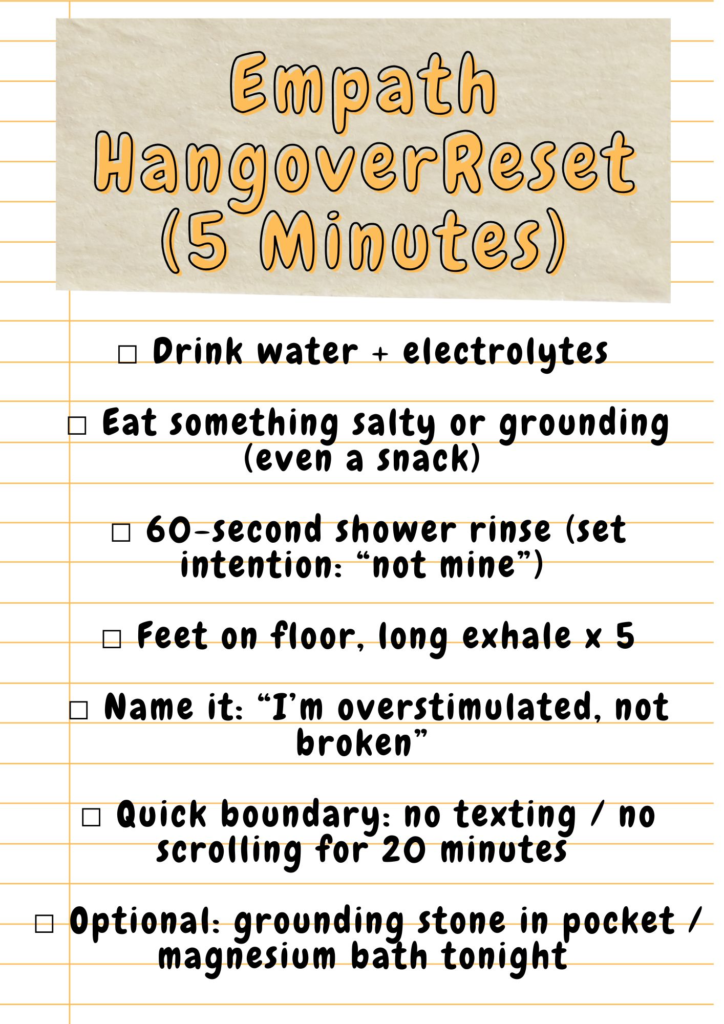
A 15-Minute Decompression Routine
This routine will not instantly remove fatigue, but it may help you reduce stimulation and notice what you need.
Step 1: Check the Physical Basics
Drink water if you are thirsty and consider whether you have eaten recently. Fatigue, headaches and dizziness can have numerous causes, so seek medical advice if these symptoms are persistent, severe or recurring.
Step 2: Reduce Sensory Input
Move to a quieter environment if possible:
- Dim harsh lighting
- Reduce background noise
- Put your phone on silent
- Sit somewhere comfortable
- Rest your eyes
Step 3: Mark the End of the Interaction
Wash your hands or face, take a comfortable shower or change into different clothes. These ordinary actions can serve as personal cues that the interaction has ended.
Remind yourself:
“That interaction is over. I can pause before deciding what I need next.”
Step 4: Choose Warmth and Quiet
A warm bath, shower or caffeine-free drink may feel comforting. Treat these as personal relaxation preferences, not treatments for an “empath hangover.”
Step 5: Return Your Attention to the Present
Try a brief sensory exercise:
- Press your feet gently into the floor
- Name five things you can see
- Notice three sounds
- Relax your jaw and shoulders
- Breathe normally without forcing or extending your breath
The aim is to focus on your immediate surroundings—not move spiritual energy through your body.
Why Exhaustion After Socialising May Keep Happening
Repeated exhaustion may indicate that certain interactions are placing greater demands on you than you have acknowledged.
You Stay Longer Than You Want To
You may notice that you need a break but remain because leaving feels rude. Planning an approximate finishing time can make the interaction more manageable.
You Do Not Give Yourself Time to Decompress
Moving immediately from a demanding interaction into work, household responsibilities or more screen time may leave little opportunity to rest. A short period of quiet, comfortable movement or reduced stimulation may help.
You Feel Over-Responsible
Always acting as the listener, fixer or peacemaker requires effort. Healthy boundaries can help you offer reasonable support without treating another person’s feelings or decisions as your responsibility.
If exhaustion has become persistent or is affecting several parts of your life, our Empath Burnout guide explains when self-care may not be enough.
If your empath hangover is actually burnout creeping in, read about Empath Burnout: 7 Energy Drains and How to Fix Them
WHabits That Can Make Social Fatigue Worse
Staying Beyond Your Capacity
You notice yourself becoming tired but remain because you do not want to appear rude.
Try instead: Decide on a realistic finishing time beforehand and give yourself permission to leave when necessary. There is no standard two-day recovery period; how someone feels afterwards varies.
Skipping Food or Water
Being hungry or thirsty may make an already demanding situation feel harder.
Try instead: Plan an ordinary meal or snack and drink according to your usual needs.
Remaining Still for Too Long
Social events, travel or long conversations may involve sitting in one position for an extended period. This can contribute to stiffness or discomfort.
Try instead: Take a comfortable walk or stretch if it feels appropriate. Movement does not release “stuck emotional energy”; it is simply a practical way to change position and take a break.
Replaying the Interaction
Repeatedly reviewing what you said can prolong stress after the event.
Try writing:
- What happened?
- How did I respond?
- What am I concerned about?
- Is there anything practical I need to address?
- Can this wait until tomorrow?
Then close the notebook and move to another activity.
Plan Before a Demanding Interaction
If you expect an interaction to be tiring, prepare for the practical demands involved:
- Decide how long you can reasonably stay.
- Plan how you will leave or end the conversation.
- Take water or any ordinary personal items you need.
- Decide which subjects or requests you will not engage with.
- Leave some unscheduled time afterwards if possible.
Preparation cannot create an energetic filter, but it can reduce uncertainty and make boundaries easier to maintain.
The “clear it fast” kit (simple Amazon product buckets)
Not a shopping list. A “support your nervous system” list. If you recommend these, keep claims realistic: these tools support comfort, grounding, and routine — they’re not medical treatment.
- Electrolytes (packets/drops): helps you bounce back physically after over stimulation
- Magnesium bath flakes: warm soak = downshift + muscle relaxation vibes
- Shower steamers: quick sensory reset when you’re emotionally fried
- Grounding stones: something steady to hold when your energy feels scattered
This post contains affiliate links. If you buy through them, we may earn a commission at no extra cost to you. As an Amazon Associate I earn from qualifying purchases.
For more tools check out: Empath Tools on Amazon That Actually Help You Thrive
When Repeated Exhaustion Needs More Attention
Occasional tiredness after a demanding interaction is not the same as persistent exhaustion. Pay closer attention if you:
- Regularly require prolonged recovery after ordinary activities
- Avoid people or activities you previously enjoyed
- Feel persistently numb, detached or low
- Experience ongoing sleep problems
- Develop recurring headaches, dizziness or other physical symptoms
- Struggle to complete normal daily responsibilities
- Feel trapped, hopeless or unable to cope
These experiences do not prove that your “system is overloaded” or establish an empath-related cause. Fatigue and withdrawal can have physical, psychological, social or lifestyle causes.
Consider speaking with a GP or qualified mental health professional, particularly if symptoms are persistent, worsening or interfering with daily life.
Sometimes the exhaustion is accompanied by replaying conversations after socializing and worrying about how you came across.
A realistic weekly plan (for empaths who want their life back)
Here’s the plan that actually works because it’s sustainable:
After social events (same day)
- water reset (shower or wash hands/face)
- electrolytes + snack
- 5 minutes grounding
- 10 minutes quiet (no phone)
Twice a week
- longer bath or magnesium soak
- 20-minute walk
- Brief environmental reset, such as opening a window, tidying your space or reducing noise
Daily (tiny)
- Review your time limit and exit plan before a demanding event
- one boundary statement: “I can care without carrying.”
If you do nothing else, do the tiny daily stuff. No routine guarantees that exhaustion will disappear. If the pattern continues despite adequate rest and realistic boundaries, investigate other possible causes with a qualified professional.
Final Thoughts
Feeling tired after social interaction does not make you weak, uncaring or “too sensitive.” Some conversations and environments simply demand more attention, patience or emotional effort than others.
An “empath hangover” is an informal description—not proof that you have brought another person’s emotions home or that your body needs energetic clearing.
Focus on practical steps:
- Eat and drink according to your usual needs
- Reduce unnecessary noise and screen exposure
- Allow time for quiet or comfortable movement
- Notice which interactions repeatedly leave you depleted
- Set clearer limits around your time and availability
- Seek professional advice when exhaustion persists
Your sensitivity may influence how you experience social situations, but it should not be used to explain every physical or emotional symptom.n you learn to protect that gift, it stops feeling like a curse.

This article offers general wellbeing education and spiritual reflection. It is not medical or mental health advice, and a spiritual interpretation should not replace professional assessment. Seek qualified support for persistent fatigue, pain, sleep disruption, anxiety, low mood or other symptoms that concern you.
Cite or share this page
Want to reference this guide? Please link to the canonical page rather than copying the article.